Why did federal planners delay a decision on the Trump White House ballroom proposal after hours of testimony—and what engineering details are emerging from project filings?
With interconnection queues topping 2,000 GW of capacity, firms aim to expand engineering and advisory services upstream of transmission and generation construction
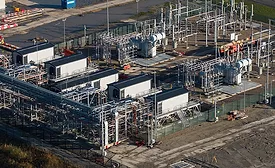
Private equity firm Littlejohn is backing grid consultant GDS as interconnection queues and power demand reshape when transmission, generation and substation projects reach construction.
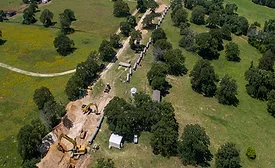
A central Texas utility plans a 7.2-mile transmission replacement to carry new groundwater supplies, pairing well expansion with modernization of a 60-year-old system.
New Jersey, Michigan acquisitions by ICE show how building code occupancy rules and FEMA Zone AE designations expand detention retrofit complexity beyond interior fit-out
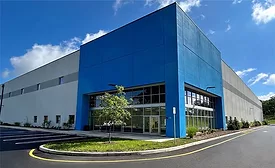
As the U.S. Dept. of Homeland Security acquires warehouses for potential detention use, building code requirements and FEMA Zone AE floodplain rules signal regulatory complexity beyond standard industrial fit-out.
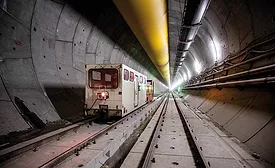
With fewer than 6 km left on the final Alpine drives, the $11.5-billion Brenner Base Tunnel shifts toward systems installation and a planned 2028 opening.
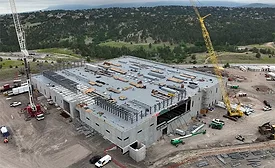
A federal judge denies an injunction request, allowing excavation to continue as the White House ballroom project nears a pivotal March 5 planning vote.
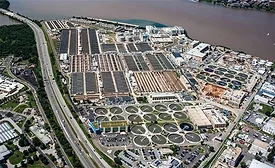
Can municipal water and sewer systems absorb sudden high-occupancy detention conversions, or do peak-day margins and pipe limits dictate expansion first?
Ruling that restores EV charging obligations and parallel litigation over discretionary grants raises broader questions about federal funding predictability
A federal ruling restoring electric vehicle charging funds spotlights the boundaries of executive authority to pause federal infrastructure law transportation dollars already authorized by Congress.