News Analysis
Court Tests Limits of Executive ‘Pause’ Power Over IIJA Transportation Funds
Ruling that restores EV charging obligations and parallel litigation over discretionary grants raises broader questions about federal funding predictability
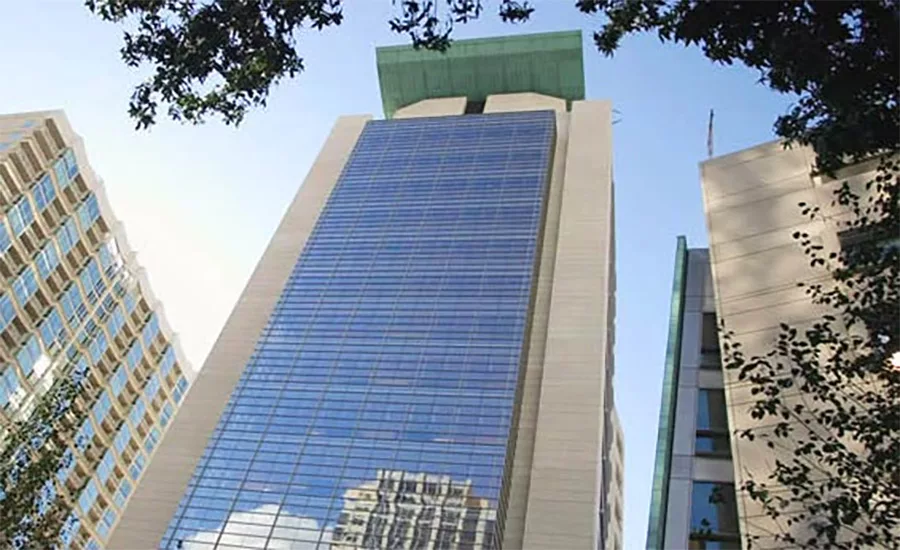
The U.S. District Court in Seattle issued a Jan. 23 ruling vacating Federal Highway Administration suspension of the $5B National Electric Vehicle Infrastructure formula program—restoring obligation authority for state EV charging projects.
A federal judge’s late-January ruling that vacated the U.S. Dept. of Transportation’s suspension of the $5-billion National Electric Vehicle Infrastructure (NEVI) formula program has restored obligation authority for state EV charging projects— crystallizing a broader question for transportation agencies and contractors: How stable are federal infrastructure dollars once authorized by Congress?
The dispute traces to a Feb. 6, 2025, directive issued by the Federal Highway Administration suspending approval of state NEVI deployment plans and halting new obligations under the program.
In her final judgment, Judge Tana Lin of the U.S. District Court in Seattle wrote on Jan. 23 that the directive and related guidance are “VACATED and SET ASIDE in their entirety.”
Read More: Civil Judgment
State of Washington et al. v. U.S. DOT et al.
The court held that the suspension “violate[s] the Administrative Procedure Act because [it is] in excess of statutory authority,” is “arbitrary and capricious,” and is “not in accordance with law and without observance of procedure required by law.”
Operationally, the ruling goes beyond policy disagreement. It bars USDOT and the highway agency from “withholding or withdrawing” NEVI funds for previously approved state plans and from “refusing to review and/or process requests for authorization to obligate funds,” except as permitted under statute and regulation.
Judge Lin required notice of the ruling to responsible administrators within five days, and on Jan. 28, the U.S. Justice Dept. informed the court that written notice had been delivered to USDOT and that “all relevant parties have since been notified of the Court’s Order.”
As of Feb. 23, court records do not reflect a filed notice of appeal; USDOT did not respond before press time to questions about whether it intends to do so.
Looking for quick answers on construction and engineering topics?
Try Ask ENR, our new smart AI search tool.
Ask ENR →
For at least one large state, the practical effect was immediate: “Yes – Obligation and reimbursement resumed after 01/23. No impact to projects,” Ryan LaFontaine, media relations manager for the Texas Dept. of Transportation, wrote ENR in an email.
With obligation and reimbursement processing resumed in Texas, near-term disruption appears contained in at least that jurisdiction, yet the reasoning behind the ruling—and parallel litigation involving other Infrastructure Investment and Jobs Act-administered programs—underscores that the limits of executive pause authority remain under active judicial review.
RELATED
Court Ruling Reopens NEVI Funds, Putting EV Charging Projects Back on Track
Administrative Checkpoints
For infrastructure law programs administered through the federal-aid highway framework—including NEVI and the Charging and Fueling Infrastructure program—funds do not move automatically from statute to construction. They move through defined administrative checkpoints: federal approval, obligation authorization and, in the case of discretionary awards, execution of grant agreements.
Each checkpoint determines whether authorized dollars translate into reimbursable, contract-backed work.
Under NEVI, states must submit annual deployment plans for federal highway agency approval before advancing corridor buildouts. When the Feb. 6 directive suspended those approvals, that gate effectively closed. Judge Lin’s vacatur reopened it.
For agencies sequencing multiyear EV corridor deployments, even a temporary halt at the approval stage can compress letting windows, defer procurement packaging and alter capital programming assumptions.
Obligation authority is the hinge between congressional authorization and reimbursable project spending. Without federal authorization to obligate funds, states cannot secure reimbursement under federal-aid rules. Judge Lin’s order directly addressed that hinge, prohibiting the federal highway agency from declining to review or process authorization requests for previously approved NEVI plans.
The ruling aligns with a U.S. Government Accountability Office determination that USDOT “is not authorized to withhold [FY 2022 through 2025 NEVI] funds from expenditure and must continue to carry out the statutory requirements of the program.” GAO concluded the suspension violated the Impoundment Control Act.
While Judge Lin’s decision rests on Administrative Procedure Act and statutory-authority grounds, GAO separately framed the issue as implicating Congress’s power of the purse under the Impoundment Control Act.
Pauses at the authorization stage can introduce uncertainty into bid timing, contractor cash flow planning and reimbursement schedules—risks that state transportation officials previously warned about.
RELATED
Shutdown Backlog Heightens Risk Around Unused IIJA Funds
Parallel Exposure in CFI Litigation
Parallel litigation over the CFI discretionary grant program highlights similar vulnerabilities on the competitive side of the federal infrastructure law's transportation funding.
In a Dec. 16, 2025, complaint filed in the Seattle federal district court, Climate Solutions, Sierra Club and the Natural Resources Defense Council allege that the federal highway agency refused to award new CFI grants, refused to execute grant agreements for previously announced awardees and refused to enter new obligations under existing grants.
According to the complaint, Congress authorized $300 million in fiscal 2022, $400 million in fiscal 2023, $500 million in fiscal 2024, $600 million in fiscal 2025 and $700 million in fiscal 2026 for the program.
The plaintiffs assert that only a fraction of awarded funds had been obligated before Jan. 20, 2025, leaving more than $1.5 billion effectively stalled.
The court has set a pretrial schedule requiring initial disclosures in March, signaling the case is finally proceeding into discovery.
For project sponsors and contractors, the distinction between an announced award and an executed grant agreement backed by obligated funds is decisive. Agreement execution and obligation entry determine when procurements move from paper commitments to contractual authority.
The Just Security litigation tracker identifies a small cluster of infrastructure law-referencing cases under its category for state attorney general challenges to temporary pauses of federal grant programs, including the NEVI litigation. NEVI is the clearest example of a transportation formula for receiving a final vacatur ruling within that cluster. Whether similar clarity emerges across discretionary programs remains unresolved.
RELATED
US DOT Awards $623M for Electric Vehicle Charging Stations
Stability, Not Policy, Is the Industry Question

Judge Tana Lin, U.S. District Court for the Western District of Washington
Image: Wikipedia
For contractors and public owners, the central issue is not EV policy but predictability.
Federal-aid highway funding administered under the federal infrastructure law moves through defined administrative checkpoints. When those checkpoints pause — even temporarily — procurement schedules, reimbursement timing and pricing assumptions can shift.
Judge Lin’s ruling reopens the NEVI pipeline, and at least one major state confirms that obligations and reimbursements have resumed. But parallel litigation over discretionary federal infrastructure law programs demonstrates that the outer boundaries of executive pause authority continue to be tested.
For an industry dependent on multiyear capital programming and stable reimbursement flows, the durability of that boundary — between authorized funding and executive interruption — will shape procurement stability through the remainder of the federal infrastructure law authorization cycle.

Bryan Gottlieb is the online editor at Engineering News-Record (ENR).
Gottlieb is a five-time Society of Professional Journalists Excellence in Journalism award winner with more than a decade of experience covering business, construction and community issues, including finance, law and real estate. He has reported for Adweek and the San Diego Daily Transcript and led a community newsroom in Santa Monica, Calif. He served as editor-in-chief of the Detroit Metro Times and as managing editor at Roofing Contractor, where he helped shape national industry coverage. At Engineering News-Record, Gottlieb covers breaking news, large-scale infrastructure and megaprojects, regulatory developments and business trends across the U.S. and global construction sectors.
email: gottliebb@enr.com | office: (248) 786-1591