Electric Grid
Littlejohn–GDS Deal Targets Planning Bottleneck Slowing US Grid Projects
With interconnection queues topping 2,000 GW of capacity, firms aim to expand engineering and advisory services upstream of transmission and generation construction

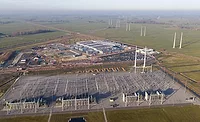
Substation expansions and transmission upgrades often hinge on interconnection and system planning studies—work that firms like GDS Associates perform and that Littlejohn & Co. is backing through its new investment partnership.
As interconnection queues lengthen timelines for power plants, substations and transmission upgrades, private equity firm Littlejohn & Co. is investing in GDS Associates Inc., a consulting firm whose planning and regulatory work often determines when those projects move into design and construction.
The partnership, announced March 5, pairs the Greenwich, Conn.-based investment firm with the Marietta, Ga.-based advisory firm as utilities face rising electricity demand and growing pressure to move projects through the interconnection process.
The transaction has closed according to a company spokesperson who declined to disclose the ownership structure or size of the investment.
Littlejohn said the partnership will support expanding GDS’ capabilities and pursuing acquisitions to build a broader platform spanning “consulting, planning, engineering and field services.”
GDS employs about 200 professionals and advises electric cooperatives, municipal utilities and investor-owned utilities on power supply planning, transmission and interconnection studies, load forecasting and regulatory strategy.
Interconnection Queues Lengthen Timelines
The investment comes as interconnection backlogs continue to shape when generation, transmission and substation projects reach construction.
Lawrence Berkeley National Laboratory reported that, as of the end of 2024, nearly 2,300 gigawatts of generation and energy storage capacity were actively seeking connection to the U.S. grid.
Looking for quick answers on construction and engineering topics?
Try Ask ENR, our new smart AI search tool.
Ask ENR →
Berkeley Lab describes “interconnection queues” as the lists of proposed power plants required to undergo impact studies to determine what transmission equipment or upgrades may be needed before projects can connect and assign the costs of those upgrades.
In its Queued Up 2025 edition, Berkeley Lab reported about 10,300 projects seeking interconnection, representing roughly 1,400 GW of generation and 890 GW of storage capacity.
The report also found that 408 GW of capacity already has a draft or executed interconnection agreement but has not yet reached commercial operation.
For regions with available data, Berkeley Lab said the median duration from interconnection request to commercial operation has doubled from under two years for projects built in 2000–2007 to more than four years for those built in 2018–2024.
For contractors and designers, those timelines often determine when substation expansions, transmission upgrades and related protection-and-control work reach the bid-ready design stage.
Federal regulators have tied interconnection reforms to the backlog that emerged earlier in the decade.
In an explainer on its rulemaking, the Federal Energy Regulatory Commission stated that, at the end of 2022, there were more than 10,000 active interconnection requests nationwide, representing over 2,000 GW of potential generation and storage capacity, and that 68% of the 2,179 interconnection studies completed that year were issued late.
FERC’s rule overhaul requires transmission providers to evaluate projects in “cluster studies,” adds penalties for missed study deadlines and strengthens financial readiness and site-control requirements intended to reduce speculative projects in queues.
One example of how grid operators are responding to rising demand comes from PJM Interconnection, which said March 2 it filed proposals at FERC aimed at addressing a supply-demand imbalance it said was “largely driven by data center growth.”
Among the proposals is an expedited interconnection track for certain generation projects. PJM said it would select no more than 10 projects per year over the next two years and expects the study process to take about 10 months. Developers would also be responsible for 100% of network upgrade costs needed to connect.
RELATED
Enbridge Launches Construction of $450M Line 5 Relocation in Northwestern Wisconsin
Expanding Design and Field Services

Michael Kaplan, managing director at Littlejohn & Co. (left), and David Brian, president of GDS Associates. The firms announced a partnership aimed at expanding consulting, planning and engineering services for electric utilities.
Images courtesy of Littlejohn & Co. and GDS
For GDS, the investment is intended to expand both capacity and services.
“We need more bandwidth in a lot of areas. Need more capacity in a lot of areas,” said David Brian, president of GDS Associates. “We’ve got certain parts of our firm that are stretched pretty thin right now, and this partnership is going to help us with some of the hiring that’s going to be required to meet existing demand.”
Brian said the firm also intends to broaden its technical offerings.
“We’ve got some services that we don’t provide to clients currently that we’d like to be able to provide the clients, and we don’t have those in house … things like substation design, transmission design,” he said, adding that the partnership will allow GDS “to go chase, probably some acquisitions on that side, to bring those service lines in house and be able to offer those clients as well.”
A company spokesperson said “field services” in the announcement refers to field design, line staking and inspection work.
Michael Kaplan, managing director at Littlejohn, said the firm’s investment thesis was based on long-term growth drivers in the electricity sector.
“We evaluated all those drivers … and frankly, we wanted to have the broadest exposure so to make sure that we were sitting behind durable, secular trends and not singular trends that were subject to cyclicality,” Kaplan said.
Kaplan described Littlejohn’s role as joining GDS’ existing partnership structure.
“GDS is a partnership … and we have become an equity partner, so we have joined the table as an equity partner with the other partners in GDS,” he said. “We’re joining the board … and we will collectively bring in some independent directors.”
RELATED
Municipal Water and Sewer Capacity Constrain DHS Detention Buildouts
A company spokesperson confirmed that Littlejohn will have representation on the board alongside GDS leadership and independent directors.
The firms said the near-term focus will be expanding capabilities and pursuing acquisitions where appropriate.
“What is for sure is GDS will hire more good people,” Kaplan said, adding that acquisitions remain “a little bit of an opportunistic endeavor.”
GDS has expanded through acquisitions before. In 2020 the firm acquired EES Consulting Inc., a Kirkland, Wash.-based firm, which it said helped expand its national presence and service offerings.
Separately, the American Public Power Association’s supplier directory describes GDS as a multi-service engineering and consulting firm serving electric, natural gas and water utilities, including transmission planning, NERC compliance and distribution system planning.
Littlejohn said it manages approximately $9 billion in regulatory assets under management. AEC Advisors and Environmental Financial Consulting Group acted as financial advisers to Littlejohn, while Morrissey Goodale served as exclusive financial adviser to GDS.

Bryan Gottlieb is the online editor at Engineering News-Record (ENR).
Gottlieb is a five-time Society of Professional Journalists Excellence in Journalism award winner with more than a decade of experience covering business, construction and community issues, including finance, law and real estate. He has reported for Adweek and the San Diego Daily Transcript and led a community newsroom in Santa Monica, Calif. He served as editor-in-chief of the Detroit Metro Times and as managing editor at Roofing Contractor, where he helped shape national industry coverage. At Engineering News-Record, Gottlieb covers breaking news, large-scale infrastructure and megaprojects, regulatory developments and business trends across the U.S. and global construction sectors.
email: gottliebb@enr.com | office: (248) 786-1591