Energy
Trump Admin Quietly Pushes Rule to Reverse Mandated Power Plant Emissions Cut
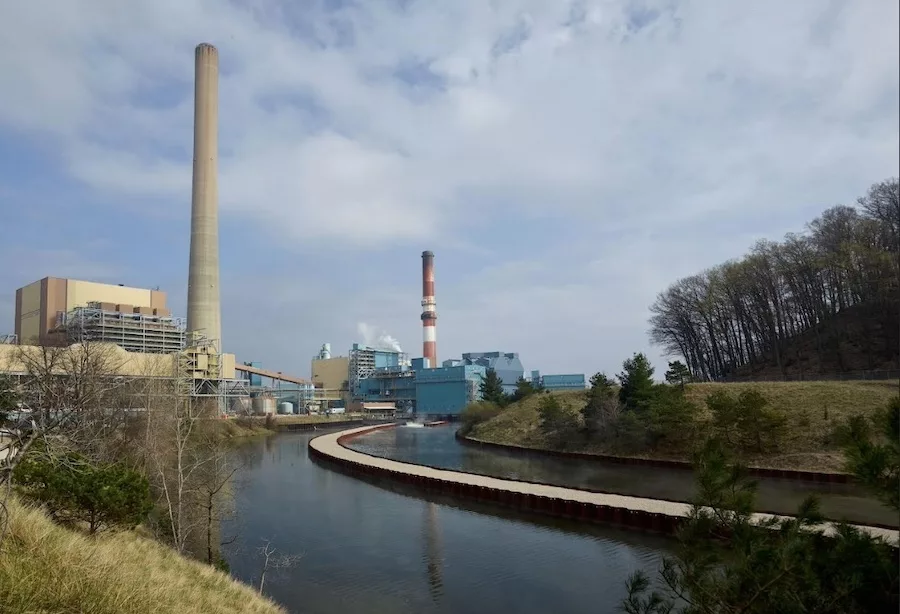
U.S. Energy Dept. new order also directs the 1.5-GW JH Campbell coal fired power plant in Michigan to remain open for 90 days past its intended May 31 retirement.
Image courtesy of Consumers Energy
The Trump administration has taken several new actions in recent days, some with little public notice, to boost fossil fuel power generation in the U.S, particularly from coal-fired plants.
The U.S.Environmental Protection Agency waited until Saturday, May 24 to confirm, several days after an earlier report by the New York Times, that the agency is drafting a proposed regulation to eliminate all current restrictions on greenhouse gas emissions from coal and gas-fired power plants. The report is based on sources and review of internal documents, the Times said.
“Many have voiced concerns that the last administration's replacement for that rule is similarly overreaching,” an EPA spokesperson said. "As part of this reconsideration, EPA is developing a proposed rule." The proposal is set to be published in the Federal Register after White House and federal agencies' review, possibly in June, the spokesperson said. EPA Administrator Lee Zeldin had said in a previous statement that the agency seeks "to ensure [it] follows the rule of law while providing all Americans with access to reliable and affordable energy.”
The draft regulation states that carbon dioxide and other plant greenhouse gases “do not contribute significantly to dangerous pollution” or to climate change because they are a small and declining share of global emissions, according to the Times report, and that cutting emissions would have no "meaningful effect" on public health. The U.S. share of emissions from power generation is just 3% of global pollution, EPA contends. But UN data has found that fossil fuels now account for more than 75% of global greenhouse gas emissions and nearly 90% of CO2 emissions, with the U.S. second to China in level of polluting power plant emissions.
EPA released no further details from the draft rule, with the Times speculating it could be finalized by the end of the year, “an extraordinarily fast pace.”
Supporters are optimistic about the rule, "It is a good step forward in line with the rule of law," Thomas Pyle, president of oil and gas advocacy group American Energy Alliance, told the Washington Post.
But other observers expect lawsuits if and when the rule becomes final and say it could block future administrations from regulating CO2 emissions from power plants and undermine climate change mitigation. Vickie Patton, Environmental Defense Fund general counsel said fossil fuel power plants "are the single largest industrial source of climate destabilizing carbon dioxide in the United States," calling the proposed rule “an abuse of [EPA] responsibility under the law. ... that flies in the face of common sense."
Looking for quick answers on construction and engineering topics?
Try Ask ENR, our new smart AI search tool.
Ask ENR →
'Emergency' Orders
The EPA confirmation followed by one day an ‘emergency order” from U.S. Energy Secretary Chris Wright that directs grid operator Midcontinent Independent System Operator (MISO) and Michigan utility Consumers Energy, to ensure that the 1.56-GW J.H. Campbell coal-fired power plant in West Olive, Mich., "remains available for operation," noting its planned shutdown on May 31, which DOE said "is 15 years before the end of its scheduled design life."
The plant's three units were built in 1962, 1967 and 1980. The site of the plant, the last of the utility's nuclear power facilities, was then set to be cleared. Wright said the closure reversal, now set to last until Aug. 21 but with speculated extension, is authorized under the Federal Power Act and "is in accordance" with the administration's claim of a national energy "emergency."
Wright also announced late on Friday, May 30 another "order" to keep open two units of the Eddystone power plant near Philadelphia that were to retire also on May 31.The 820-MW oil and gas burning facility, owned and operated by Constellation Energy, has functioned since 1960. Two of its units have already closed, with the two new closures involving units operating since 1967 and 1970, says the utility. Wright cited recent statements from regional grid operator PJM Interconnection that its 13-state system faces a “growing resource adequacy concern” from load growth, past power unit retirements and other factors. Constellation had not commented on the order at story posting time.
Michigan utility regulators termed the Campbell plant closure order reversal "unnecessary” and said there is no power emergency in the state or the Midwest region. A Consumers Energy spokesperson said in a statement that the utiity "plans to comply with the 90-day pause [and is] reviewing the executive action and the overall impact on our company.”
The utility had announced in February an agreement with Ashcor USA Inc., a unit of ATCO Ltd., to extract and repurpose millions of tons of impounded coal ash from the J.H. Campbell site to be made into a high-grade cement substitute for concrete production.
Kit Kennedy, power sector managing director at the Natural Resources Defense Council, said keeping the "zombie plants" on line will "increase electricity costs for people in Michigan and Pennsylvania.“ Kennedy termed the Trump directives "a power grab; not a power emergency. These dirty and expensive fossil plants were slated to close because they could not compete with cheaper, cleaner alternatives."
Meanwhile, the Trump Administration moved on May 22 to support a lawsuit filed last year by Texas and 12 other Republican-led states in federal district court in Tyler, Texas, against large private infrastructure investors Blackrock, Vanguard and State Street Global Advsors that claims the firms conspired to reduce competition in the U.S. coal sector, which risks undermining the Trump goal of more fossil fuel power. The U.S. Justice Dept. and Federal Trade Commission filed a statement of interest in the suit that Blackrock and State Street called “baseless.”
President Donald Trump also signed four executive orders to propel a faster buildout of U.S. nuclear power plants, including a directive for the Energy and Defense Departments to construct reactors at military bases, on federal lands and sited near data centers.
The Trump orders also seek strategies for how reactors could be constructed without approval of the federal Nuclear Regulatory Commission, and set a goal to increase U.S. nuclear power generation capacity to 400 GW by 2050, up fourfold from the current 100 GW level that is the output of more than than 90 operating reactors.
The Tennessee Valley Authority last month submitted to the agency the first portion of a construction permit application to build a GE Hitachi BWRX-300 small modular reactor at its Clinch River nuclear site in Oak Ridge, Tenn. If built, the Clinch River unit will serve as a flagship for U.S. commercial deployment of the SMR design, according to TVA.
“The application is essentially the blueprint for the plant’s design and safety systems, and the NRC must approve the plans before construction could begin,” TVA said, noting that it will submit the full construction permit application by the end of June.
TVA has contracted Bechtel, Sargent & Lundy and GE Hitachi as its team to plan, design and potentially procure, construct and commission Clinch River Unit 1, the companies said. GE Hitachi is the designer of the BWRX-300 system.