Power
Equinor Pushes Back on Trump Admin Halt of $5B NY Offshore Wind Project
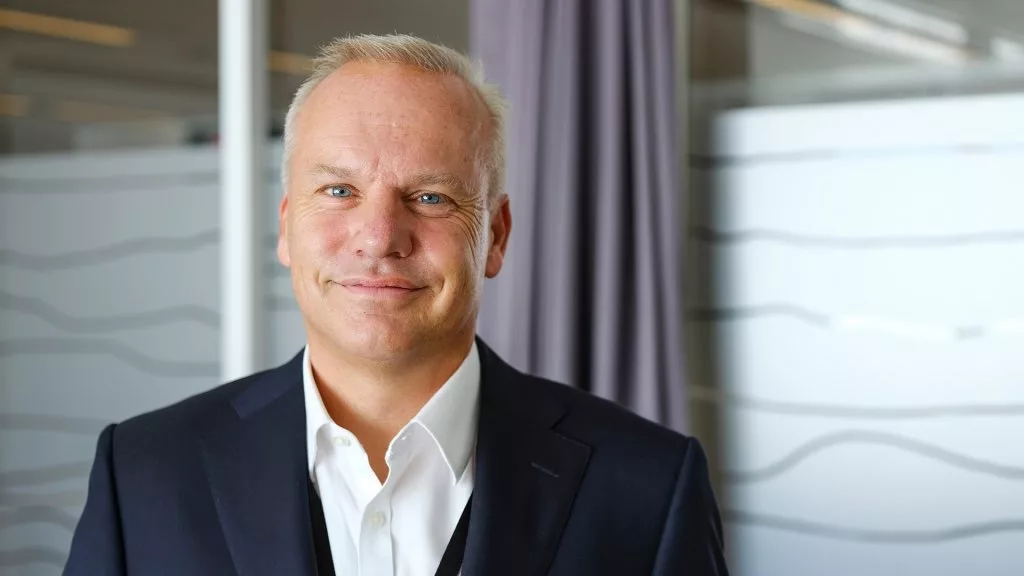
Anders Opedal, CEO of Norway-based offshore wind developer Equinor, is weighing legal action against the federal government for ordering building of the $5-billion Empire Wind project off the New York coast to stop.
Photo: Courtesy of Equinor
Top executives of Norway-based energy developer Equinor are responding strongly—including expressing intent to sue the government—after the Trump administration halted construction of the estimated $5-billion Empire Wind offshore wind energy project off New York’s coast, claiming need for further “review” of the fully permitted project.
“We have invested in Empire Wind after obtaining all necessary approvals, and the order to halt work now is unprecedented and in our view unlawful,” company CEO Anders Opedal told investors and analysts April 30 on its first-quarter results conference call, although it is complying with the shutdown order. “This is a question of the rights and obligations granted under legally issued permits, and security of investments based on valid approvals.”
Empire Wind, which was fully permitted last year by the Biden administration and the state, is set to have 54 turbines located on an 80,000-acre site about 15-30 miles southeast off Long Island. With an 810-MW capacity, it would power as many as 500,000 homes via underwater cables connecting to a substation in Brooklyn, N.Y., Equinor says.
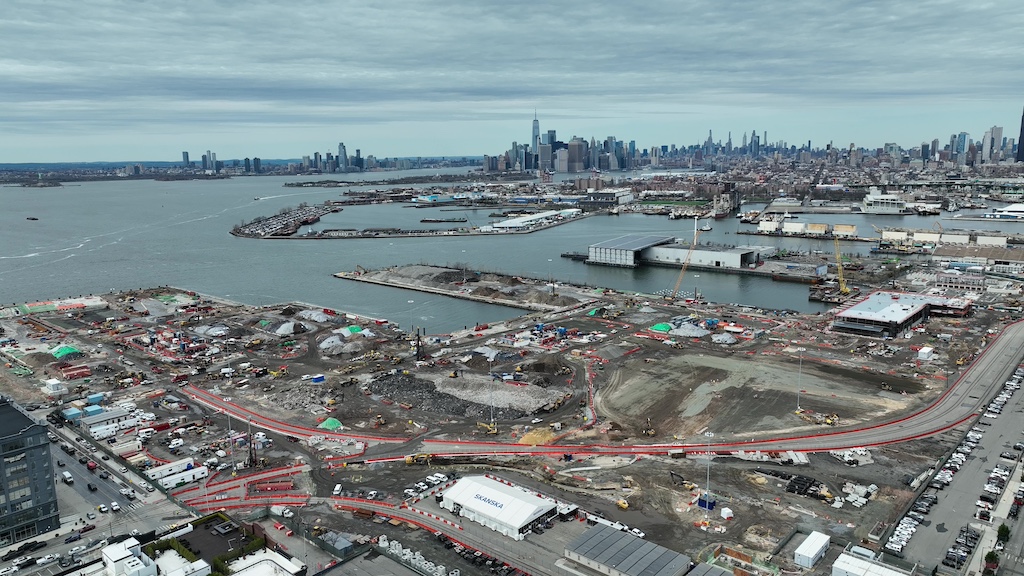
Project staging area construction in Brooklyn, NY led by Skanska USA is more than 50% complete, with offshore work now getting underway.
Courtesy of Equinor
The Equinor strong pushback comes as another closely watched US offshore wind project—the much larger 2.6 GW CVOW off the Virginia coast that is more than 55% complete in installing its 176 turbines—does not expect a stop-work order, Bob Blue, CEO of its owner Dominion Energy, told investors on May 1.
But Blue reported that the more than $10-billion project incurred $4 million in extra costs in Q1 as a result of Trump-imposed tariffs on its foreign-made components and materials, which could rise to $123 million in Q2 if the current policy continues and to as much as $500 million if still imposed by the end of 2026, when CVOW is set to operate.
The CEO also stressed that the tariff impact is accentuated by “ongoing uncertainty” over policy and “actual costs incurred are dependent upon the tariff requirements and power rates, if any, at the time of delivery of the specific component.”
'Federal overreach?'
The U.S. Interior Dept. on April 16 ordered the Empire project halt, claiming more review of the project's environmental impacts was needed, but with no timeframe or scope for the analysis revealed. The move was condemned as "federal overreach" by New York Gov. Kathy Hochul (D) but was praised by some state Republican officials. Even so, Iowa Senate Republican Chuck Grassley who authored the federal wind production tax credit in 1992, on April 30 defended federal support for the sector. Onshore wind energy provides more than half of the state's power.
Looking for quick answers on construction and engineering topics?
Try Ask ENR, our new smart AI search tool.
Ask ENR →
Equinor said the Empire Wind project, which got underway last year with construction by Skanska of its onshore staging terminal in Brooklyn, is 30% complete.
"Empire is complying with the order affecting project activities for Empire Wind. Upon receipt of the order, immediate steps were taken by Empire and its contractors to initiate suspension of relevant marine activities, ensuring the safety of workers and the environment," Equinor said in a statement, adding that it now is determining "impact on the project and project financing," but also said it "wiill be exposed to termination fees toward its suppliers." The firm estimated its further exposure at $1.5 billion to $2 billion.
"This shortsighted decision to stop work on Empire Wind 1 ... doesn’t just halt the completion of a project already under construction. It halts the production of reliable, domestic energy at a time of increasing energy demand and skyrocketing electricity rates," says Robert Freudenberg, vice president of the NYC area Regional Plan Association, also terming the action "myopic" and with "dubious reasoning."
He emphasizes the "emerging pattern ... where this administration believes it can retroactively deny permits that have been lawfully vetted and approved." If the actions stand, "it raises the specter that no federal approval is ever final, but can be subject to arbitrary revocation, even years after it had been given and the works are underway," Freudenberg says. "This would undermine the entire environmental review process, creating chaos in permitting, planning and construction of vital infrastructure across the country."
"We have invested in Empire Wind after obtaining all necessary
approvals, and the order to halt work now is unprecedented and in our
view unlawful.”
Anders Opedal, CEO, Equinor
Equinor Chief Financial Officer Torgrim Reitan said the suspension was “extraordinary” for a company that has invested $60 billion in oil and gas in the U.S. since 2000. “Equinor invested in good faith,” he told investors. “This is now about the sanctity of contracts … and the security of investments.”
Reitan said it is “a matter of urgency that the administration clarifies its position, given the delicate position of Empire Wind, which has a full roster of suppliers lined up” to build and equip it.
“This project is in a critical phase,” Reitan told financial analysts. “We are about to start the offshore installations, and the installation window is now.” An Equinor spokesperson told ENR that marine developer Maersk is set to install turbines, manufactured by Vestas, with contractor Heerema responsible for monopile foundation installation that would start this year.
Skanska is general contractor for the onshore project scope at the South Brooklyn Marine Terminal, along “with many subcontractors,” the spokesperson said. GE Bond is responsible for onshore substation work at the terminal, with work about more than 50% complete. “Construction on the project has put more than 1,500 people to work in the U.S. so far,” he said. The project's investment value has reached about $2.5 billion as of March 31, said Equinor on the call.
The Empire Wind project will be the first offshore wind project to deliver power directly to New York City, linking at the Brooklyn substation located next to the terminal and continuing to the Gowanus Brooklyn substation, where it would connect into the city grid.
Forward Uncertainty
“We have been clear this is urgent, we have little time. The construction schedule is sensitive to contractor availability [and] the weather window,” said CFO Reitan. “This depends on project finance to work and as you well understand, lenders are very uncertain about the way forward. We have always assumed the U.S. will honor contracts.”
Meanwhile, Leslie Beyer, a former oil and gas lobbyist and Trump nominee for Interior Dept. assistant secretary set to run the agency that regulates offshore wind permits, the Bureau of Ocean Energy Management, said at her Senate confirmation hearing April 30 that voiding already-granted permits sends “a dangerous message to the investment community" in response to a question from Sen. Angus King (D-Maine).
Another senator warned that the Empire Wind suspension threatened to “squash any faith” the private sector has in the US federal permitting system, whether for wind projects or others, said industry publication Recharge. Beyer, former CEO of the Energy Workforce & Technology Council, also would run the Bureau of Land Management; Office of Surface Mining, Reclamation and Enforcement and the Bureau of Safety and Environmental Enforcement.
"Lenders are very uncertain about the way forward. We have always assumed the U.S. will honor contracts. This project is in a critical phase. We are about to start offshore installations, and the installation
window is now.”
Torgrim Reitan, CFO, Equinor
Philip Totaro, CEO of energy sector analysis firm InelStor LLC, told ENR that with the Empire Wind project halted, “litigation may be the only way to resolve the matter.”
He contends that “the suggestion that the project development or environmental review process was ‘rushed’ is a blatant excuse to use a seemingly legitimate process to pull federal permits for offshore wind projects that were already issued by the previous administration,” adding that “this federal review of permits for all offshore wind farms in the USA, and the halting of Empire Wind 1 is nothing more than highway robbery being disguised as judicious policymaking.”
Added Totaro: “These companies have paid hundreds of millions of dollars in some cases for lease rights, and they are now likely to have to litigate to build their own projects. This is a nonsensical waste of time and resources, especially at a time when the U.S. is supposedly in the midst of an ‘energy emergency.’”
Opedal said Equinor may book an impairment loss in the second quarter as a result of the U.S. government order, although it reported a stronger-than-expected rise in its first-quarter operating profit, boosted by a jump in European gas prices, Reuters reported. The CEO also said on the firm's fourth quarter 2024 earnings call that it is “high-grading its investment portfolio, reducing the investment outlook for renewables and low carbon solutions."

.webp?height=200&t=1768778145&width=200 "Empire-Wind")
.webp?height=200&t=1766484839&width=200 "Wind-Farm-Pause-(2)")