Government
EPA Rolls Back Pollutant Rules for Mercury and Air Toxins in Power Plant Emissions
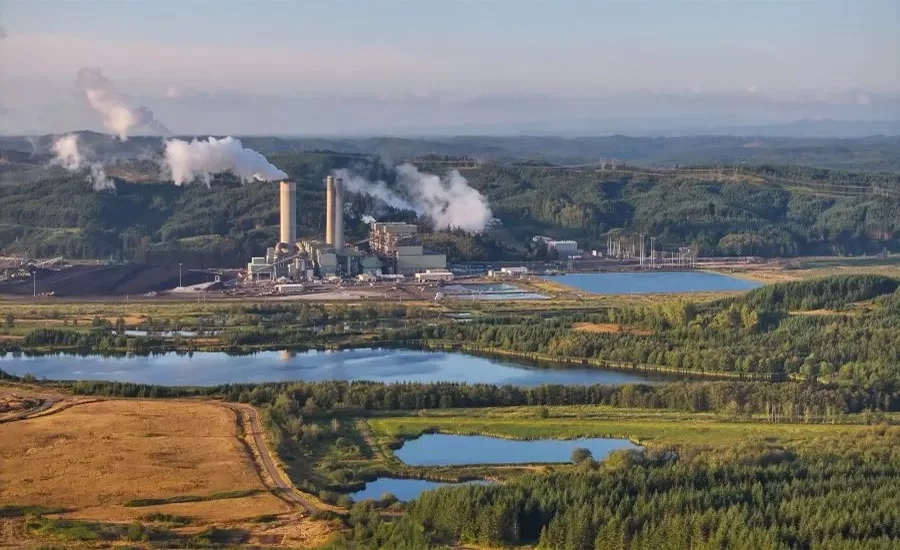
Transalta 730-MW coal-fired power plant in Centralia, Wash., is one of a handful of aging U.S. facilities ordered by the Trump administration to stay open beyond their useful life.
As part of the Trump administration’s continuing push to boost U.S. coal production and use as an energy source, the U.S. Environmental Protection Agency has acted on its previously stated intent to roll back emissions standards for mercury and other toxins in air emissions from coal- and oil-fired power generating units.
EPA announced Feb. 20 its repeal of the Biden administration’s 2024 amendments to the Mercury and Air Toxic Standards (MATS), which tightened limits on particulates and mercury in emissions from plants, and ordered that all facilities monitor particulate matter emissions continuously. The final EPA rule reverts to the existing 2012 standard. Other toxins subject to the rule include lead, arsenic, chromium, nickel and cadmium.
EPA says the change will save the power sector $78 million annually through 2037 and described the latest action as part of the administration’s effort to boost domestic fossil fuel energy production.
In a statement praising the new EPA rule, West Virginia Senate Republican Shelley Moore Capito, who chairs the Environment and Public Works Committee, said it “demonstrates" President Donald Trump’s and EPA Administrator Lee Zeldin’s "support of the affordable and reliable electricity that coal provides.”
But environmental groups note that the 2024 rules were due in part to technology advancements that allowed the vast majority of operating coal plants to cost-effectively reduce emissions of mercury, lead and other cancer-causing toxins.
Hayden Hashimoto, attorney at the Clean Air Task Force, said that the federal Clean Air Act clearly shows that “Congress intended stringent regulation of air toxics emissions—including a prohibition where achievable—not to enable EPA to take the unprecedented action of weakening or repealing standards for favored industries.” He added that executive orders expressing “a naked preference for coal do not justify a rule that contravenes the statute and allows more emissions of hazardous air pollutants into the air.”
The new rule also grossly underestimates the public health harms related to repealing the 2024 changes, said Julie McNamara, associate policy director of the Union of Concerned Scientists' climate and energy program. “In attempting to justify this indefensible broadside against public health, EPA Administrator Zeldin is now actively hiding from the public massive health harms associated with this repeal. But hiding the data won’t hide the facts.”
Looking for quick answers on construction and engineering topics?
Try Ask ENR, our new smart AI search tool.
Ask ENR →
Trump administration officials have made clear their desire to keep older, less efficient coal plants operating in lieu of cleaner sources of energy, such as offshore wind and other renewables, claiming the need for those facilities to meet growing power demand from data centers and other users..
On Feb. 11, Trump signed an executive order directing the U.S. Defense Dept. to procure power at military facilities from coal producers through long-term purchase power agreements, with more than 40 coal-burning plants located 100 miles or less from domestic installations , according to America’s Power, a sector trade group, told The New York Times.
But the order included no implementation details, with a Feb. 13 Fox News report noting issues related to existing facility transmission links. "A broader effort to use military purchasing power to sustain multiple commercial coal plants would likely require substantial funding, careful contract structuring and congressional backing," the report said.
The U.S. Energy Dept. is set to award $175 million to upgrade six coal power plants in Kentucky, North Carolina, Ohio and West Virginia. The facilities include the coal and gas-fired Belews Creek Steam Station in Stokes County, a 2.2-GW, two-unit Duke Energy plant operating since 1974 that was set to retire in 2039 but now could gain $34 million in federal funding to upgrade. The company had cited changing fuel prices and mandates to close coal ash storage sites in causing frequent changes in plant use trends in the last decade that hastened the retirement decision, a local publication reported. “Frequent cycling of coal units has increased maintenance costs, as these units were not designed for such operations,” the report said.
Also, the board of large federal power producer Tennessee Valley Authority voted unanimously on Feb. 11 to keep on line two large coal burning plants, the 1.4-GW Kingston Fossil Plant built in 1955 and the 2.4-GW Cumberland Fossil Plant built in 1973, both in Tennessee. They had been set to close in 2027 and 2028, respectively, but will continue operating next to new natural gas plants, each 1.4 GW, now being developed on their sites.
The reversal follows a major board shift last year, after Trump removed three Democratic members and replaced them with four Republicans, who the U.S. Sentate confirmed in December members. Despite TVA's effusive defense for the reversal in its announcement, citing Trump's "energy emergency" declaration and growing regional power needs, the President described TVA in White House comments as having gone in "a very bad, very stupid" direction in the original closure decision.
The Kingston plant was the site of a catastrophic 2008 collapse of a coal ash disposal structure that released 5.4 million cu yards of toxic slurry into surrounding land and water areas, resulting in more than $1.7 billion in damages and costs.The incident triggered tougher rules on coal ash disposal safety and closure of unllined ponds originally by 2021, but legal rulings extended the deadlines, and last month EPA said closures of unlined ponds larger than 40 acres have three more years, until October 2031, to complete.
Meanwhile, the Energy Dept. has been issuing "emeregency" orders since spring 2025 for other coal-fired plants—in Indiana, Michigan, Washington state and Colorado—to stay open or reopen in 90-day increments past announced closure dates—despite poor plant economics and operability problems, state and owner statements of regional power adequacy, delayed or halted maintenance and lack of access to coal.
Most recently, owners of Colorado's 446-MW Craig Plant in Westminster announced Jan. 29 that they have filed for a rehearing of the Energy Dept. order, claiming it amounts to a "physical and regulatory taking" of their property, which was set to be retired on Dec 31, 2025, and violates the U.S. Constitution and federal law.
Washington state Attorney General Nick Brown and a coalition of environmental and public interest groups did likewise on Jan. 14, in separate filings, on behalf of the 730-MW Centralia coal-fired plant in Washington, for which a $600-million makeover to natural gas was starting up after its also announced Dec. 31 retirement.
Brown termed the department's action an "illegal, clumsy emergency order forcing a decommissioned coal power plant back into production despite not having the staff, buyers or coal for such work." He added: “We will take every step necessary to undo this unwanted and unworkable order.”