Government Regulation
FERC Orders Grid Operators to Rework Data Center Power Rules
Orders require six regional grid operators to defend or change tariffs governing large users’ access to the US transmission system
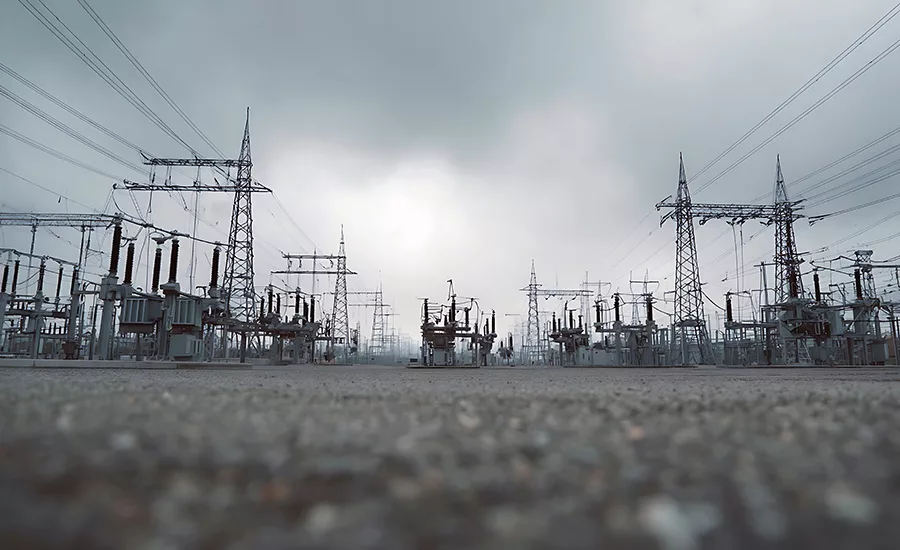
The Federal Energy Regulatory Commission on June 18 ordered six regional grid operators to justify or revise rules governing how data centers and other large power users connect to the transmission system amid rising electricity demand.
The Federal Energy Regulatory Commission (FERC) on June 18 ordered the nation's six largest U.S. regional grid operators to justify—or revise—rules governing how data centers, manufacturing plants and other large energy users connect to the electric transmission system, the agency's latest move to address surging power demand tied to artificial intelligence and industrial growth.
In a unanimous vote, the agency's five commissioners voted to issue tailored "show-cause" orders to PJM Interconnection, Midcontinent Independent System Operator, Southwest Power Pool, California Independent System Operator, ISO New England and New York Independent System Operator.
The agency said the action is intended to speed integration of large loads while protecting existing customers from cost shifts and reliability risks.
But the orders do not apply to the fast-growing data center hub in Texas, which operates a grid outside of federal jurisdiction. However, on June 18, the state Public Utility Commission approved transmission provider ERCOT's "Batch Zero" program, under which large-load customers would be reviewed in groups rather than individually, with reports noting potential of 100 GW of "mature" projects. The change takes effect on July 10, with the first group set to gain grid connection study results by the end of January.
FERC stated that operators and transmission owners under its jurisdiction must either explain why existing tariffs remain just and reasonable or propose revisions addressing concerns identified by the commission.
The agency directed responses within 60 days and ordered grid operators to submit resource adequacy reports within 30 days, describing how they plan to ensure sufficient generation to meet existing and future large loads.
The commission identified five areas for potential reform: transmission service application and study processes, including consideration of alternative transmission technologies; measures to prevent cost shifting and improve transparency; co-location arrangements and behind-the-meter generation; new transmission services for flexible large loads; and processes for studying generation facilities serving electrically proximate large loads.
Looking for quick answers on construction and engineering topics?
Try Ask ENR, our new smart AI search tool.
Ask ENR →
FERC noted efforts already underway by some regional grids to fast-track large loads such as two Southwest Power Pool processes to support major new demand and overall reliability.
"We are setting the stage for a resilient, reliable and forward-thinking grid that empowers communities and safeguards consumers by transforming the way large energy users access the grid," FERC Chairman Laura Swett said in a statement.
“This really pushes all the ISOs and RTOs to be more productive … and gives the hyperscalers far more clarity," energy entrepreneur Jigar Shah, also the former Biden-era Energy Dept. Loan Programs Office director, told Energy Central. “We wanted to see the hyperscalers start being better grid citizens, which is what this FERC order requires them to do.”
Regulating 'Unprecedented' Investment
The action stems from a rulemaking effort launched after Energy Secretary Chris Wright directed FERC in October 2025 to consider reforms aimed at ensuring timely and orderly interconnection of large loads, including AI data centers.
Wright argued that growing electricity demand from AI and domestic manufacturing would require unprecedented investment in the nation's transmission system and warranted federal action.
According to FERC, electricity demand growth is being driven in large part by rapid expansion of data centers and other large commercial and industrial loads. The commission's presentation accompanying the orders cites unprecedented demand growth and the challenges grid operators face in accommodating large-load connections while allocating costs fairly.
FERC said the orders affect regions serving about 200 million Americans across more than 30 states and the District of Columbia. The commission emphasized that the action is tailored to individual regional markets rather than imposing a single nationwide framework.
The orders do not assert federal jurisdiction over retail electric rates, terms or conditions, an issue that drew significant attention during the rulemaking process. Instead, the commission focused on transmission-level rules governing large-load integration and related planning processes.
Noted Rob Gramlich, president of market consultant Grid Strategies, the FERC orders are “right up to the line” of agency jurisdiction, stopping short of what Wright had proposed.
But Swett emphasized that FERC is "under no illusion" that large-load issues are limited to the RTO/ISO regions of the country, encouraging stakeholders elsewhere to report "barriers to entry," she noted, with the order intended to encourage, not constrain new approaches.

Bryan Gottlieb is the online editor at Engineering News-Record (ENR).
Gottlieb is a five-time Society of Professional Journalists Excellence in Journalism award winner with more than a decade of experience covering business, construction and community issues, including finance, law and real estate. He has reported for Adweek and the San Diego Daily Transcript and led a community newsroom in Santa Monica, Calif. He served as editor-in-chief of the Detroit Metro Times and as managing editor at Roofing Contractor, where he helped shape national industry coverage. At Engineering News-Record, Gottlieb covers breaking news, large-scale infrastructure and megaprojects, regulatory developments and business trends across the U.S. and global construction sectors.
email: gottliebb@enr.com | office: (248) 786-1591


.webp?height=200&t=1763376409&width=200 "Oil-Permian-Basin-(2)")