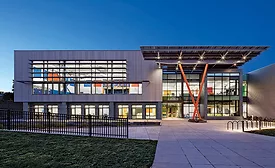
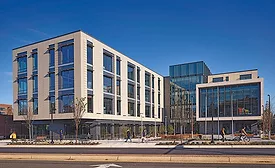
The effort to create Washington, DC’s first Net Zero Energy school was a lesson in perseverance, as the project team faced COVID-related material shortages and absenteeism, and permitting delays that shrank the original nearly two-year-long baseline schedule to just sixteen months.
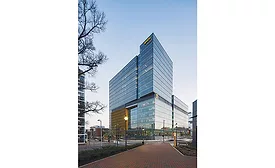
This project involved a significant design challenge: converting three floors in a César Pelli-designed office building with 13-ft floor-to-floor heights and deep steel girders into state-of-the art labs.
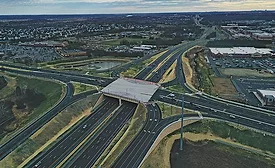
The $60-million interchange project was designed to combat traffic congestion, boost safety and enable pedestrians and bicyclists to move more freely along Battlefield Parkway in Leesburg.
The twin spans of the Delaware Memorial Bridge were showing their age by 2018, with more than 1 billion cars and trucks having rolled across their decks since the first span opened in 1952.
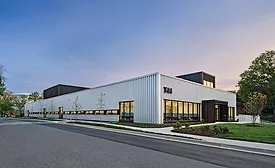
The project provides research space for the National Institute on Aging. The design included single-story modular construction with open concept labs to reduce costs and maximize available space on the $33.7-million project.
This new building, replacing an old city hall, plays a key role in College Park’s downtown revitalization. It’s the first ever joint space for both a city hall and for university offices, the team says.
Though W.M. Jordan Co. had no opportunity for preconstruction services or constructibility analysis on the National Aeronautics and Space Administration’s Langley Research Center Measurement Systems Lab project, the team found ways to save millions of dollars while also enabling the agency to add scope to the project.
 RSS
RSS