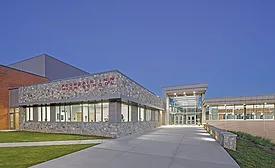
When students and parents enter the new 230,000-sq-ft building, they’re met by spaces for computer-controlled machinery, robotics, metalworking, mechatronics and engineering—all of which highlight the school’s advanced manufacturing curriculum based on science, technology, engineering, arts and math (STEAM) concepts.
A fixture in the heart of Atlanta’s Buckhead district since the 1950s, Pace Academy has been transformed by a three-story, 36,500-sq-ft addition that contains two music rooms, science and makers classrooms, administrative offices and gymnasium.
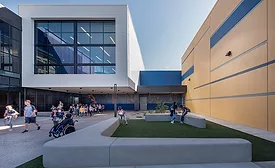
Serving 500-plus students in fast-growing Buckeye, west of Phoenix, the $25.5-million K-8 school is organized with three learning communities operated along traditional age-based grade bands, but the floorplan can flex to an ability-based cohort involving teacher-facilitated learning.
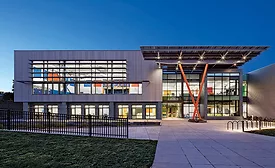
The effort to create Washington, DC’s first Net Zero Energy school was a lesson in perseverance, as the project team faced COVID-related material shortages and absenteeism, and permitting delays that shrank the original nearly two-year-long baseline schedule to just sixteen months.
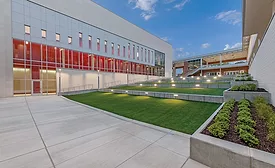
Built as part of a master plan to renew the 99-year-old Santa Monica High School campus, this 260,000 sq-ft facility includes a five-story education building, two levels of subterranean parking, aquatic center with an Olympic-sized pool, rooftop solar and more.
The 10,000-sq-ft addition to the K-8 independent school includes a variety of unique learning areas for visual arts, robotics and innovation and performing arts, including a 250-seat performance space.
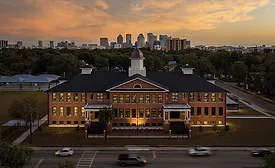
Tasked with rebuilding a historic Tampa elementary school that was nearly destroyed in 2017 by the one-two punch of Hurricane Irma and ensuing fire, contractor JE Dunn Construction Co. and architect Fleishman Garcia began a painstaking effort to revive the early 1900s-era brick building into a modern facility.