Government
High Court Rules President Can Remove Commissioners and Officers of Independent Agencies
Trump vs. Cook ruling repeals 1935 Humphrey's Executor decision for everything but the Federal Reserve

President Trump fired three National Labor Relations Board personnel, including member Gywnne Wilcox, above, in January. On June 29, the US Supreme Court affirmed those terminations.
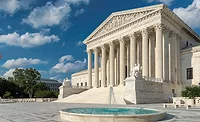
The U.S. Supreme Court on June 29 overturned a 91-year-old precedent known as Humphrey's Executor vs. United States, which prevented presidents from removing sitting members of independent boards or commissions within the federal government.
Rebecca Slaughter, one of two Federal Trade Commissioners fired by Trump early in his second term, will now not return to her post. Justices ruled that President Donald Trump or any future president may remove members of independent agencies or commissions for any reason involving an administration's ability to work with sitting officers at the top of these entities. The ruling in Slaughter v. Trump, is the latest in a series of opinions that involved the current court overturning precedent it ruled had either been wrongly decided or incompatible with established law, as in the Loper Bright Enterprises vs. Raimondo ruling in 2025.
"The President must have the assistance of officers he can trust," wrote Chief Justice John Roberts in the 6-3 majority opinion. "Although it is up to the Senate to decide whether to confirm those with whom the President would prefer to work, neither Congress nor the courts may saddle him with those with whom he cannot work. Subordinates who exercise the President’s power are subject to removal by him. Then, and only then, can they remain accountable to the President, and the President to the people."
While the decision represents a significant win for the Trump administration and a major expansion of presidential control over parts of the federal apparatus once deemed apolitical or beyond anything but "for cause removal," the justices in Trump vs. Cook made an exemption for Lisa Cook and other members of the Federal Reserve, citing the need to preserve the Fed's independence from political pressures in setting monetary policy.
Roberts and the concurring majority said that power did not extend to Cook and the Fed but, in a lengthy, explanation, said that it would be up to Congress to pass rules governing appointments and removals of the monetary policy board. The ruling gives wide deference to Trump and future presidents regarding commissions and boards such as the Federal Trade Commission, Federal Energy Regulatory Commission, Surface Transportation Board (which overseas much of the U.S. rail system), Merit Systems Protection Board, Consumer Financial Protection Bureau and even the National Labor Relations Board. The latter is where Trump previously removed democrat-appointed members of the board and those temporary removals now become permanent.
The Associated General Contractors of America and Associated Builders and Contractors both declined to comment on the ruling although AGC said it was pleased its members were provided clarity about whether entities such as the National Labor Relations Board are functions of, or independent of, the executive branch. North America's Building Trade Unions, which had opposed the board removals when they happened did not immediately respond to requests for comment.
The majority opinion also left open the possibility that Cook or other Fed board members could be removed, but that any change in the way members are appointed or removed must come from congressional action. "Any change in that scheme must come from Congress, not the courts," Roberts wrote.
Looking for quick answers on construction and engineering topics?
Try Ask ENR, our new smart AI search tool.
Ask ENR →