Water Infrastructure
PFAS, Project Funding Are Key Woes as Drinking Water Providers Convene
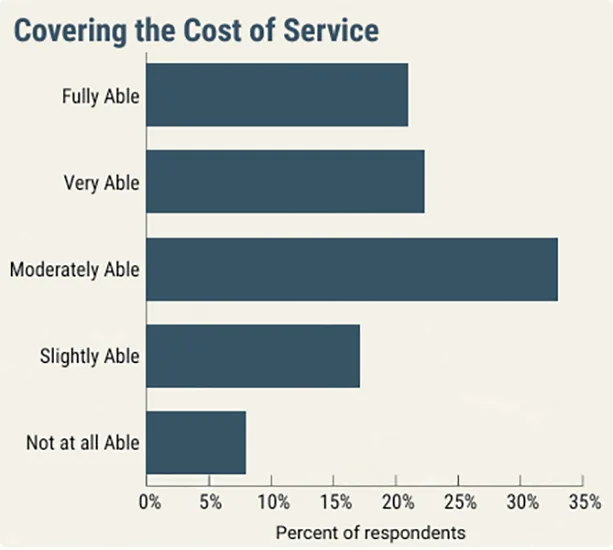
Many drinking water utilities feel unprepared and inadequately resourced to meet the enormous need for new or upgraded infrastructure, according to new survey of American Water Works Association members.
Identifying some best approaches to treat ‘forever’ chemicals known as PFAS, as well as sources of treatment project funding, were top of mind for drinking water utility managers at the American Water Works Association's ACE 26 meeting in Washington, D.C., June 22-24.
Attendee discussions came during an active week as the U.S. Environmental Protection Agency took regulatory and legal steps to provide direction and funding relating to emerging contaminants in drinking water systems.
Water utilities and their consulting services firms described an environment where already cash-strapped agencies are buckling under competing demands—retrofitting existing infrastructure that is well beyond its sell-by date; complying with requirements of the 2021 Revised Lead and Copper Rule; and monitoring for PFAS as well as planning capital programs to expand or build new facilities to reduce levels of perfluorooctanoic acid (PFOA) and perfluorooctane sulfonate (PFOS) to permissible limits under current drinking water standards.
In its annual State of the Industry Report, AWWA said utilities need between $2.1 trillion to $2.4 trillion for new and upgraded infrastructure between now and 2050—a gap of $56.6 billion between what is currently spent each year and what is needed.
Incoming association President Brent Tippey, East region drinking water lead for engineering consultant HDR, said funding is the number one concern its utility members cite when surveyed. “Whether it's PFAS as an emerging contaminant or whether it is aging infrastructure that is becoming more vulnerable, they need additional revenue,” he said in an interview with ENR. Utilities need both long-term financing and grant funding to be able to pay for what’s needed to avoid pushing rates beyond what customers can pay, he said.
Tippey began his term as president of the 50,000-member drinking water group on June 24.
Jess Kramer, EPA assistant secretary for the Office of Water, told conference attendees that over the next few years, her office plans to “cut red tape … [and] figure out how to streamline getting the dollars out the door that are so fundamental to addressing the aging infrastructure that's facing this country."
Looking for quick answers on construction and engineering topics?
Try Ask ENR, our new smart AI search tool.
Ask ENR →
She said the agency will "work with our partners in the states to make sure that [funding] is getting out the door, and then we're going to work with the communities, and we're going to work with the systems to understand the challenges that they're facing.”
Kramer said federal funds are going unspent in several states where it has been targeted. Within the state revolving fund (SRF) loan program alone, $14.8 billion remains “uncommitted,” she said, based on an internal analysis, according to EPA. “Those are dollars that have been sitting unobligated to a project for over a year. That is lost money, that is true tangible work in a community, whether it's building new infrastructure, capital investments or return to compliance,” Kramer said.
In a June 6 blog post, the Maryland-based Environmental Policy Innovation Center cautioned against using the level of uncommitted funds as a rationale for EPA requesting fewer dollars in its annual budget requests, as the agency has done for the SRF program in 2026 and 2027.
The center’s own analysis suggests that some states with more resources consistently commit nearly all available funding. But others “face administrative, staffing, technical assistance, or demand-related challenges. This variation suggests the issue is not the SRF model itself, but differences in implementation and capacity," the report contends. "States that utilize set-asides and invest in technical assistance, have adequate staffing, promote streamlined application processes and provide proactive community outreach tend to move funding more quickly.”
PFAS Extension Does Not Apply to All Utilities
Many utilities are uncertain how to proceed following EPA’s announcement May 20 that it would extend the compliance deadline for meeting maximum contaminant levels of 4 parts per trillion of PFOA and PFOS by two years, from 2029 to 2031.
“I think it left utilities and the industry … with the impression that the extension is going to be a blanket extension, with every single utility eligible for the two-year extension,” Rosa Yu, national PFAS lead at Carollo Engineers, told ENR.
However, the extension does not apply to all utilities, she said. “It’s conditional. It hinges on the state primacy status.” For the handful of states given authority to set and manage their own environmental regulations, utilities could still be required under state regulations to implement drinking water limits, Yu said.
Several sessions and exhibitors at the conference focused on both established and emerging technologies for reducing PFAS levels or destroying it altogether, including reverse-flow reverse osmosis, which reduces the amount of leftover, highly concentrated brine usually associated with conventional RO treatment, said Max Finder, director of U.S. sales for water technology provider ROTEC.
But potential regulation of other emerging contaminants is on the horizon, particularly with microplastics. In a session on the state of research regarding microplastics, consultants stressed how much is unknown and needs to be better understood before constituents can be regulated in a meaningful way, including how to accurately sample and monitor microplastic levels in drinking and wastewater, as well at what levels microplastics begin to negatively impact human health.
“For us in the water industry, and for folks that are plugged in already to the discussion around microplastics from sampling and analytical standpoints, we know very well that there are there is a lot of debate, open debate on microplastics … and so that debate is present as well in the human health space,” said Cayla Cook Carbone, an associate at Hazen and Sawyer who has served as the Water Environment Federation Microplastics Task Force co-chair.
Action at EPA
On June 24, EPA—along with the U.S. Dept. of Justice and the West Virginia Dept. of Environmental Protection—announced a $450-million federal settlement with PFAS manufacturer Chemours. The Dupont spin-off is alleged to have released PFAS into the Cape Fear River in North Carolina, into the Delaware River in in New Jersey and into the Ohio River in West Virginia—in some cases without permits, and in others, in violation of existing permits.
Under the settlement, Chemours will spend over $337 million on injunctive relief, including an estimated $280 million to provide alternative drinking water, $60 million to ensure compliance with the law at its West Virginia facility, and additional funds to ensure compliance at other facilities. Additionally, Chemours will conduct projects under a multi-year, government-supervised $90-million PFAS mitigation program.
Two days lsater, EPA released its proposal for the Sixth Unregulated Contaminant Monitoring Rule (UCMR 6). Contaminants on the list are not currently regulated under the Safe Drinking Water Act, but EPA has identified 30 that it contends should be monitored and made public by community water systems.
This data will help inform future regulatory decisions, according to EPA. Microplastics were not on the list, but several types of PFAS were. EPA will accept public comment through August 11.