Editorials
Inflationary War Shocks and Ruined Infrastructure
“Attacks on critical infrastructure are not only about what is destroyed, but also about the people left without what they need to live. Even wars have limits.”
The Iran war has sent shocks through the world economy, dramatically spiking energy prices and helping drive materials costs 2.2% higher in March, month-over-month, and 4.8% higher than a year earlier.
A survey of 73 economists published April 16 in The Wall Street Journal warns that prolonged conflict in the Middle East will spur higher inflation, slow near-term growth and weaken job creation.
With diplomacy flailing, the survey upped the possibility of an economic recession within the next 12 months—to 33%, from 27%. That’s a worrisomely high percentage. Moreover, these same economists foresee tepid 2% growth in the gross domestic product. Thankfully, economist forecasts often are wrong. Compounding the complications, in a good way, is that Wall Street’s performance remains incredulously strong.
Treasury Secretary Scott Bessent says he’s optimistic that gasoline prices for consumers will return to $3 per gallon by summer. Of course, that assumes a heck of a lot will go right in the next few weeks and months. We hope it does, but that’s bullish, at best.
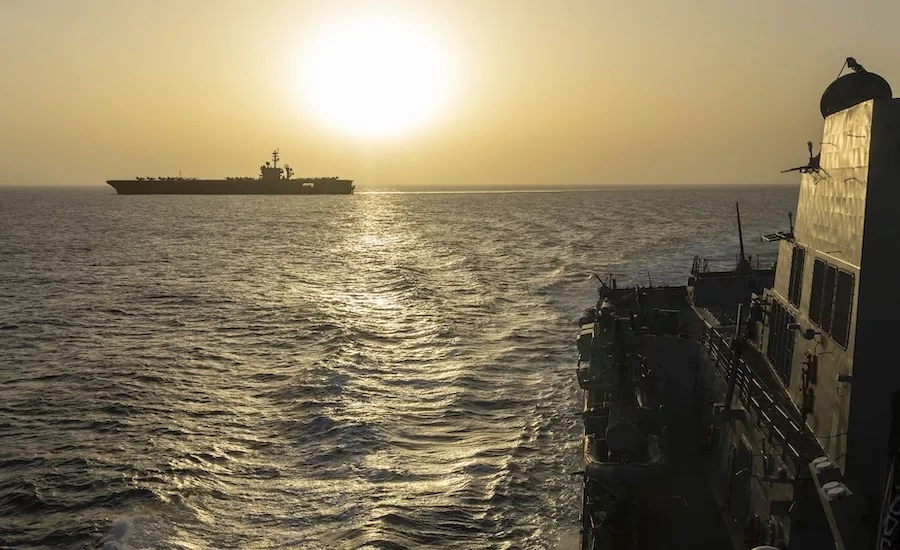
While the Iran-U.S. double blockade of the Strait of Hormuz was lifted as of this issue deadline on April 21, its impact remains, having reduced key shipments of fertilizer, industrial chemicals, metals and oil to a fraction of its pre-war pace. Few economists or private sector businesses believe there won’t be stubborn inflation of energy prices as a result.
Risk now dictates that a more conservative approach to business as a hedge against a more drawn out conflict portends a long-term drag on the world economy. Global consumers will naturally respond by pulling back on spending.
Taken in whole, it’s obvious that the risk dial for construction costs will be reset much higher.
Looking for quick answers on construction and engineering topics?
Try Ask ENR, our new smart AI search tool.
Ask ENR →
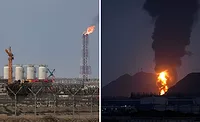
Three weeks after global consultant Rystad Energy estimated a $25-billion tab to repair and rebuild war-damaged Persian Gulf energy infrastructure, including in Iran, the firm now has revised the figure to a range of $34 billion to $58 billion--which includes up to $8 billion for damaged industrial, power and water production assets. “Repair work does not create new capacity; it redirects existing capacity, and that redirection will be felt in project delays and into inflation far beyond the Middle East,” said Rystad’s analysis.
ENR sees the world through the eyes of industry professionals who create infrastructure, so it is particularly distressing to witness the damage and destruction. Targeting energy facilities, desalination plants and other civilian infrastructure, with only a marginal military purpose, represents a brutal level of war tactics.
The International Committee of the Red Cross posted to Facebook April 7 an illustration of a child on a bombed-out street standing with a bucket at a broken water spout. The message above said “critical infrastructure should never be a casualty.” It added this: “Attacks on critical infrastructure are not only about what is destroyed, but also about the people left without what they need to live. Even wars have limits. They must be respected.”