US Offshore Wind Projects Pass Milestones, Seek to Avert Further Trump Attacks
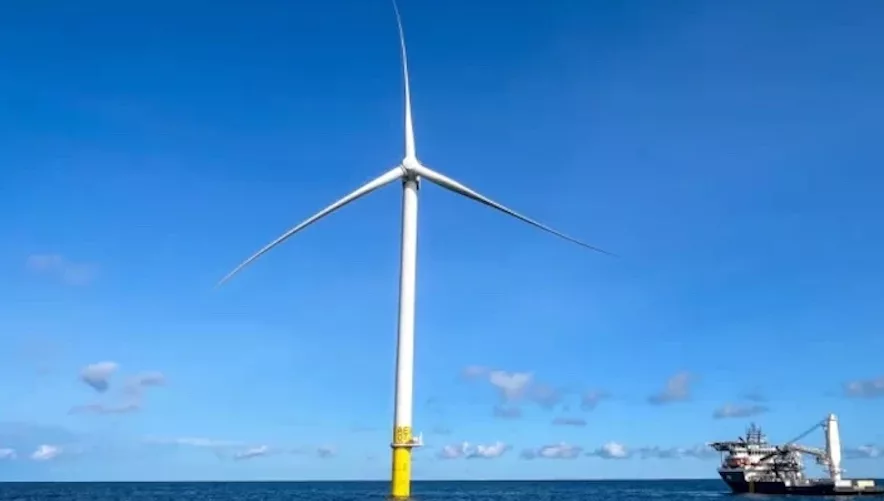
The estimated $6-billion Revolution Wind project off Rhode Island announced in recent days that it had begun delivering power to New England’s electric grid.
After winning unanimous court rulings in recent weeks striking down Trump administration-ordered construction work shutdowns. East Coast offshore wind megaprojects and their political supporters are mounting new efforts, including negotiations on permit reform legislation, to avert fresh federal legal attacks as projects reach key completion and power delivery milestones.
But the government is also apparently weighing a new approach to curtail offshore wind—offering one developer a buyout to cover its costs for existing ocean site leases if it agrees not to develop projects, according to The New York Times.
Earlier this month, the same federal judge who in January rejected the administration's late 2025 order to shut down construction of the 810-MW, $5.5-billion Empire Wind project off New York state ruled against the government's new attempt to extend the stop-work order past its stated March 22 expiration, after which legal challenges are barred. “The government's concern about potential future actions is too speculative, at this stage, for considerations of judicial economy to weigh in its favor,” said U.S. District Court Judge Carl Nichols in Washington, D.C.
The U.S. Interior Dept. also seeks a shutdown extension for the 704-MW, $6-billion Revolution Wind project between Rhode Island and Connecticut, on which another D.C.-based district court judge has yet to rule.
The administration also pushed last month to appeal to the Boston federal appellate court a lower court ruling that struck down the freeze on offshore wind permitting that President Donald Trump announced in a January 2025 executive order. That decision came in a lawsuit against the order by 17 states and the District of Columbia. Trump officials claim that a "comprehensive assessment" of project national security and economic impacts is necessary.
Looking at Continuing Litigation
While courts have yet to rule on the merits of lawsuits against the project stop-work orders by developers and some state officials, observers speculate that judges' strong statements in their emergency restraining orders against the government actions so far indicate the administration may not succeed in winning the new cases.
Looking for quick answers on construction and engineering topics?
Try Ask ENR, our new smart AI search tool.
Ask ENR →
Pressure is also building on Capitol Hill to delay reforms to fossil fuel permitting sought by the administration unless it halts its legal attacks on offshore wind. Trump, who has said changes are needed to expedite a boosted power supply for the surging artificial intelligence sector, also wants a reform bill in place before the midterm elections in November.
Offshore wind supporter Sen. Sheldon Whitehouse (D-R.I.) has warned the administration that continued legal appeals and attacks would undermine efforts for permit reform legislation to pass. “We are watching those [legal efforts] and would view any appeal as inconsistent with further progress on permitting reform,” he told media March 12. Whitehouse is the highest ranking Democrat on the key Environment and Public Works Committee.
Meanwhile, Revolution Wind announced this month it had begun delivering power to New England’s electric grid, under 20-year agreements with utilities in Rhode Island and Connecticut. Also, the 800-MW Vineyard Wind project off the coast of Massachusetts now is the largest U.S. project to complete construction, with 62 turbines now built, developers said March 16. The project, the first to begin construction in 2022, has been delivering up to 572 MW of power since last year.
In addition, the 2.6-GW, 176-turbine Coastal Virginia Offshore Wind Project offshore of Virginia Beach and set to be the largest U.S. offshore wind project, now is 70% complete and will send its first power from a large 14-MW turbine to onshore transmission by March 31. Work is projected to finish by early next year but the month-long federal shutdown added $228 million to its cost, now estimated at about $11.5 billion.
Administration New Lease 'Buy Out' Offer
However, according to reporting by the Times, unnamed "senior administration officials" have drafted settlement agreements that, if signed, would provide nearly $928 million to TotalEnergies, the French energy company already invested in offshore wind project sites off New York state and North Carolina, to cover its development costs so far.
Under settlement terms reviewed, the administration would cancel leases in federal waters for two TotalEnergies projects—Attentive Energy in New York and Carolina Long Bay—with the payment to the company reimbursing its bid costs for the sites won in Biden-era auctions in 2022.
The projects were set to begin generating power in the early 2030s, but had been paused in November 2024 by TotalEnergies CEO Patrick Pouyanné after Trump’s election. The CEO said, however, that the projects could be built under a new president. TotalEnergies would receive $795 million for the Attentive Energy investment and about $133 million to cover Carolina Long Bay, said the Times.
In exchange, TotalEnergies would not build the projects, and would commit instead to investing in natural gas infrastructure in Texas, but with no spending totals or project locations noted.
“It is quite unusual for the administration to do this cash outlay, seemingly just because Trump doesn’t like offshore wind,” a former Interior Dept. attorney told the Times. A TotalEnergies spokesperson declined to comment to the Times or other media on whether it will sign the agreement. Agencies also declined comment.
Neither the agreement documents nor Times reporting indicate if there are other potential payouts under consideration, but German renewables developer RWE, which also paused its U.S. offshore wind projects after the election, also has said it would seek federal reimbursement for its site investments if the administration blocks its projects. The firm paid a record $1.1 billion in 2022 for a large site off the New York and New Jersey coast for a planned 2.8GW development, with partner National Grid.
“I would say that the American administration is aware of the investment protection issue,” RWE CEO Markus Krebber said in a March company quarterly results briefing. “If we never get the right to build the plants, I assume we'll get the money we've already paid back. And if necessary, through legal action.”