Best of the Best Winners
Emma Willard School, Alice Dodge Wallace ’38 Center for the Performing Arts

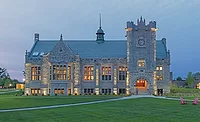
Project team meticulously—and carefully—restored the 100-plus-year-old chapel building into a performing arts center.
Emma Willard School, Alice Dodge Wallace ’38 Center for the Performing Arts
Troy, N.Y.
K-12 Education
Submitted by: Consigli Construction Co.
Region: ENR East
Owner/Developer: Emma Willard School
Lead Design Firm: Annum Architects in Collaboration with Ann Beha
Construction Manager: Consigli Construction Co.
Structural Engineer: Silman Structural Solutions
Civil Engineer: CT Male
MEP Engineer: Kohler Ronan LLC
Theater Design: Next Stage
Acoustics/Technology/Vibration Consultant: Acentech
Transforming the Emma Willard School’s 100-plus-year-old stone chapel in Troy, N.Y., into a modern arts venue proved to be, in itself, an effort where even a single misstep could not be tolerated.
Like in a ballet performance, the Consigli Construction-led project team practiced deep collaboration and trust to successfully navigate the complex—and sometimes unique—structural, acoustic and sequencing issues as they transformed the structure to support modern performance infrastructure.
The conversion “required us to basically remove the first floor of the building and open up the lower level, which included a pool and a bowling alley,” Scott Kosnick, the school’s director of facilities construction management and planning, said in a project video.
Kosnick said the building’s first floor and lower level “didn’t necessarily align properly,” and credited Consigli for the solution that “basically allowed us” to continue with the project.

Photo by Chuck Choi, courtesy of Consigli Construction Co.
“This building fought back as we were trying to build it, so keeping the outside of the building intact while we demoed the entire inside was just a huge challenge,” noted Greg Mollnow, project superintendent for Consigli.
Removing an entire floor and excavating the foundation to improve acoustics and accommodate raked seating destabilized the structure, requiring new roof-level framing, all while a critical structural column supporting much of the roof had to remain within 1/16 of an inch of its original position. Engineers developed a micropile underpinning and shoring system to stabilize the structure.
The chapel also received a new slate roof, copper gutters and full masonry.
Looking for quick answers on construction and engineering topics?
Try Ask ENR, our new smart AI search tool.
Ask ENR →
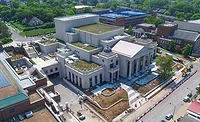
Additionally, a below-grade arts wing housing studios, rehearsal rooms and a black box theater leverages soil thermal mass to stabilize interior temperatures and reduce operational energy use.
Kosnick praised the project team for “some of the best communication I’ve had with a contractor in my 20-plus years of experience.”