2025 East Best Projects
Best K-12: Emma Willard School, Alice Dodge Wallace '38 Center for the Performing Arts
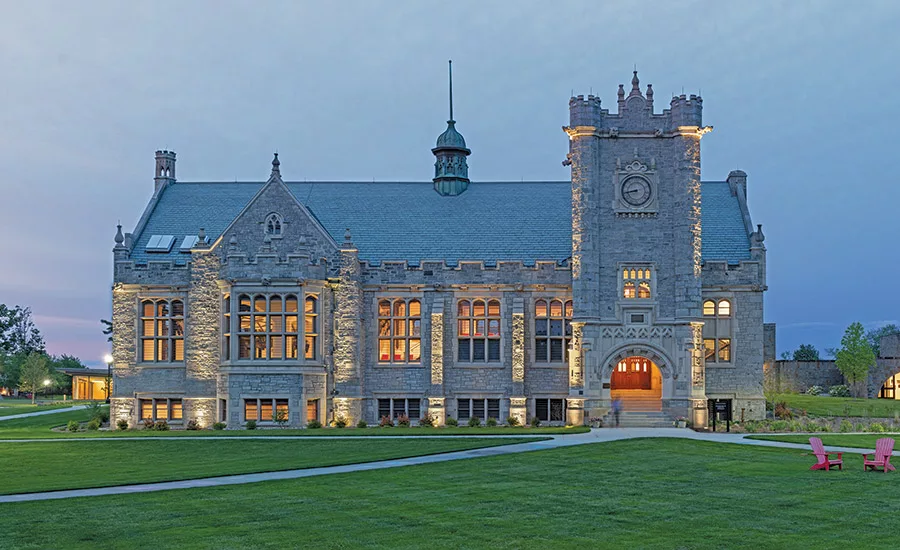
Emma Willard School, Alice Dodge Wallace ’38 Center for the Performing Arts
Troy, N.Y.
BEST PROJECT
Submitted by Consigli Construction Co.
Owner/Developer: Emma Willard School
Lead Design Firm: Annum Architects in Collaboration with Ann Beha
Construction Manager: Consigli Construction Co.
Structural Engineer: Silman Structural Solutions
Civil Engineer: CT Male
MEP Engineer: Kohler Ronan LLC
Theater Design: Next Stage
Acoustics/Technology/Vibration Consultant: Acentech
Transforming the 44,000-sq-ft stone chapel built in 1910 into a modern, high-performing concert hall while also adding a new 20,000-sq-ft subterranean arts wing required deep collaboration and trust among the team to navigate complex structural, acoustic and sequencing issues.
Removal of an entire floor in the historic building floor and excavating the foundation to improve acoustics and accommodate raked seating destabilized the structure, necessitating new roof-level framing. A precise micropile underpinning and shoring system stabilized the structure throughout construction while keeping a critical structural column supporting much of the roof within 1/16 in. of its original position.
The chapel was reimagined into a 450-seat venue with soaring ceilings, reengineered wood trusses and refined acoustics. Features include suspended reflectors, sloped seating, a restored baroque Noack pipe organ and an extendable oak stage. Outside, more than 160 leaded-glass windows were disassembled, restored off site and reinstalled.
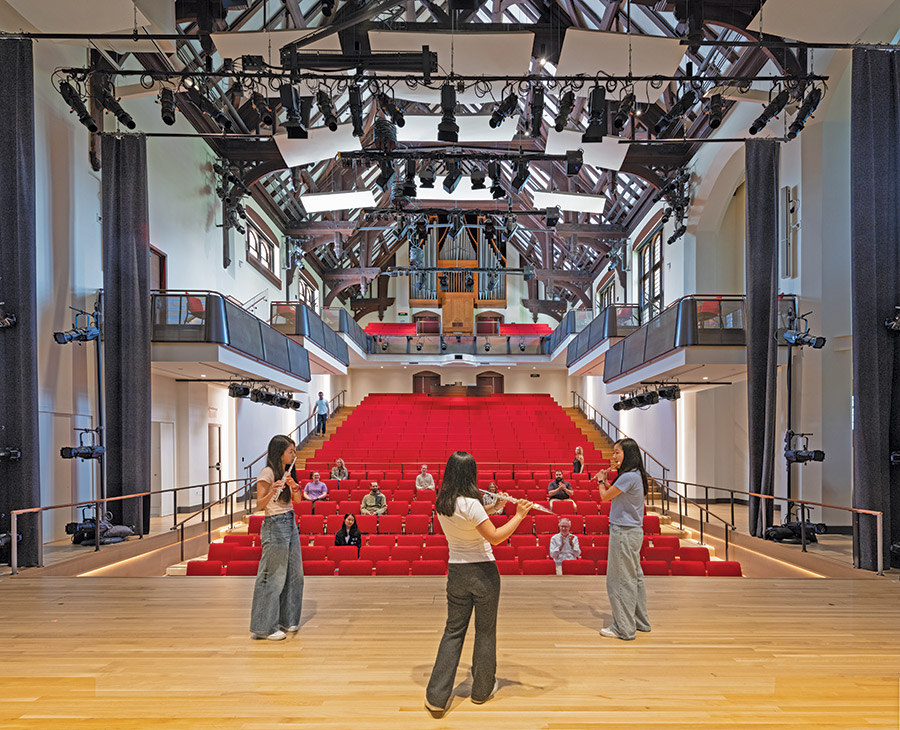
Photo by Chuck Choi, courtesy of Consigli Construction Co.
The chapel also received a new slate roof, copper gutters and full masonry restoration. A thermal vestibule was added by enclosing the east porch, increasing usable space without expanding the footprint. Approximately 80% of the original structure was retained, avoiding an estimated 6,000 metric tons of embodied carbon.
The new below-grade arts wing, tucked beneath a green roof, houses acoustically isolated studios, rehearsal rooms and a black box theater. Its design leverages soil thermal mass to stabilize interior temperatures and reduce operational energy use.
Oversized low-velocity ductwork, acoustic wall assemblies and adjustable curtains were used to tune each space. Wireless seismometers were installed during construction to detect vibrations that might threaten the chapel’s structural integrity.
Mechanical systems had to be routed across both old and new structures without compromising sound isolation.
Despite several unexpected scope increases, the $43.1-million project was delivered on time and within budget, creating a learning environment that continues the school’s 200-year tradition as a leader in girls’ education.