Contract Awards Advance Egypt High-speed Rail Project
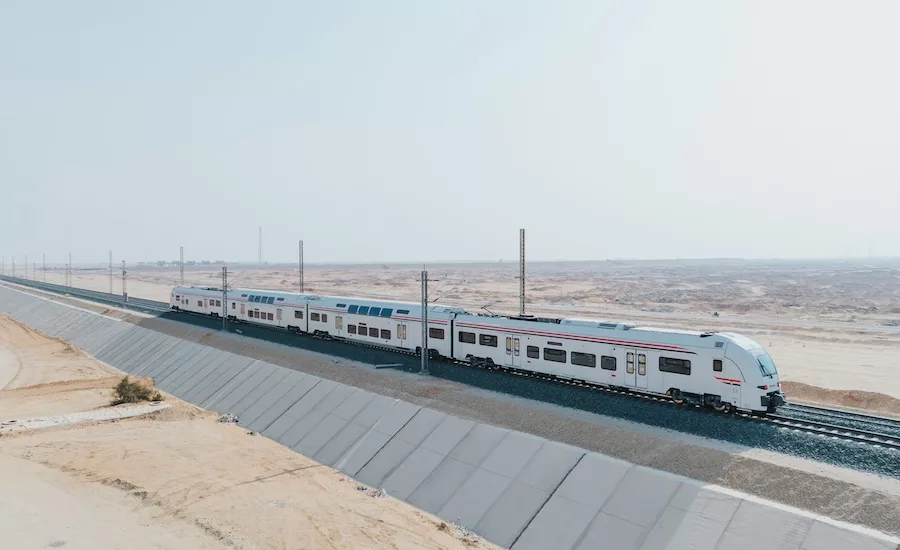
Siemens Mobility ran the first test of a train set for Egypt's upgraded rail system last month on a segment of newly built track west of Cairo. While not the fastest train in the planned rail network, the four-car Desiro HC can reach speeds of up to 160 kph and will serve Egypt's regional passenger rail system.
Egypt’s National Authority for Tunnels signed in New Cairo on Nov. 13 an operations and maintenance contract with El Sewedy Electric and Germany’s Deutsche Bahn International Operations for the country’s planned multi-billion-dollar high-speed rail system.
Launched in 2018, the project calls for laying 2,000 km of new track that will accommodate electric Velaro and Desiro trains supplied by Siemens Mobility, according to information on the authority website. The fastest trains in the rail network will travel at speeds of 230 kph and service 60 stations along three separate routes connecting the Mediterranean Sea with the Red Sea, and the Nile River to key southern cities and to Egypt’s main tourist destinations.
The massive project falls under Egypt’s Vision 2030 program with the intention to modernize the country's transport infrastructure at an estimated total cost of $23 billion. The Mediterranean-to-Red Sea rail route is expected to open in 2027, with full completion set for the early 2030s.
The authority is the Egyptian government agency functioning under the Ministry of Transport that is responsible for planning, construction and operating the country’s rapid transit system and the railway electrification projects. It owns and oversees infrastructure development and all other contracts connected to the high-speed rail project.
Siemens Mobility also took the opportunity to showcase the Velaro high-speed train that will serve the new rail network. The Desiro HC regional train made its first test run in November, on newly constructed tracks near the 6th of October Depot, west of Cairo.
Siemens Mobility leads a consortium including Orascom Construction and The Arab Contractors that will build the new line. The turnkey contract covers technology, rolling stock and track installation, along with civil works that involve bridges, tunnels and earthworks.
As lead contractor and technology provider, Siemens Mobility will deliver the entire rail system, which includes 41 Velaro high-speed trains, 94 Desiro regional trains, 41 Vectron freight locomotives, signaling and power supply, plus a 15-year maintenance contract. Orascom and The Arab Contractors will provide track work, signaling, overhead catenary and traction power substations.
Looking for quick answers on construction and engineering topics?
Try Ask ENR, our new smart AI search tool.
Ask ENR →
 The Velaro high-speed train from Siemens Mobility has a top speed of 230 kph.
 Photo courtesy Siemens
In a statement released by Siemens Mobility, Deputy Prime Minister and Minister of Transport and Industry Kamel El Wazir said: “The inaugural ride of the Desiro regional train and the arrival of the Velaro marks a defining moment in Egypt’s transport modernization strategy. This high-speed train project will help redefine passenger experience, reduce travel times and boost connectivity between cities. It reflects our commitment to building a modern, safe and sustainable rail network that serves our people and supports Egypt’s economic growth for generations to come.”
Besides operations and management, the 15-year contract with El Sewedy and DB IO provides training for engineers and technicians, an estimated 95% of whom will be Egyptian and eventually operate the network independently.
The authority has also signed supervision and engineering contracts with the French companies Egis and Systra for Lines Two and Three of the high-speed network. They have a combined total distance of 1,325 km, including 39 stations.
Egypt’s electric high-speed system will be the sixth-largest in the world and it promises to have a major impact on the country’s economy. The network will be accessible for some 90% of Egyptians and will have a goal of cutting travel times by up to 50%. It will accommodate up to one million passengers and carry as much as 8,500 tons of goods every day. The system will further the development of several sectors across the entire economy as it will connect cities, seaports, dry ports, archaeological sites and tourist destinations throughout the country.
The authority is also responsible for arranging financing for the project. Most of the funding is through European institutions and German government guarantees.
.webp?height=200&t=1771641756&width=200 "UAE-High-Speed-Rail-(2)")


