As the 17th year of the Comprehensive Everglades Restoration Plan (CERP) opens, both challenges and progress are evident in the restoration of the ecosystem of South Florida’s fabled River of Grass.
Legislation to block permanently an Obama-administration rule that seeks to define more clearly federal clean-water jurisdiction is headed to the president.
A scheduled drilling effort to construct a test borehole in the deep shale formations of North Dakota is one of the first moves in the U.S. Dept. of Energy’s formal effort to develop new nuclear storage options for low-level radioactive waste fuel from nuclear powerplants, now often housed on-site in temporary facilities, such as cooling ponds and aboveground concrete casks.
The city of Flint and Michigan Gov. Rick Snyder (R) are scrambling to address a drinking-water-supply crisis that went on for months before local officials admitted lead levels in the water were dangerously high.
The North Carolina Dept. of Environmental Quality has proposed classifications for 32 coal-ash impoundments at 14 powerplant sites owned by Duke Energy.
California Gov. Jerry Brown (D) declared a state of emergency in Porter Ranch, Calif., on Jan. 7, following the failure of one of the world’s top drilling contractors to plug Southern California Gas Co.’s Aliso Canyon gas leak.
The people claiming that our economy will collapse under the burden of efforts to reduce greenhouse-gas emissions are the same ones who tout the free market’s infinite ability to solve technical problems.
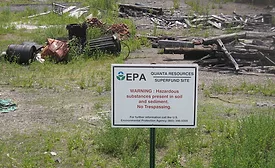
A new report from an environmental advocacy group criticizes the slow pace of environmental cleanups under the chronically underfunded Superfund program, which turned 35 on Dec. 11.
 RSS
RSS