The ENR Top 500 Review +: AI Wave Raises Design Revenue
July 2, 2026
The ENR Top 500 Review +: AI Wave Raises Design Revenue
July 2, 2026Ennead is architect on video technology platform bilibili's Shanghai headquarters. The more than 770,000-sq-m campus is divided into zones with buildings shaped as "mushrooms" or "bilis" that taper to their supporting stems. Completion of the campus is scheduled for 2027.


Related Link:
ENR 2026 Top 500 Sourcebook (PDF)
(Subscription Required)
An expected $1.75 trillion in AI-related infrastructure spending will drive U.S. economic growth well into 2027, according to some economic forecasts. At a global scale, research consulting firm McKinsey estimates that AI infrastructure spending will reach $6.7 trillion by 2030, fueled by data center project hyperscalers such as Amazon, Alphabet, Apple, Meta and Microsoft. Considering that there isn't much else driving the U.S. economy forward right now, Associated Builders and Contractors Chief Economist Anirban Basu says data center work is one of the few current opportunities for economic growth across the construction sector.
Domestic design revenue for ENR's Top 500 Design Firms increased 8.1% last year to $136.3 billion, while international revenue rose 3.2% to $22.4 billion. Both increases are in line with the growth seen between 2023 and 2024, according to ENR data.
Of the 475 design firms that filed surveys this year and last, 83.2% reported an increase in revenue. The Top 10 design firms accounted for 32.2% of total Top 500 design revenue. Both readings are also in line with last year's survey results.
Median firm revenue rose to $103.2 million in 2025, up 6.4% from 2024. However, median revenue for firms self-identifying as architects shrank notably, down 13.9% to $58.7 million.
The telecommunications market, driven by data centers, continued to surge in 2025, rising 31.3% between 2024 and 2025. Market revenue rose just under 87% between 2023 and 2025. The power market also showed double-digit growth, rising 14.6%, while the water supply market increased 9.9%.
Revenue from the oil and gas market continued its multi-year slide, dropping 18.6% between 2024 and 2025. Revenue in that market has fallen 40.2% between 2023 and 2025. Revenue in manufacturing also fell by double digits, dropping 17%. Markets also contracted for hazardous waste, down 8%, and industrial process work, down 5.2%.
In the American Institute of Architects' January 2026 Consensus Forecast, a 12- to 18-month outlook for nonresidential building construction business conditions, its panel of forecasters—including ABC, S&P Global Market Intelligence and Dodge Construction Network—concluded that the U.S. economy is plagued by "uncertainty and imbalance." As a result, the panel says consumer confidence scores dropped to 54.9 in November 2025 from 79.6 in December 2024.
Surging Demand
In an interview with CNBC's Mad Money host Jim Cramer last month, Jacobs CEO Bob Pragada said the firm's data center business—which jumped 62.2%, surging its project pipeline by 500%—was a "real growth engine" for the company. Such growth is further reflected in the global services firm's rise to No. 1 on the Top 500 Design Firms list this year, with last year's top firm, AECOM, sliding to No. 2.
Looking for quick answers on construction and engineering topics?
Try Ask ENR, our new smart AI search tool.
Ask ENR →
In comments to ENR, Pragada says the firm's clients are navigating a "convergence of challenges," from the rapid, large-scale buildout of AI infrastructure and economic and geopolitical disruption to rising global demand for new drugs and therapies.

Cover image from ENR archives
In the face of such challenges, Pragada says the firm's chief responsibility remains clear: "Continue to innovate while navigating constant change." He adds that this strategy "reflects what we see clients across our industry needing: a trusted advisor for end-to-end solutions, from planning and shaping their capital programs through delivery of their most complex projects and assets."
Arup Americas Managing Director Scott Russell says the firm, ranked No. 55, is committed to tackling market complexity by "leaning on our expertise and innovation" while still upholding its values of "responsible growth and stewardship" to meet demand. At Introba Inc., President and CEO Matthew Cummings says innovation calls for "managing the intersection of talent and transformation."
Cummings adds, "Clients are asking for more innovation faster, at a greater value," Cummings says. "We need people with strong technical skills who can collaborate comfortably across disciplines and on projects that are growing in complexity." At the same time, he says technology is changing the design and delivery process, "requiring continuous learning and a willingness to evolve how we get work done."
In this way, amid ongoing labor shortages, LJB Inc. CEO Rod J. Sommer says technology integration has become a matter of survival as firms fight to keep projects afloat in an increasingly competitive market. The firm is ranked No. 287.
"The industry is being pushed to do more with fewer people, making the integration of AI and automation essential," Sommer says. "The challenge is moving quickly enough to stay competitive while ensuring those investments deliver real value and sustain margins."
Energizing AI
AG&E CEO Sanjay Agrawal says the No. 356-ranked firm wins work through its vertically integrated approach, combining traditional systems engineering and operations research with downstream specialty services such as steel detailing and precast engineering—both critical components for data centers.
"This integration gives our clients the ability to shorten construction schedules, making us a preferred partner," Agrawal says, explaining that AG&E has become one of the largest structural engineering firms in the U.S. focused on data centers.
For Ulteig Engineers, ranked No. 87, increased demand for data centers has "changed the tempo" of its portfolio as resources shift to meet growing demand for power infrastructure.
"As electric utility and renewable energy clients respond to rapid load growth, resources are shifting to grid upgrades, interconnections, new generation and system planning," says Ulteig President and CEO Doug Jaeger. "The surge creates opportunity while tightening capacity, especially for specialized talent and teams that can move quickly without sacrificing quality."
Jaeger adds that such a shift has also changed how the work crystallizes int eh firm's markets. He notes, "Unlike traditional utility capital investment programs planned over longer horizons, data center work can arrive with more urgency and less certainty around scope and timing. That volatility challenges resource planning and execution discipline."
Jaeger believes artificial intelligence infrastructure projects are also "breaking the traditional power demand curve," and creating "volatile loads the grid was never designed to accommodate."
As a result, "capacity and schedule certainty is often [a] deciding factor for siting and expansion," says Dave Sobeck of Carollo Engineers, ranked No. 49. "It's pushing earlier coordination among owners, utilities and economic development teams to avoid commitments that outpace infrastructure realities."
“In today's design and engineering environment, strong leaders bring more than technical expertise—they bring systems mindset.”
— Chris Houle, vice president of power delivery solutions, Leidos
Jaeger says that design firms can win by being a "steady partner." He adds, "Clients value teams that bring structure early, clarify constraints and integrate solutions across the full lifecycle," explaining that Ulteig Engineers has been focused on megaprojects "where renewables and storage are co-located with data centers and other large-load projects," because that is where he believes the "long-term infrastructure buildout is headed and integrated execution matters most."
Reevaluating Firm Resources
Top 500 firms say they are also evaluating their internal needs. Labor resources remain a top priority, but firms are also looking for technology tools to complement their work and meet market demands.
"The surge in data center work hasn't affected how or where we win work as much as it has affected the capacities of the talented contractors and subcontractors that we rely on to install the work and meet the lead times of critical equipment," says TLC Engineering Solutions CEO Michael P. Sheerin. "We have been enlisted to commission some complex data center projects as a backstop to the accelerated timelines of these projects and the capacities of other teams, and we are happy to help out," he adds. The firm is ranked No. 197.
Overall, firms say technology has helped them make smarter decisions earlier.
"From the earliest design conversations, our design teams work alongside AI design assistants that aggregate research, reconcile evolving client decisions and flag program conflicts before they compound, while validating design moves against code and benchmarks in real time," says Grant Saso, innovation and emerging technology manager at Little Diversified Architectural Consulting, ranked No. 281. Saso adds, "We use visualization tools to test precedent imagery and understand what clients actually want without committing to a full design yet."
By reducing routine work and surfacing alternative insights, "these tools free our teams to focus on higher-value, innovative thinking, while professional judgment and accountability remain at the center of every decision," says VHB President Bill Ashworth. The firm is ranked No. 65.
By embracing technology as a complement to developing the next generation of leaders, firm executives say the industry can better position itself to increase capacity to manage more complex projects.
"In today's design and engineering environment, strong leaders bring more than technical expertise—they bring a systems mindset," says Chris Houle, vice president of power delivery solutions at Leidos, ranked at No. 21 this year.
Houle adds that the firm looks for individuals who "understand how engineering decisions impact the full project lifecycle, from procurement and construction to long-term operations."
He explains, "The ability to make timely, risk-informed decisions is critical, as is understanding what matters most to the customer—whether that's cost, schedule or reliability—and clearly communicating trade-offs," he says.
Design Markets in Focus
General Building
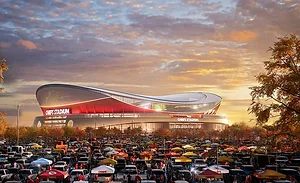
HNTB, HDR, Kiewit Ready for 'Big Red Rebuild'
$600M Memorial Stadium rebuild is expected to start construction in March 2027.
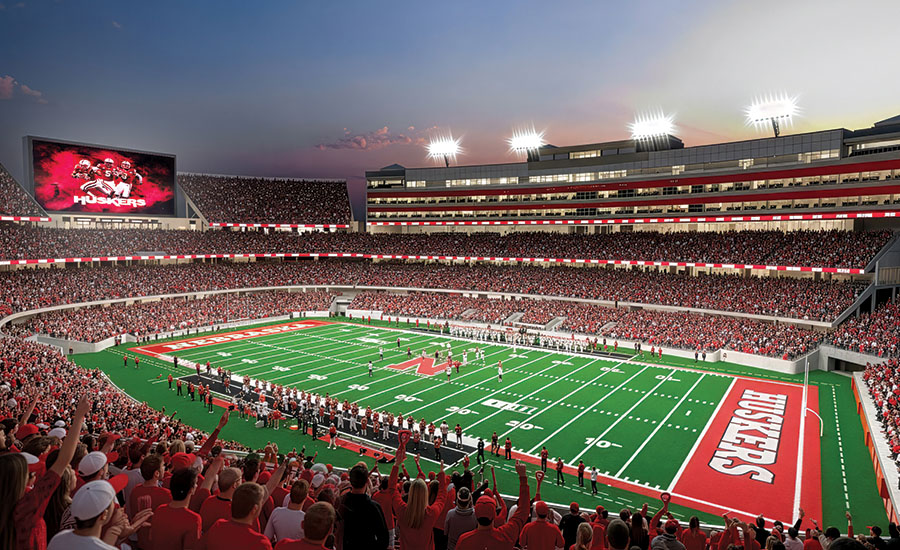
HNTB and HDR have partnered to redesign the University of Nebraska’s historic Memorial Stadium. Dubbed the “Big Red Rebuild,” the $600-million plan was approved by the University of Nebraska System Board of Regents in April.
Transportation
Taming Arizona’s Wild Horse Pass Corridor
$1B project addresses safety, congestion on Phoenix-Tucson corridor
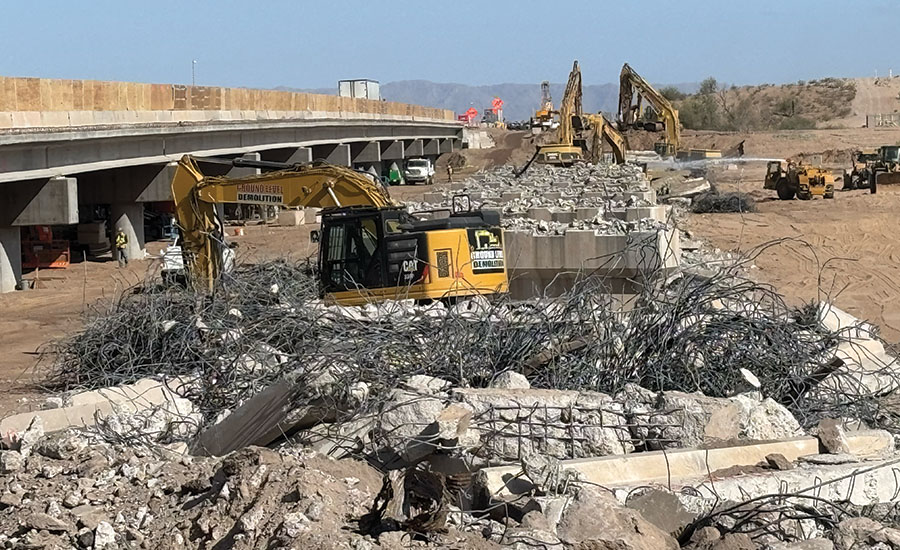
The final four-lane corridor of I-10 between Phoenix and Tucson is on its way to being upgraded to resolve longstanding congestion and safety issues.
Oil & Gas
$1B Louisiana-to-Texas Gas Pipeline Reaches Finish
The 72-mile connector will supply the $13B Port Arthur LNG terminal set to open in 2027 and 2028
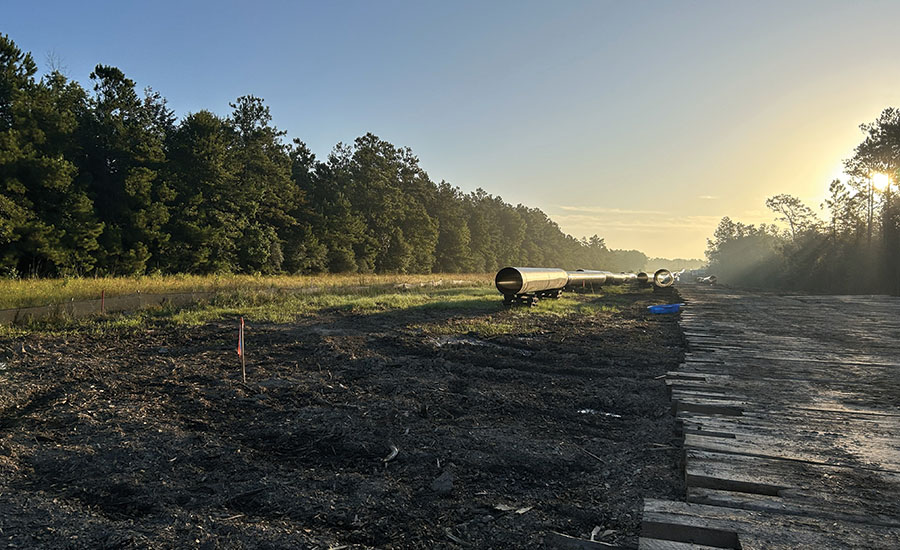
Sempra Infrastructure said last month that its 72-mile Port Arthur Pipeline Louisiana Connector project had completed and was placed in service. Originating in southwest Louisiana, it is set to supply natural gas to the first phase of the Port Arthur LNG export terminal east of Houston, when construction of that facility's two trains completes in 2027 and 2028.
Power
US Uranium Enrichment Set to Expand
Urenco USA plant in Eunice, N.M., eyes 2027 construction start to double capacity
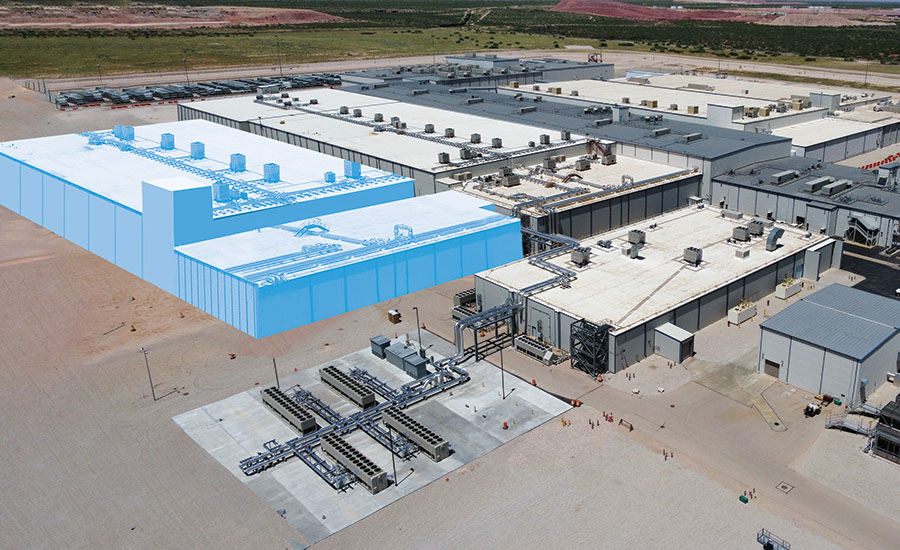
The operator of the National Enrichment Facility, the sole U.S. commercial uranium enrichment site, has announced plans for a privately funded multibillion-dollar expansion at its Eunice, N.M., complex that would boost low enriched uranium production by 50%.
Environment
Another Contract for Carp Deterrent Effort
Work resumes in April after Trump administration pause on Brandon Road Interbasin Project
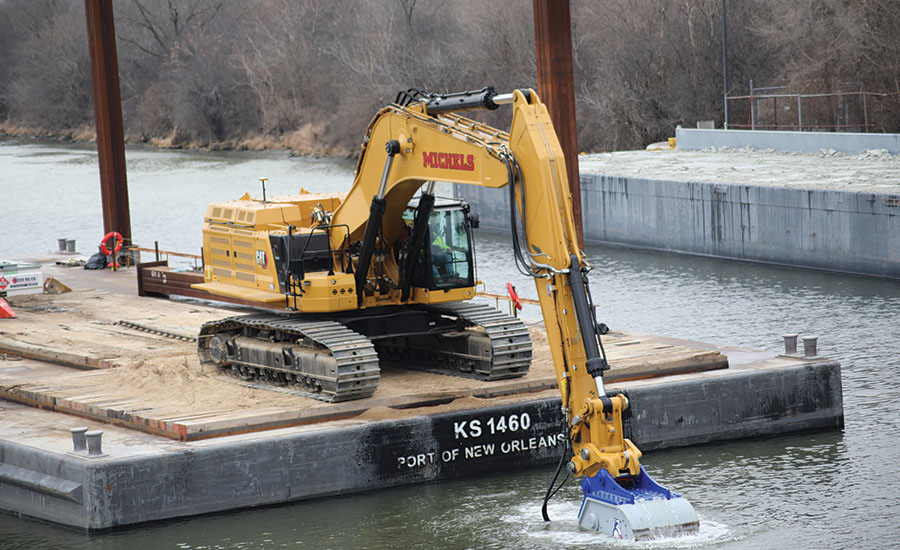
The U.S. Army Corps of Engineers has selected a Black & Veatch-Stantec joint venture for design, engineering and analytical services for the Brandon Road Interbasin Project.
Manufacturing
Semi-Conductor Market Going Strong
$1.9B SK hynix plant in Indiana is one of many advanced chip facilities being built across the US
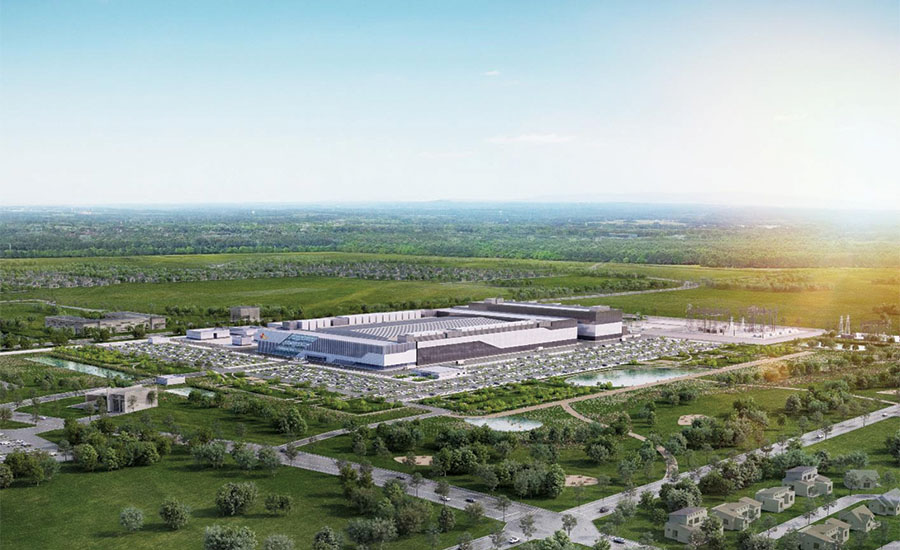
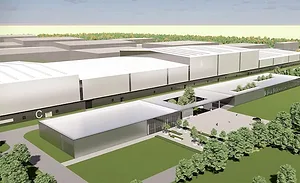
Piling for SK hynix Inc.'s High-Bandwidth Memory (HBM) Advanced Packaging and R&D Hub in West Lafayette, Ind., began in April and is ongoing. The project is one of many bringing advanced semiconductor chip manufacturing to the U.S.