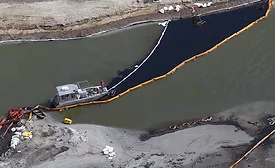
The U.S. Environmental Protection Agency has rejected objections raised by General Electric Co. to a final cleanup plan, issued in February, for toxics in the Housatonic River in New England.
It took Flint, Mich.’s water issues, which rose to a crisis level last year with news of the city’s extensive lead-tainted supply, to catapult sector needs higher on legislative agendas and into the public consciousness.
Utility Southern Co.’s costly effort to produce clean energy from coal met a major milestone on Oct. 12, when its Kemper County, Miss., integrated gasification combined-cycle plant produced the first kilowatt of electricity with synthetic fuel made from local lignite.
Nearly 200 countries have agreed to cut the production and use of hydrofluorocarbons (HFCs)—used in refrigerants and cooling and ventilation systems—by more than 80% over the next 80 years.
For Anthony Jones, 46, a Gulf War veteran and apprentice craftworker based in Flint, the work that he does—pulling out lead service lines to homes—is personal.
The U.S. Environmental Protection Agency has reached a settlement with Occidental Chemical Corp. to perform engineering and design work necessary to clean up 8.3 miles of New Jersey’s lower Passaic River, the most polluted portion.
British Columbia’s chief mining regulator refuses to move compliance and enforcement to a separate agency, despite three reports that say design issues contributed to the massive Mount Polley Mine spill more than two years ago.
 RSS
RSS