Various “thought leaders” in the industry have been trying—some would say hitting their heads against the wall—for at least the 37 years that I have been covering buildings (and likely before that), to use technology to streamline, automate and quicken building design and construction.
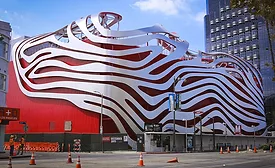
A Los Angeles car museum gets a renovation to match its collection with a cherry-red exterior and 310 distinct metal panels flowing around it like a fluid-dynamics wind-tunnel test.
Located in the heart of the University of Miami’s Coral Gables campus, the Frost Music Studios project is part of a $61.5-million master plan that will nearly double the school’s space while preserving its historically significant architectural elements.
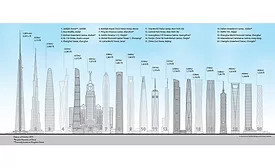
Having recently reached a height of 113 meters, the contender for the title of the world’s tallest building is slowly growing up in Jeddah, Saudi Arabia.
This $91-million, 223,000-sq-ft building not only features laboratory, office and administrative spaces, but also a basement vivarium, two underground cisterns with 24,000 gallons of capacity and tunnels designed to connect to two future buildings.
The $72-million Pinellas County Public Safety Facilities and Centralized Communications Center project called for the complete demolition of existing buildings on a 40-acre campus and replacement with new, storm-hardened facilities such as a sheriff’s administrative building, emergency operations and dispatch centers, a 1,248-space parking garage and an energy plant to supply emergency power and cooling.
The first ropeless, tall-building elevator—a compact, lightweight system that mimics a subway line on end—is set to enter the testing and certification stage in early 2017.
London-based international architect Foster + Partners has launched a building kit for landing sites needed for a fleet of drones proposed to deliver medical and other supplies to remote African locations.
 RSS
RSS