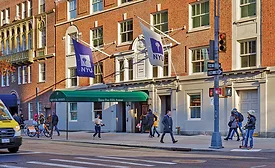
Named for its address, 200 Clarendon St., this one-time conventional, second-floor office space is now a 300,000-sq-ft hospitality and wellness-infused club.
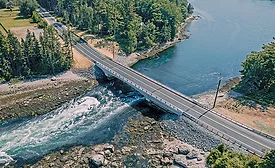
Community engagement played a key role in shaping the $9.6-million strategy to replace the picturesque, yet deteriorating concrete tied-arch bridge spanning the reversing falls across Salt Pond that lead to the Atlantic Ocean.
The $82-million project replaced a severely deteriorated 1920s-era through-truss bridge with a 2,087-ft-long, six-span structure designed to serve this key border crossing for at least 100 years.
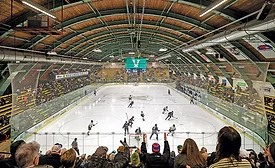
Following a pandemic-related work stoppage that also forced a 25% reduction in the project scope, the team relaunched the upgrade with a sequenced retrofit by installing detailed and complex steel reinforcements to the hockey arena’s barreled roof and adding a new media loft.
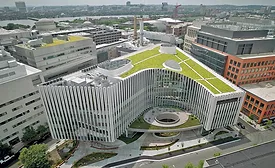
Collaboration is at the heart of this new 323,000-sq-ft facility, which brings together scientists, engineers and physicians from multiple disciplines to solve critical global health problems.
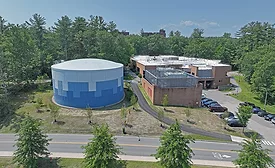
With a capacity of 1.4 million gallons, the $10.3-million tank produces chilled water during off-peak nighttime hours, significantly reducing the university’s energy costs.
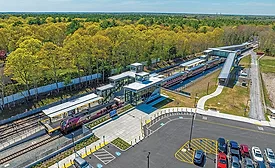
The $1-million project restores commuter rail service between Boston and three previously underserved cities with nearly 40 miles of new track, six new stations, 12 bridges, 28 grade crossings and two new layover facilities.
Equipped with all-electric HVAC and hot water systems, the renovated 141,000-sq-ft dormitory drastically reduces energy consumption and carbon emissions while significantly improving indoor environmental quality for students.
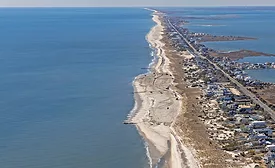
During the winter of 2024-25, the project team placed more than 1.2 million cu yd of dredged sand along three beach sections as part of a larger effort to protect vulnerable coastline from erosion and storm surge risks.
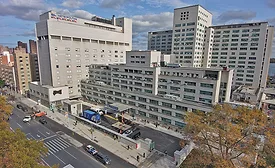
Situated within half a block of Manhattan’s East River, the Metropolitan Hospital requires nearly half a mile of flood protection systems as tall as 12 ft to safeguard against future 500-year storms and an estimated 3-ft increase in sea level rise and freeboard.
 RSS
RSS