The article “Fire at Arizona Energy Storage Battery Draws Scrutiny” (ENR 7/8-15 p. 18) illuminated the potential hazards associated with energy storage systems and lithium-ion batteries and accurately noted that the technology “now make[s] up 98% to 99% of all new battery-type storage systems.”
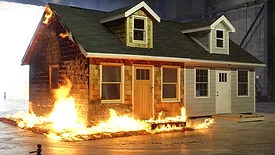
The focus of IBHS outreach in 2019 is calling out details of landscaping, construction materials, and the assembly of decks, roofs, siding, soffits and vents as ignition-point risks when seeded by wind-blown embers. It also is looking at the fire resistance of manufactured lumber, versus natural materials.
San Francisco on June 4 hired a financial advisor as it considers buying distribution assets from the beleaguered utility Pacific Gas & Electric, which filed for voluntary bankruptcy protection in January as it faced more than $30 billion in liabilities stemming from 2017 and 2018 wildfires that burned many thousands of acres and destroyed thousands of structures.
Service resumed on March 18 for the Boston MBTA Blue Line following disruption from a fire that raged for two days at an East Boston casket company, forcing evacuation of 150 homes.
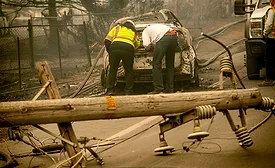
California utility giant details 2019 plan for boosted infrastructure and technology—and controversial expanded blackouts—to respond to and prevent devastating wildfires in its huge service area.
After fire destroyed AvalonBay’s four-story, 235-unit apartment project in Maplewood, N.J., in 2017, Michael Feigin decided that conventional industry standards and approaches designed to minimize the risks of these relatively rare, yet costly construction-phase fires were not enough.