Legal
US High Court Sides with Trump to End Protections for Haitians and Syrians
.webp?t=1782730864)
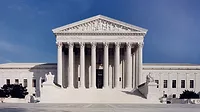
The U.S. Supreme Court handed the Trump administration a victory with a 6-3 opinion in Mullin v Doe on June 25, agreeing with government' arguments that federal agencies have authority--without the need for judicial review—to end temporary protected legal status for Haitians and Syrians living and working in the U.S. under a program designed to provide a safe harbor for foreign nationals at risk in their home countries.
Construction and labor groups say the decision could have real impacts for construction companies that have hired workers under the temporary protected status (TPS) program for years.
"The construction industry has long relied on workers with TPS, many of whom have been legally employed in the industry for years, said Brian Turmail, vice president of association and Industry Image at the Associated General Contractors of America, in an email, “Recent administrative changes to the program have placed in jeopardy, for many of these workers, the ability to remain employed, and additional workers face uncertainty as other TPS designations come up for renewal.”
These developments compound current industry challenges in finding workers for projects, Turmail said. AGC has called for comprehensive immigration reform that would create added legal pathways to help meet industry’s future labor needs
The opinion was written by Justice Samuel Alito, and joined by the court’s conservative wing: Chief Justice John Roberts and Justices Clarence Thomas, Brett Kavanaugh, Neil Gorsuch and Amy Coney Barrett. Justice Elena Kagain wrote the dissent, joined by Sonya Sotomayor and Ketanji Brown Jackson.
Eliminating Protections
The TPS program was established under the federal Immigration and Nationality Act in 1990 to provide a safe harbor for foreign nationals at risk because of wars, natural or environmental disasters, or extraordinary and extreme circumstances.
The program has been a target of the Trump administration as part of its broader immigration goals. President Donald Trump issued an executive order in January 2025, directing cabinet officials to ensure that TPS designations remained within the scope of the law, and that the designation should be limited to meet the statutory requirements, but to not remain in place beyond what is necessary.
Looking for quick answers on construction and engineering topics?
Try Ask ENR, our new smart AI search tool.
Ask ENR →
Since the executive order was signed, the U.S. Dept of Homeland Security has ended TPS protections for every status set for renewal -- affecting 13 nationalities in total, including those from Ethiopia and Venezuela.
When then-Secretary Kristi Noem said in November 2025 that TPS status for Haitian nationals would end Feb. 3, Fritz Emmanuel Lesly Miot, a Haitian neuroscientist and PhD candidate, along with five other Haitians, sued the federal government. They argued that rescinding TPS status for Haitians and Syrians was racially motivated. The federal district court in Washington, D.C., placed a stay on the TPS termination to allow the underlying legal challenge to play out.
The Supreme Court majority rejected that argument, stating: “One may oppose TPS and favor tighter restrictions on immigration for economic or other reasons that have nothing to do with race. And a person without racial bias can provide a harshly unfavorable description of living conditions in some of the countries with TPS designations.”
Despite Trump’s negative statements about Haitians in Springfield, Ohio, and elsewhere, they do not necessarily prove racial discrimination, Alito contended. “Whatever one may think of the cited statements, they are insufficient to show that the termination of Haiti’s TPS designation was based on the race of the Haitian people."
In her dissent, joined by Sonia Sotomayor and Ketanji Brown Jackson, Kagan said that although the TPS program was not intended to grant indefinite legal status, “the law prevents the program from ending as it likely did here— without the required consultations about country conditions and, as to Haiti, with impermissible race-based considerations tainting the decision.” She added: “At this juncture, both sets of plaintiffs ask for only one thing: that they may stay in this country while they continue to litigate their claims. For all the reasons given, they are entitled to that relief, and should not instead be consigned to devastating, and indeed life-threatening, injury.”
Jessica Bansal, TPS counsel for the National Day Laborer Organizing Network, said in a statement that humanitarian protections will be stripped from “hundreds of thousands of immigrants, in blatant violation of laws enacted by Congress.”
In addition to representing the plaintiffs in Mullin v. Doe, Bansal represents the National TPS Alliance in litigation challenging YPS termination for Venezuela, Honduras, Nepal, and Nicaragua.