Women in Construction
10 Minutes with Gretchen Gagel, CEO of New International Institute for Women in Construction
“Sometimes the universe tells you that you should pivot and not be afraid to start something big,” says the long-time industry executive and women's leadership advocate.
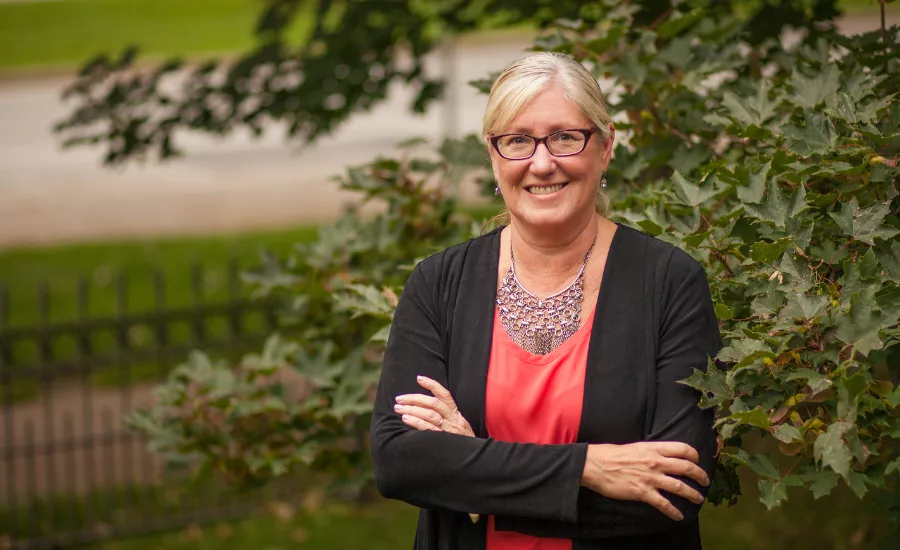
As a 40-plus-year veteran of work as an owner and construction advisor, Gretchen Gagel has used her experiences and those relayed by others to found the International Institute for Women in Construction, of which she is CEO. She aims to reshape how women enter the construction sector by uniting recruitment and retention efforts through research
Women represent a growing share of the construction industry workforce, with 2025 US Bureau of Labor Statistics data showing a 45% increase in their ranks from 2015 to 2024. As a 40-plus-year veteran of work as an owner and construction advisor, Gretchen Gagel has used her experiences and those relayed by others to found in 2025 the International Institute for Women in Construction, of which she is CEO. She aims to reshape how women enter the construction sector, by uniting recruitment and retention efforts through research. The institute includes a 20-member advisory board of current and former industry execs who are supporting ambitious goals to accelerate broad change, says Gagel. “We want to accelerate efforts, to ignite action globally,” she says. The institute has published five research reports about attracting more women to construction—the most recent last month that describes "the Australian experience.” Here she shares how the institute intends to close the talent gap to put more women to work. The interview with ENR senior editor Emell D. Adolphus has been edited for clarity.
See Gretchen's keynote presentation on women's leadership given at the 2025 ENR Groundbreaking Women in Construction conference. Check out the agenda for this year's great event, set for June 14-16 in San Diego, and plan to attend!
ENR: What moment or realization convinced you that the industry needed a global institute focused specifically on women?
Gagel: Sometimes the universe tells you that you should pivot and not be afraid to start something big. Five years ago, I started thinking about the fact that women in construction are having similar experiences in my two home countries, Australia and the US. I realized that global efforts are often fragmented and underfunded. I thought, why are we still having conversations about how to attract and retain women in construction? How can we connect the dots to create a global movement that moves needles?
Many initiatives struggle to move from conversation to measurable progress. According to your research, what concrete changes do companies need to make if they truly want to increase the number of women in construction?
We recently synthesized over 50 global research studies on the barriers to attracting women to construction trades into these key challenges: 1) Women and girls don’t know construction is a viable career. School outreach programs such as Move Over Bob (https://moveoverbob.com/) are helping to change this. 2) Over 70% of apprenticeship programs are 100% male. Collaborative programs such as a current JE Dunn partnership with a technology client introduce women into these apprenticeship programs; 3) Our industry culture of “toughness” and poor behavior can be intimidating. Actions such as Turner Construction’s zero tolerance for bias-motivated events help improve industry professionalism. 4) There is a lack of flexibility that makes childcare challenging, for both men and women. John Holland Group in Australia is piloting two project start times to allow people to drop kids at daycare and school, a game changer for the industry. These are the global stories that the institute tells, concrete examples of changes that industry stakeholders are making to help everyone, including women, thrive.
The institute aims to double the number of women in construction over the next decade. What institute strategies or interventions will have the greatest impact in achieving that goal?
Looking for quick answers on construction and engineering topics?
Try Ask ENR, our new smart AI search tool.
Ask ENR →
To start, we as an industry must truly want women. We must genuinely view them as a critical element of solving our talent shortage. I often hear “we can’t find them” or “they don’t’ stay”. Why? If we are as serious about attracting, developing and retaining women as we are about safety, needles will move. By connecting global efforts, sharing examples of successful strategies and convening the boldest thinker to determine new strategies, the institute will make a difference. We are not professing to have the answers. Our passion, our industry connections and our systemic approach in service to the industry reveals the answers and inspires action.
You’ve described the institute as a global “think tank” and collaboration hub. How will it bring together contractors, unions, educators and policymakers in ways that haven’t been done before?
We meet with these industry leaders every day to determine the ecosystems that are enthusiastic about collaborating to solve this problem. This is not easy. The industry has traditionally been fragmented with more individual than collective efforts. Finding the stakeholder leaders for each sub-segment, be that a US-based construction trade, a state or a country, who are serious about progress is the key.
Data on women in construction is often fragmented. How will the institute help create a clearer global picture of progress—and hold the industry accountable?
We are committed to being a global source of accurate data on the participation of women in construction. Our January 2025 white paper reported on the overall percentage of women in construction for the 20 countries with the highest construction spend. We recently reported on the US construction trades and whether female participation is increasing or decreasing by trade. We are also focusing on program evaluation – what specific strategies and tactics are moving needles? We will collaborate with global industry leaders to gain their buy-in and hold the industry accountable for progress. It’s a massive undertaking but the institute is up for it!
You’ve spoken about the cultural barriers women face on jobsites and in leadership roles. What cultural shifts are most urgently needed within construction organizations?
Our culture must value women. Period. We must understand unconscious bias and how it shapes our decision-making. When two men hired me as CEO of a company, I was frequently asked if we were a woman-owned business. When I answered “no,” people often asked me, “Then why did they hire you as CEO?” Truly. It’s exhausting. Bias is important because it allows us to make quick decisions, but as industry leaders we must be aware of how subtle unconscious bias impacts women in construction. Women don’t want to be treated like your daughter. Women do not want to be spoken over in meetings or asked to take the notes. Women want a fair chance. Zero tolerance for poor behavior raises the professionalism of the industry, improves its culture and attracts more men as well.
What role do male allies and industry leaders play in accelerating change, and how can companies engage them more effectively?
Male allies are critical and is the reason the institute has several male board and advisory board members such as Mark Whitson, president of DPR Construction and Tom Reilly, president of Turner Construction. When I joined [consulting firm] FMI in 1994, my first manager, Lou Bainbridge, turned down strategic planning work with contractors who would not accept me as part of the team. That is male allyship. Men hold most of the senior leadership positions in the construction industry and we will not make progress without their buy-in and leadership.
Looking ahead 10–15 years, how do you hope the construction workforce—and the leadership pipeline—will be different as a result of this initiative?
I hope that we are no longer having a conversation about how to attract, develop and retain women in construction, that we have cracked the code on this. I hope that men understand that this is not about women thriving at the expense of men, it is about the sustainability of our industry.