Women in Construction
Women in Construction Week: Female Welder’s Murder Is Call to Action
Organizer NAWIC says event had participation from 542 construction-related companies and more than 900 program registrants
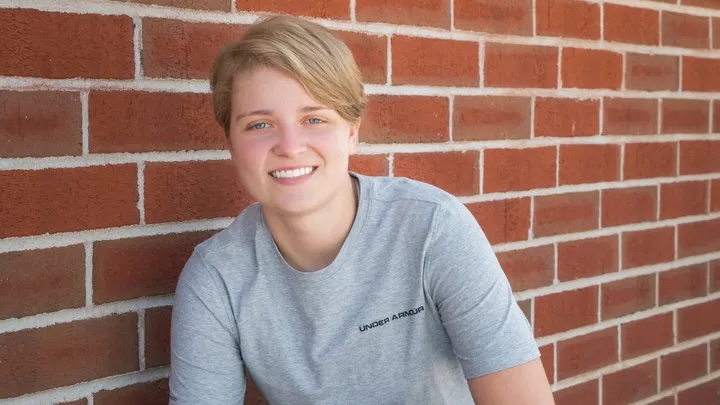
Welder Amber Czech was killed Nov. 11 by a fellow employee at a dairy equipment manufacturing facility in central Cokato, Minn.
Photo: Portraits by Cindy
More than 900 registrants across 542 U.S. construction firms participated in Women in Construction Week from March 1-7, according to the annual event’s founder and organizer, the National Association of Women in Construction.
Under the theme of “Level Up. Build Strong,” the association’s more than 130 chapters covered jobsite safety and career advancement for women in construction during a week of virtual talks and site visits highlighting the “essential roles women own across every level of our industry,” said NAWIC President Rita Brown in a press release launching the event. And with more women working across the AEC industry than ever, NAWIC has led calls for increased career advancement opportunities and improved workplace protections to ensure women can safely do their jobs.
Last year, the fatal workplace attack of 20-year-old welder Amber Czech by a male employee in Minnesota became a reminder of the jobsite challenges women still face working in male-dominated fields. Yet amid calls for increased safety, women in construction leaders say the incident should serve as an industry-wide call to action.
In an interview with ENR, NAWIC’s Brown joins International Institute for Women in Construction founder and CEO Gretchen Gagel and Holt Construction CEO Patricia Zugibe in detailing experiences with gender-based harassment and how they aim to use their roles to advance and improve experiences for women in construction.
When a fatal incident like Amber Czech’s case happens, what questions do you ask yourself as a leader about improving workplace and jobsite procedures and compliance?
Zugibe: When a tragedy like this occurs, I ask whether safety procedures are truly lived, not just written. I reflect on whether our systems account for the realities of the jobsite and whether any worker might feel unsafe but hesitate to speak up. Safety culture is proven long before an incident happens. Leadership requires continuously evaluating safety culture and taking action before incidents occur. Every serious event reminds us that training, communication and accountability must be actively reinforced at every level of an organization.
Gagel: What a tragic incident for our industry, and unfortunately not the first. During one of our advisory board meetings for the International Institute for Women in Construction, someone said, “Why is it so hard to enforce anti-bullying policies to end harassment and poor behavior?” Most people in our industry do not accept PPE infractions. Why do we accept someone treating someone else with disrespect? I believe it begins by clearly defining acceptable and unacceptable jobsite and office behaviors and then rigorously enforcing compliance to these behavioral norms. There must also be consequences for leaders unable to achieve safe projects.
Brown: The first question I ask is, where did the system fail and why was that failure allowed to exist? These issues do not occur in isolation. Known disruptive behavior is too often tolerated, minimized or protected through outdated processes. That must end. Perpetrators cannot continue to hold more operational value and tolerance than the workers we, as an industry, are obligated to protect. 'Zero tolerance' has to mean exactly that—immediate action, accountability, and an industry-wide refusal to allow jobsites to become safe havens for abuse or violence. Full stop.
Looking for quick answers on construction and engineering topics?
Try Ask ENR, our new smart AI search tool.
Ask ENR →
Where do you think the industry underestimates risk when it comes to the day-to-day experiences of women v. men in construction?
Zugibe: Risk is often underestimated because the industry assumes all workers face the same challenges. Women may encounter issues such as ill-fitting PPE, limited facilities or professional isolation, while men can feel pressure to push through unsafe conditions to prove capability. Safety improves when people do not have to choose between proving themselves and protecting themselves. A truly safe industry treats employee wellbeing as a core part of risk management, recognizing that both physical and mental health are essential to safe and productive jobsites.
Gagel: I believe we underestimate the amount of pressure that men and women feel on our jobsites, and this is reflected in our high suicide rate. Science tells us that when we are under sustained stress our amygdala, the part of our brain that causes fight, flight or freeze, becomes hypervigilant. We are more easily “triggered” and this results in poor behavior. I have huge respect for the work of my friend Brent Darnell, who has spent decades helping our industry understand the importance of self-care and emotional intelligence. I believe we can still work hard, deliver projects and reduce stress. I tire of people saying, “They left the industry because they weren’t tough enough.” Why do we need to be the industry where only the tough survive?
Brown: The industry consistently underestimates mental stress and delayed response to workplace concerns. When issues are dismissed, trust erodes, and in construction, trust is critical to safety. When you’re operating heavy equipment or setting steel stories in the air, lack of trust becomes a life-or-death risk.
Our jobsites and systems were historically modeled around a male-specific convention. As our workforce evolves, we are finally correcting gaps in PPE, facilities and accountability. The real risk is failing to adapt our systems fast enough to protect everyone, that is doing the work.
Have you personally experienced gender-based workplace or jobsite harassment? What helped you address the situation?
Zugibe: I approach gender bias as a cultural reality. It exists in everyday life, not just in business or within the trades or the boardroom. Through my experiences, I learned the importance of aligning with people who share your values, especially in moments when your voice is not immediately heard. I am fortunate to work with both women and men who have supported me and my team and who actively mentor colleagues across the organization, regardless of identity. Culture determines whether people feel they belong or whether they feel they have to prove they deserve to be there. Those relationships have reinforced that a strong, respectful culture directly impacts how valued people feel at work.
Gagel: There is not enough space to list the number of times I have faced gender-based harassment and more frequently unconscious bias. I’ve had men from my meetings call my hotel room, had a man place his hand on my thigh under the tablecloth during an executive dinner. Fortunately, I had the fortitude and confidence to clearly state to that person that this behavior was unacceptable. I might have mentioned the possibility of a fork in the back of his hand, but it’s a sad statement when a 50-year-old woman must ask a man to walk her two blocks back to the hotel after this dinner because she feels unsafe. I think additional advice I would give myself today would be to be more vocal in helping people understand that these things happen and the impact these incidents have on our ability to keep women in our industry. While IIWIC is focused upon sharing stories of our successes in attracting, developing and retaining women in construction, we cannot ignore the challenges.
Brown: You don’t travel 30 years in this industry without having to navigate the bias and buffoon factor. I stay professional, prepared and focused. Then and now.
What steps have you taken to ensure employees feel empowered to speak up about unsafe conditions in the workplace, and how do you measure whether those steps are working?
Zugibe: [At Holt], we have created multiple channels for raising safety concerns, including anonymous reporting and direct access to leadership, reinforced by routine site visits and check-ins. Systems alone do not build trust, action does. Effectiveness is measured not only by incident rates but by engagement, repeat reporting and whether concerns result in visible change. If employees continue to speak up, it indicates they believe their voices matter. Silence is not success; dialogue is.
Gagel: Decades ago, I initiated a process where I am anonymously reviewed by everyone who works for me twice a year. I believe that this is one way of giving people a safe way to not only provide me with feedback on my performance as a leader but also raise issues they may not feel confident speaking about. I’m a big fan of Harvard professor and author Amy Edmonson and her work on psychological safety—creating forums to invite participation. When I was chair of the board of Brinkman Construction, our board visited a jobsite every quarter and took time to speak to people individually about the culture of the organization. This included how well we were living our values, including safety, and any concerns they might have. The measurement part is more challenging, but one can only hope that if you prove you want to listen people will share their concerns.
Brown: Safety starts with one truth: silence is risk. Speaking up is everyone’s responsibility. Even when it’s hard. I’ve elected to amplify the real concerns that women across the country come to me with.
As leaders, our very job is to require action and accountability when concerns are raised. If decency isn’t enough of an imperative, understand that without question, unsafe conditions cost lives, talent and project performance. That affects the profitability and the bottom line of every project. How do you know you have a successful jobsite culture? You have higher retention, increased reporting and safer overall jobsite performance. Safety isn’t messaging. It’s leadership in action.
If you could change one thing about how the industry discusses the experiences of female trade workers and leaders, what would it be?
Zugibe: I would shift the narrative away from celebrating women “overcoming” the industry and toward how the industry must evolve to ensure safety and respect for all workers. When inclusion and safety are treated as operational imperatives rather than individual tests of resilience, the result is a stronger, safer and more sustainable workforce.
Gagel: I would encourage our industry to build an environment where we truly want women and understand that women are one critical element of solving our labor shortage. Most trades in our industry have less than 3% women and this is unfortunate. Research supports that diverse teams make better decisions and in fact one respected study demonstrated that one of the most critical contributors to team IQ is whether there are women on the team—not because we are better or smarter, but because we bring different viewpoints. If we really want women, we will find a way to attract them, develop them and keep them. Our industry is full of talented people who know how to solve problems. We perhaps just need a little more focus on this issue. We at IIWIC want to be able to tell the story of women thriving at every level in the industry, of women being respected for their skills and knowledge, of women being accepted as peers.
Brown: I would stop framing women’s experiences as exceptions or side conversations. Our female workforce are professionals doing critical work in high-risk environments; like their male counterparts. The question is: Is our industry willing to modernize its culture, systems and accountability to match the current and arguably the future fighting force we so critically need?
We must treat safety, respect and access as universal operational standards, not gender discussions — performance improves for everyone.