AI Infrastructure
UPDATED States Push Data Center Pauses to Buy Time to Gauge Impacts
Major tech firms will sign, at March 4 White House event, an administration-pushed "pledge" to pay for data center and other power costs, but few details are confirmed.
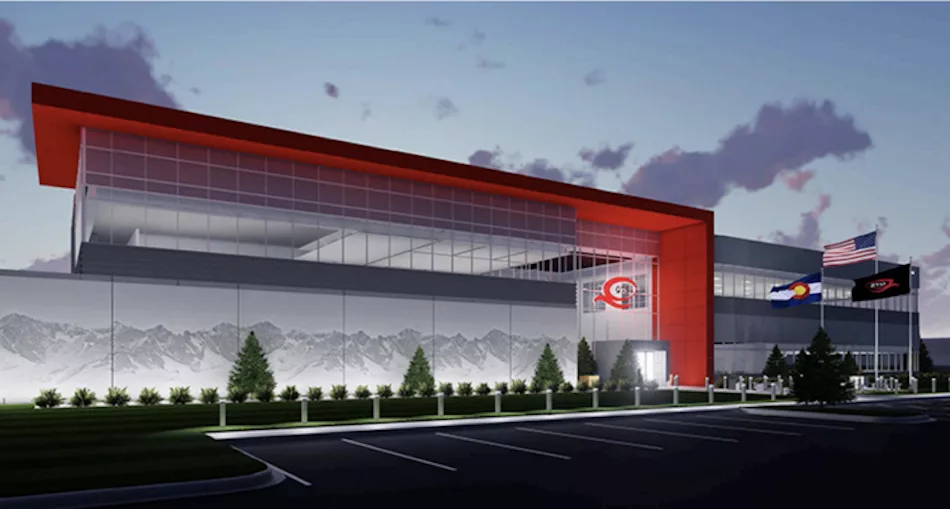
Data center that is part of proposed 2,100-acre Digital Gateway complex in Prince William County, Va., the subject of a lawsuit in state appeals court on which arguments were heard in February. The complex would generate an estimated $400M in annual revenue, but Virginia is among several states contemplating a statewide data center moratorium.
More states now are following municipalities to block or restrict data center expansion, claiming they need more time to hear from constituents, power authorities, developers and environmental agencies before deciding whether, and how, to approve them—and what to require.
Efforts to pause fast-moving infrastructure that supports artificial intelligence development have worked their way into several state legislature agendas in recent weeks—as well as into the national debate. While caveats attached to the bans run a wide range, all forms of the legislation buy time for more discussion about the facilities’ water and power use and potential to drive up local electricity costs.
"Just six weeks into the new year, more than 300 data center-related bills have already been filed in more than 30 states," said MultiState, an Arlington, Va.-based government relations consulting firm in a Feb. 20 update. "Unlike in recent years when many states enacted bills designed to lure data centers using tax incentives and state-funded infrastructure as inducements, they are reconsidering their apparent 'open-door' policy toward the facilities."
New York state’s proposed policy, introduced in early February by state Sen. Liz Krueger and Assembly member Anna Kelles, both Democrats, is considered one of the most aggressive in the U.S. It seeks a three-year moratorium for proposed facilities of more than 20 GW and asks the state Dept. of Environmental Conservation to develop environmental impact requirements, while the state Public Service Commission would study how to minimize impacts on gas and electricity prices.
“This is the time to take a pause and set up strong regulations that ensure protections for New Yorkers from carrying the economic burden of the high energy demands of data centers and minimize environmental harms of water, noise, light and air pollution,” Kelles said. The pause would also provide time for the state to pass data center regulations, said a Krueger spokesperson.
The New York Independent System Operator, which operates the state power grid, said it has 9.5 GW of proposed data center load in its interconnection queue—the main reason it is worried about a capacity shortfall in the next five years. “There's no possible way that new nuclear generation [or new gas generation] can address that issue in a relevant timeframe,” the spokesperson said. Local approval of one large 450-MW facility at a former upstate coal-fired power plant site now faces litigation. Permits of more than 130 existing data centers in New York would not be affected.
In a March 2 letter to Gov. Kathy Hochul and state lawmakers organized by environmental group Food and Water Watch, more than 100 state advocacy organizations urged passage of the bill. Hochul has not yet endorsed the measure.
Looking for quick answers on construction and engineering topics?
Try Ask ENR, our new smart AI search tool.
Ask ENR →
But one opponent of the three-year moratorium, the operating engineers' union New York-New Jersey Engineers Labor-Employer Cooperative, cites the impact on members of the sector cutback.
More Stateside Halts Eyed
Similar proposals are also moving in other states, including bipartisan action. In Oklahoma, Republican Sen. Kendal Sacchieri introduced a bill that would ban data center construction above 100 MW until late 2029 and would task the Oklahoma Corporation Commission to study water supply and electricity cost impact issues. But bills in both South Dakota legislative chambers proposing a one-year moratorium on hyperscale-sized data centers larger than 50 MW failed on Feb. 18, although measures mandatng more project transparency advanced.
In Florida, Gov. Ron DeSantis (R) proposed state legislation in December, with numerous development mandates "to protect Floridians from footing the bill for Hyperscale AI Data Centers and to empower local governments to reject their development in their communities."
Democratic Sen. Jaha Howard in Georgia introduced a one-year pause to listen to constituent concerns, while a bipartisan team in Maryland wrote legislation prohibiting data centers in the state until further laws require them to be co-located with a power plant. “Data centers consume enormous amounts of power. Maryland should not approve massive new energy users unless they provide or finance their own reliable power generation,” said Kathy Szeliga, a state delegate backing the bill. In Vermont, which has no industrial-scale data centers, legislation now in its House would set new siting and ratepayer cost parameters, but a state Senate bill seeks a construction moratorium until July 1, 2030.
Virginia, which hosts what has become the largest data center hub in the U.S. with about 568 operating facilities, this year has joined in on similar statewide action. A proposal would bar local governments from granting final approvals for data center rezoning, special use permits, special exceptions and development plans—with more than 60 projects now being considered. The state House of Delegates passed earlier this month a bill that would continue generous state tax exemptions for existing and new data centers powered by renewable energy or transitioning from fossil fuels. But more legislative battles are ahead in the state.
Meanwhile, a state appeals court heard arguments Feb. 24 in a community lawsuit against the proposed 27-building Digital Gateway project by developers QTS and Compass, part of which would abut the Manassas National Battlefield Park, a federally managed Civil War monument. The project is located on about 2,100 acres—which is expected to generate $400 million in annual revenue to Prince William County—was approved in 2023 by its Board of Supervisors in what plaintiffs contend was a rushed action.
Described as one of the largest U.S. data center complexes, it would also include 14 electric substations and hundreds of diesel generators. The companies have not released detail on power use or commented on the project cost or lawsuit, but environmental groups calculated it would need more than 2.9 GW to operate.
The energy demands of data centers are attracting attention as more—and larger—facilities are built. Data center need rose 9% in the last year, said an analysis of federal data. A data center complex being built by Meta in Louisiana will reportedly draw more daily power than all of New Orleans during a summer peak. That city's council enacted this year a one-year moratorium on building the facilities.
But some states are against data center curbs. In a Feb. 21 editorial, The Washington Post, owned by Amazon CEO Jeff Bezos, pointed to Mississippi Gov. Tate Reeves (R) who it said in a social media post "offered a rousing defense of data centers this week as essential to winning the AI race against China."
Sanders: Federal Moratorium?
Even so, nationwide attempts to address data center impact concerns also have surfaced. Republican Sen. Josh Hawley of Missouri and Sen. Richard Blumenthal, the Connecticut Democrat, introduced legislation this month to mandate that all data centers supply their own power with off-grid sources and be built using project labor agreements. Following a data center pause by Denver in February, Sen. Bernie Sanders (I-Vermont) also renewed his call for a "federal moratorium," which Interior Secretary Doug Burgum immediately responded to in a TV interview claiming the move would be "capitulating to China," while a number of Democrats also opposed.
President Donald Trump, facing blowback from rising power prices in certain parts of the country, noted in his State of the Union speech last month that big tech firms have agreed to his "Rate Payer Protection Pledge" to pay for power infrastructure costs of their data centers. The pledge signing by Microsoft, Amazon, Meta Platforms, xAI, Oracle, OpenAI and possibly others will occur at a March 4 White House event, an administration spokesperson confirmed.
The companies "will build, bring, or buy their own power supply for new AI data centers, ensuring that Americans’ electricity bills will not increase as demand grows," she said. But little implementation detail has been shared, with questions remaining on whether the pledge would be binding or have the force of law, media reports said.
Energy Secretary Chris Wright said tech companies would also “advance some money to add additions to the grid,” according to E&E News. Tech firms such as Microsoft, OpenAI and Anthropic have issued statements about covering costs of grid upgrades or keeping their infrastructure from raising local utility costs, with reports of an estimated $600 billion to be spent on data center expanson.
But some in Congress remain concerned that the pledges won't keep rising costs under control. “A handshake agreement with Big Tech over data center costs isn’t good enough,” Sen. Mark Kelly (D-Ariz.) said on X. “Americans need a guarantee that energy prices won’t soar and communities have a say.”
Even so, there is strong skepticism on whether congressional legislation can be enacted this year, with lobbying from tech firms and from state and local officials who see economic gains from data centers—and with no clear passage process, according to Blumenthal and media reports.
Christopher Jordan, a senior specialist on urban innovation at the National League of Cities, said pauses enable municipalities to determine "what questions to ask,” particularly related to growing impacts on water supplies, since hyperscale data centers have started to cluster in water-scarce or drought-vulnerable regions.
Westward expansion is where data center "clustering is happening and dollars are going," Julien Dumoulin-Smith, a power sector research managing director for investment banker Jefferies Financial Group, told a Feb. 12 Barron's webinar. Concerns over data center water drain are one issue that prompted Denver Mayor Mike Johnston and the city council to propose on Feb. 23 a moratorium for one year or less, with no start date yet given, reports say. One just-introduced Colorado statehouse bill would require new facilities to use renewable energy and not affect consumer ratepayer costs.
Drought-affected Utah will weigh in its current legislative session several data center disclosure bills—including one requiring state reporting for those of 10,000-sq ft of annual water diverted, discharged and reused, while those of 10 MW and higher at peak demand must report energy use for analysis on grid impact. The water data submitted would be aggregated with no public ID of users, in the bill's current form, but separate legislation would ban non-disclosure agreements on data between developers and public officials.
A better understanding of what data centers could offer hinges on projects being built with more transparent agreements, said Simon Wang, economic mobility specialist at the National Community Reinvestment Coalition, a Washington, D.C., non-profit network of about 600 community-based organizations focused on fairness in banking, housing and business.
But as different tiers of government weigh in on whether to encourage or limit data center development, policies might start to conflict. "Certain localities bear the cost inadvertently,” Jordan said. “Local communities are feeling the physical effects of this much more.”