2025 Global Review +: Shifting Priorities Drive Projects
December 23, 2025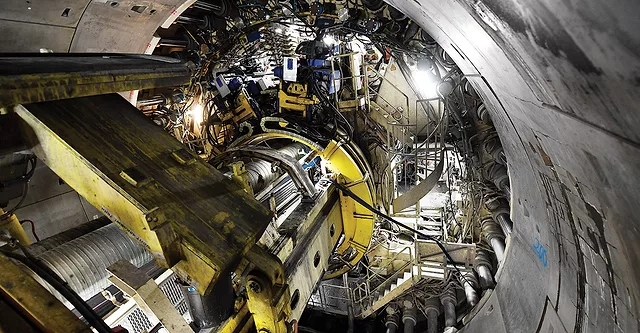
2025 Global Review +: Shifting Priorities Drive Projects
December 23, 2025Italferr is part of the design team on the Turin-Lyon high speed rail project connecting France and Italy. The project includes a 57.5-km tunnel.


Related Link:
ENR 2025 Global Review + (PDF)
(Subscription Required)
Sustainability, ESG (environmental, social and governance) integration, artificial intelligence and resilient and adaptive infrastructure systems are among global trends prompting design firms to “reimagine their business models, enhance operational efficiency and improve the return on investment for clients,” according to this year’s Top 225 International Design Firms.
Companies juggle geopolitical and economic uncertainties in the form of rising construction and materials costs, and supply chain disruptions on an international scale that can directly impact project finance and delivery timelines, notes Hamzeh Awwad, CEO of AJi Group. “These issues are often more acute than in our home markets, where regulatory frameworks and economic conditions tend to be more stable and familiar," he says.
With the World Economic Forum estimating a $15-trillion investment gap for global infrastructure by 2040—and an annual $3.3 trillion needed to support anticipated worldwide economic growth—Australia-based design firm Aurecon has preemptively appointed a chief engineering, eminence and innovation officer to spearhead complex infrastructure-related challenges and “support our people to relentlessly pursue engineering collaboration, and technical and delivery excellence,” says CEO Louise Adams. “We are operating in a dynamic yet complex world, which presents a multitude of challenges for engineers as well as opportunities.”

TOP 225 cover credit: rendering courtesy of Dewan Architects + Engineers; Top 250 Cover credit: Photo courtesy of Kalyon Insaat Sanayi ve Ticaret As
Top 225 international design revenue rose 7.7% between 2023 and 2024, to $89.3 million from $82.9 million. Median international revenue is up 6.9%, totaling $63.9 million. Of the 211 firms that filed 2025 and 2024 surveys, 71.1% reported higher revenue on the former and 93.6% of those reporting profitability status noted profit on international work last year.
Backlogs for Top 225 design firms have also remained strong for a majority of firms, but the percentage of those showing an increase has fallen over the past few years. Of 185 firms reporting backlog status on the 2025 survey, 65.4% said it is higher than last year. That proportion was 69.3% and 74.1% on the 2024 and 2023 survey filings, respectively.
The Middle East had the largest growth between 2023 and 2024, with international design revenue rising nearly 30% in the region, almost doubling since 2021. Major growth was also reported in the U.S. (10.7%), Africa (9%) and Europe (7.6%). Revenue dipped significantly in the Caribbean (17.4%) and Latin America (15%).
“Many countries, particularly across the Persian Gulf region, Africa and with emerging economies, are actively pursuing economic diversification strategies to reduce reliance on traditional sectors such as oil and gas and extraction and export of natural resources,” notes Pace Associate Director Abdullah Abdulaziz Al Shaiji.
For the Top 225 overall, revenue in the telecommunications market rose 61.7% in 2024, with the average firm international total increasing to $24.28 million from $16.01 million in 2023. Listed firms all saw double-digit percentage revenue increases in other markets—including sewer/waste (20.2%), power (18.9%), industrial process (17.7%), general building (16.2%) and water supply (15.8%). Top 225 revenue in the oil and gas sector contracted 21.1% between 2023 and 2024.
Looking for quick answers on construction and engineering topics?
Try Ask ENR, our new smart AI search tool.
Ask ENR →

“We are operating in a dynamic yet complex world, which presents a multitude of challenges for engineers as well as opportunities.”
Louise Adams, CEO, Aurecon
With 2050 seen as a key deadline for net-zero emissions for the global energy transition, Top 225 firms involved in the energy sector say they are seeing firsthand how reimagined production is driving market innovation.
“There is a clear and growing movement toward nuclear power as a key component of the global energy transition and energy sovereignty,” says Assystem Deputy CEO Stéphane Aubarbier, citing the 2023 U.N. Climate Change Conference (COP28) in Dubai, with over 20 countries pledging to triple nuclear energy capacity by 2050, as one of several catalysts driving the trend.
Geopolitical instability around the world has also had a “growing impact on the priorities of national governments and how public funds are allocated,” says Murat Koru, chairman of Proyapı Engineering and Consultancy Inc. “In recent years, the increase in military conflicts and the perception of rising global insecurity have led many governments to reassess their budgets,” he says. “As a result, spending on transportation infrastructure in some regions has been reduced or postponed in favor of initiatives seen as more urgent for national security or defense preparedness.”
Such change of priorities in response to regional conflicts are reflected in the revenue numbers for this year’s Top 250 International Contractors, with supply chain disruptions and cost volatility rocking some global markets and roiling others to a point of diminished returns.
Overall, Top 250 revenue increased 0.5% from 2023 to 2024 to $501.2 billion. In turn, this marginal growth drove down median international revenue 2.7% to $464.36 billion, from $477.07 billion in 2023. Among filing companies that reported a profit or loss, 91.3% said they were profitable in 2024.
“The global economic recession that began with the pandemic in 2020, and especially the recent war in countries near our areas of operation, creates uncertainty and supply chain disruptions,” says BCM Holding Chairman Baran Çoktin. He adds that uncertainty “impacts input and logistics costs in the construction sector, increasing them and reducing profit margins.”
Even as contractors innovate to push projects forward, Çoktin says risks associated with unpredictable political and policy shifts and high labor and land costs can ultimately spook investors into inaction. He predicts that the majority of contracting expenses next year will be “mostly in labor [and] material costs due to economic crises” and in transportation “due to increases in petroleum products.”
After explosive double-digit growth over the past two years, 2024 revenue data shows manufacturing and industrial process sectors have contracted the most, 3.3% and 10.6% respectively. Top 250 contractors doing business in the oil and gas sector saw revenue fall 13.6%, with those in hazardous waste reporting a 10.6% decline. But sewer and waste sector revenue was up 18.4% for listed companies, with revenue also rising 14.2% for firms in telecommunications and 12.2% for those in water supply.
Behind the numbers, many Top 250 contractors said they are leaning into a business strategy that prioritizes refining core services such as tunneling, oil and gas infrastructure and site development over expanding into new sectors and contracting markets.
Over its 25-plus years in operation, Egyptian Maintenance Co. has developed a reputation for overcoming challenges that has allowed it to become “a trusted partner for integrated maintenance services, says Chairman and Managing Director Khaled Ibrahim. He adds that “high-profile projects in sectors such as oil and gas, petrochemicals and water treatment have significantly enhanced our market presence.”
“Military conflicts and the perception of rising global insecurity have led many governments to reassess their budgets.”
Murat Koru, Chairman, Proyapı
Top 250 revenue in the Caribbean region increased 37.7% between 2023 and 2024. The Middle East and Australia regions also saw double digit revenue growth at 17.7% and 13.9%, respectively, with decreases in Latin America of 9.9% between 2023 and 2024, after growing 77.2% from 2021 to 2023.
Firms on this year's Top 250 survey reported an increase in the total value of new international contracts—rising 7.6% to $727.3 billion, from $676.1 billion on the 2024 survey. Backlogs also remained solid, with 55.4% of firms reporting a backlog status change, indicating growth in the past year.
Yet, overall global supply chain disruptions have created a domino effect of rising costs in the form of materials delays and price fluctuations. President Donald Trump’s trade policy—and its accompanying tariffs—have also added to surprise costs in materials procurements. Some contractors have opted to take a wait-and-see approach on how tariffs will progress, but others are preparing for how they will impact operations in the long-term.
Across his company's infrastructure work, Guillermo Lorenzo, CEO of Infrastructures, Engineering and Services for COMSA Corp., says there is a collaborative “commitment to sustainability and digitalization, and the need to innovate and optimize processes to maintain competitiveness.”
Any “periods of international uncertainty are not good for economic activity,” he adds. Yet the international construction industry “successfully weathered the shocks of the COVID-19 pandemic and the war in Ukraine, and we are confident that we will do so again if new difficulties arise,” Lorenzo predicts.
General Building

Team Set to Build Aussie Olympic Venues
A joint venture of Laing O’Rourke and AECOM will deliver the program
Transportation

Relics and Rail Work Converge in Rome
Two miles of a new transit line open as work continues on a third station.
Power
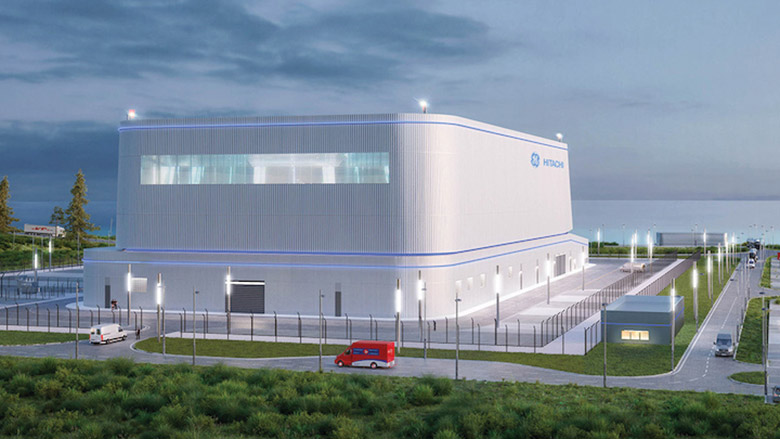
GE Vernova Hitachi SMR Advances in UK
Regulators OK reactor design through an early, nonbinding review stage
Oil and Gas
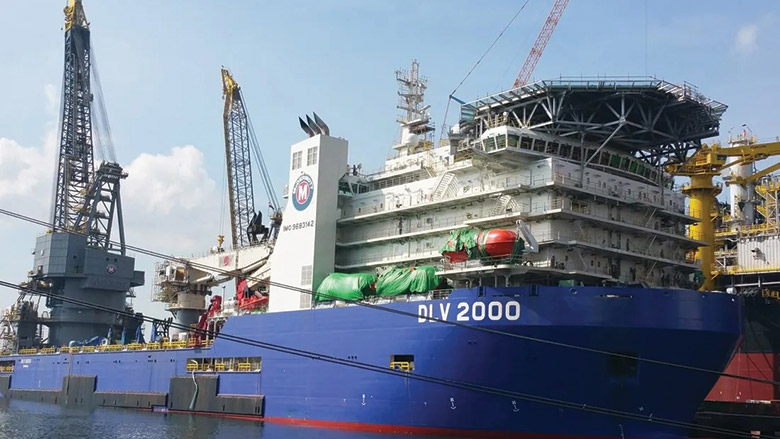
First Deepwater Gas Project off Brunei OK'd
U.S. contractor McDermott is awarded key EPC and installation contract
Environment
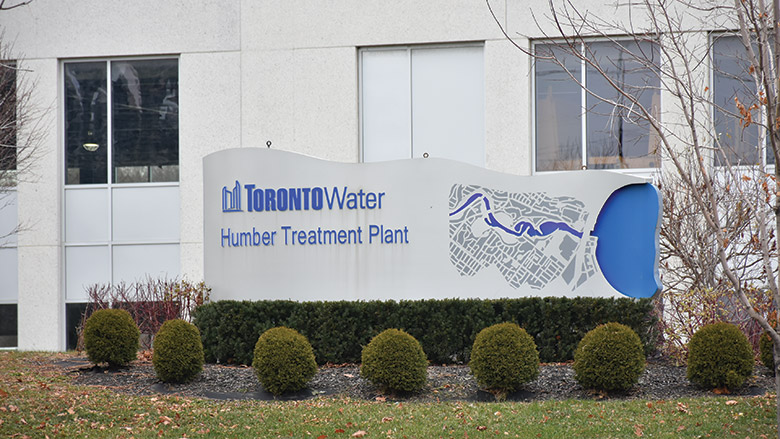
New Upgrades for Toronto Wastewater Plant
Work aims to update treatment system and lower carbon footprint
Manufacturing