ENR 2025 Global Best Projects
Best Project, Water/Wastewater: Julius Nyerere Hydropower Plant and Dam
Dam provides necessary electricity and Jobs in remote Tanzania

Julius Nyerere Hydropower Plant and Dam
Morogoro, Tanzania
Best Project, Water/Wastewater
Submitted by The Arab Contractors (Osman Ahmed Osman & Co.)
Owner: Tanzania Electric Supply Co. Ltd. (TANESCO)
Lead Design Firm: Artelia Group
Contractor: Joint Venture of The Arab Contractors Co. and Elsewedy Electric
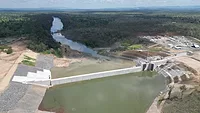
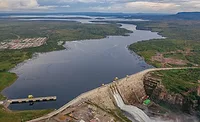
The Julius Nyerere hydroelectric dam seeks to address Africa’s growing demand for electricity as well as sustainable development. The project includes a 134-meter-high by 1,025-m-long dam and a reservoir with a 34-billion-cu-m storage capacity. The nine 235-MW Francis turbines inside the dam’s powerhouse will generate up to 6,035 GWh annually.
The dam is located in a remote and flood-prone area of Tanzania, more than 350 km outside of Dar es Salaam, in an area where the rock is heterogeneous, which required the project team to conduct extensive geotechnical analysis and build more than 24 roads and bridges to be able to deliver materials and workforce teams to the site.
The facility, which at peak had more than 12,000 workers on site, is expected to contribute to Tanzania’s GDP and provide power to neighboring countries. The project team facilitated training for 5,000 Tanzanians and provided on-site housing for workers.
According to The Arab Contractors, the project required ingenuity in addressing challenges. Among the advancements in construction methods and technologies, the team used roller compacted concrete in the dam structure. “This technique allowed for efficient large-scale placement, reduced curing time, and improved thermal control—addressing key challenges typically encountered in mass concrete works,” the project team said.
The construction of a diversion tunnel to reroute the Rufiji River during construction of the dam’s foundation was another challenge. “The design and execution of the upstream and downstream cofferdams under flood-prone conditions required careful sequencing to ensure dry working environments and uninterrupted progress,” the project team said.
Looking for quick answers on construction and engineering topics?
Try Ask ENR, our new smart AI search tool.
Ask ENR →