ENR 2025 Global Best Projects
Best Project, Power/Industrial: Macau Refuse Incineration Plant — Phase 3
Urban waste handling complex seeks to blend in
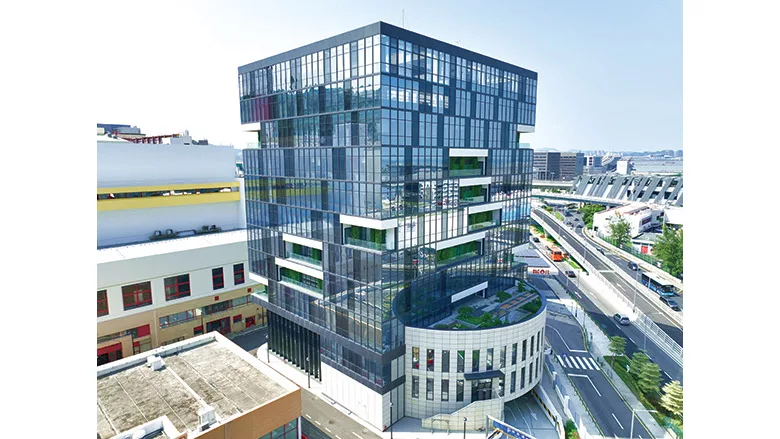
Macau incineration plant expansion, which includes new administration building here, boosts waste handling capacity and adds design elements to reduce bulk of the complex on a tight site.
Macau Refuse Incineration Plant – Phase 3
Macao, China
Best Project, Power/Industrial
Submitted by China Harbour Engineering Co. Ltd
Owner: Environmental Protection Bureau, Government of Macau Special Administrative Region
Lead Design Firm: AECOM Hong Kong
Contractor: China Harbour Engineering - Sanfeng Covanta Environment Industry - Tongfang Environment - Big Four Facilities Management Joint Venture
Macau's Refuse Incineration Plant’s new phase boosts daily capacity to 3,000+ tons at the only urban solid waste treatment facility in this special administrative region of China, first opened in 1992. The project includes systems for refuse receiving, charging and incineration; waste heat recovery; steam turbine power; water and steam cooling; flue gas cleaning; and fly ash and slag handling, as well as a a new power substation.
The project, finished ahead of schedule and on budget, includes a 25-ton-per-day hazardous waste treatment plant and allows for annual power generation of 200 million kWh at full capacity.
The plant’s compact site, with highly integrated existing equipment and pipelines, presented challenges that required facilities “to be designed and built in a stacked way,” the submission says.

Macau incineration plant expansion boosts capacity to 3,000+ tons per day and adds design elements to reduce bulk on tight site.
Photo by RuDong Zhao, China Harbour Engineering Co. Ltd.
“The design divides the plant exterior into four layers, reducing bulk and creating the stacked effect, which adds interest,” the team adds. Photovoltaic glass curtain walls between each “layer” provide natural light and ventilation to inner corridors, while glass, wood-like metal grilles and steel give “a lighter and more modern appearance,” it notes. The design also cuts solar radiation and energy use. For sustainability, all plant wastewater is treated and reused and the administration buildng feature a rooftop rainwater harvesting system.

Photovoltaic glass provides natural light and a more modern appearance, says the team, with the design also reducing solar radiation and energy use. Photo by RuDong Zhao, China Harbour Engineering Co. Ltd.
Crews used incremental launching and other construction methods for the first time in Macau to assemble large-span roof steel trusses, as well as an Intelligent anti-collision system to service five tower cranes in the tight space. The project team says it proactively raised the pile foundation dynamic load test ratio from 3% to 100%, ensuring each pile fully met designed capacity. The project also employed a multifaceted workforce safety and security programs.
Looking for quick answers on construction and engineering topics?
Try Ask ENR, our new smart AI search tool.
Ask ENR →