Environmental Policy
COP30 Talks Yield Little Progress Toward Climate Emissions Reductions Worldwide

The Tropical Forest Forever Initiative, endorsed by more than 50 countries at the COP 30 meeting in Brazil, will provide a financing mechanism to prevent deforestation, a leading cause of global warming.
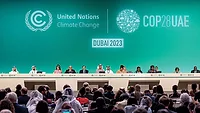
Nations left international climate meetings in Belem, Brazil during the two weeks of the 30th UN Climate Change Conference (COP30) with little to show for their efforts to transition the world away from fossil fuels, although gains were made in financing climate adaptation.
While delegations from 194 countries attended the conference—which went into overtime to end Nov. 22—there was no representation from the Trump administration, which has embraced fossil fuels and denied that climate change is a crisis, though U.S. politicians and organizations attended on their own to demonstrate commitment to climate action.
Efforts to negotiate tangible plans to reduce fossil fuel emissions for the most part languished.
“The talk of the COP has been to ‘embrace science’ and move away from negotiations to focus on implementation," said Bill Hare, CEO of Climate Analytics, a Berlin-based global environmental nonprofit, in a statement. “However, there is a massive risk that the outcome of COP30 will just leave countries to ‘implement’ policies that will warm the Earth to 2.6° C. There is no point in ‘embracing the science’ if it’s not acted on, just as there is no point agreeing to global energy goals if they’re not implemented.”
There were some gains. The meetings marked the official launch of the Tropical Forests Forever Facility initiative, which was established by the Brazilian government to provide annual funding to countries that preserve tropical forests. The $5.5-billion program received endorsements from 53 countries—including those with tropical forests as well as others—with 19 of the endorsees being potential sovereign investors, according to COP.
Marina Silva, Brazil minister of environment and climate change, said in a statement that the funds are not a donation, but rather “an initiative that operates according to market logic, leveraging private resources from public investments."
She added that “for every dollar contributed by countries, it is expected to mobilize about four dollars from the private sector, creating a permanent trust fund. It is a new way of financing conservation, with shared responsibility and a vision for the future.”
Looking for quick answers on construction and engineering topics?
Try Ask ENR, our new smart AI search tool.
Ask ENR →
The Utilities for Net Zero Alliance increased its annual investment goal to $148 billion, up from $117 billion last year—split between $66 billion for renewables and $82 billion for grid and storage investment that will represent about $1 trillion in investment by 2030.
A total of 83 countries—more than ever before at a COP meeting—agreed to reduce emissions from fossil fuels, with the final agreement calling for tripled financing by 2035 to developing nations for climate adaptation projects. More than 14,000 local governments globally committed to slashing emissions and protecting communities from deadly heat. But a “roadmap” to phase out oil, coal and gas was left out of the official agreement after facing resistance from major fossil-fuel producing nations including Saudi Arabia and Russia, and will be taken up by committed nations outside of the U.N. process.
“COP30 has delivered progress,” U.N. Secretary General António Guterres said, adding, however, that “the gap between where we are and what science demands remains dangerously wide.”
Despite absence of the official U.S. delegation, U.S. Sen. Sheldon Whitehouse (D-R.I.) railed against the administration at a Nov. 14 press briefing for being aligned with fossil fuel interests, adding that while officials deny that climate change is a crisis, the finance community—including executives at Goldman Sachs, Freddie Mac and other entities—is quite aware. “A lot of folks who aren’t by their nature green [are] looking for the coming economic shocks,” he told media. Also attending the event was California Gov. Gavin Newsom (D).
A coalition of 180 U.S. businesses and organizations also signed a letter presented at the summit maintaining commitment to improving energy efficiency as the “fastest, cheapest and most readily available solutions we have to lower greenhouse gas (GHG) emissions, decrease demand on the grid and improve the health, safety and productivity of our built environment.” Signatories included the U.S. Chamber of Commerce, E3 Energy Services, Honeywell and the National Association of Energy Service Companies, among others.
Closing Window for Reaching Goal
Numerous studies suggest that the Paris Agreement goal adopted in 2015, which sought to prevent average global temperatures from increasing more than 1.5° Celsius over pre-industrial levels, is no longer achievable. In January, the World Meteorological Organization said that 2024 was the first year that average global temperatures exceeded a 1.5° C increase, reaching 1.55° C, with the hottest years on record occurring over the past decade.
Some effects of this temperature rise were evident at the conference, with heavy rains causing water to drip onto delegates in meeting rooms, and air conditioning faltering under high heat and humidity. A fire that broke out Nov. 20 at a convention hall pavillion, contained in about six minutes, was described by many as a metaphor for the climate crisis.
A study published Oct. 27 in the journal Nature suggested that the carbon footprint from the construction industry alone could more than double globally by 2050. Authors found that in 2022, the use and manufacturing of cementitious materials, bricks and metals accounted for more than half of the industry’s carbon emissions, while glass, plastics, chemicals and bio-based materials contributed 6%. The remaining 37% came from transport, services, machinery and on-site activities.
The authors concluded that under the business-as-usual scenario, “the construction carbon footprint alone will exceed the per-annum carbon budget for the 1.5 °C and 2 °C goals in the next two decades.”