Economy
June PPI Holds Flat as Construction Input Costs Ease 1.6%
Materials costs dipped in June, but tariffs and rate policy create inflationary pressures
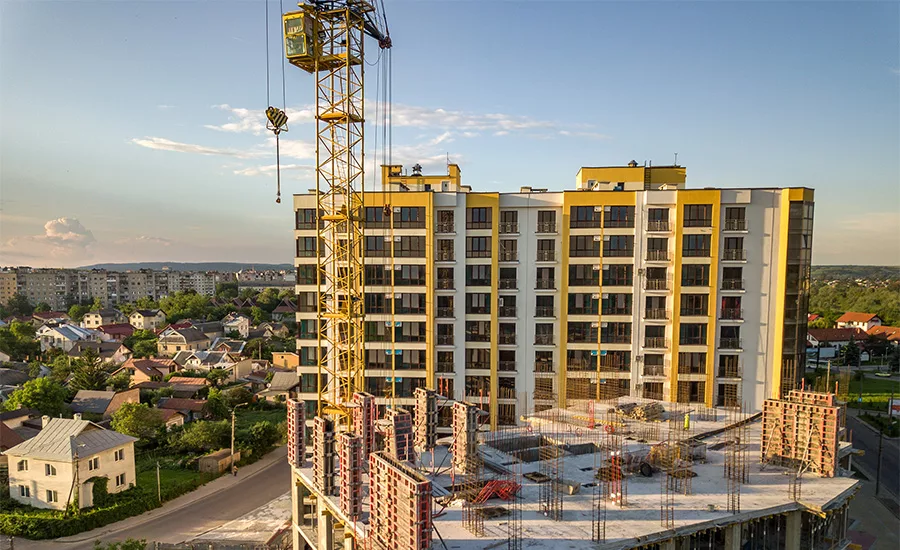
Construction input costs declined 1.6% in June, the BLS reported Wednesday, offering temporary relief to contractors navigating inflation pressures, tariff uncertainty and shifting project timelines.
Image courtesy of bilanol via Adobe Stock
The U.S. Bureau of Labor Statistics reported Wednesday that the Producer Price Index for final demand was unchanged in June, as a 0.3% gain in goods prices was offset by a 0.1% decline in services prices.
The flat reading followed a revised 0.3% increase in May and, as Reuters reported, matched economists’ forecasts for no change in the headline PPI for final demand.
Over the 12 months ending in June, the PPI for final demand rose 2.3%, down from May’s 2.7% annual advance, according to BLS data.
Core measures of producer inflation—excluding volatile food and energy components—are also running above the Federal Reserve’s 2% target, bolstering expectations that the central bank will hold its benchmark overnight rate at 4.25% to 4.50% at its late-July meeting.

Construction‐sector input costs showed some relief in June. According to the Federal Reserve Bank of St. Louis, the unadjusted PPI for construction materials fell to 338.482 in June from 343.975 in May, a 1.6% month-to-month drop that may ease near-term budget pressures for contractors.
“Contractors largely are still busy now, but they’re hearing more and more from owners that projects are being put on pause, scaled back or even canceled because of uncertainty about where the economy is headed,” Ken Simonson, chief economist at the Associated General Contractors of America, said in a LinkedIn post.
“Tariff policy—and shifting effective dates—means contractors have a hard time figuring out what their costs will be,” the AGC economist added.
Looking for quick answers on construction and engineering topics?
Try Ask ENR, our new smart AI search tool.
Ask ENR →
RELATED
Trump's Planned 50% Copper Tariff Shakes Electrical Contractors
“The reemergence of input price escalation means that taxpayers will get even less infrastructure per dollar spent,” Zack Fritz, an economist at the Associated Builders and Contractors trade group, said in an email.
“This is a particularly pressing issue given the way that federal regulations and materials prices have driven up infrastructure costs over the past few years; the cost of building roads in the U.S. increased about 65 percent from the start of 2020 to the end of 2024, according to the DOT’s National Highway Construction Cost Index,” he continued.
Moreover, contractors continue to feel the sting of earlier tariff-related price hikes. In a May survey, ABC found 87% of its members had been notified of materials price increases tied to import duties and 22% reported project delays as a direct result.
“Nearly 22% of contractors had a project delayed or canceled in April due to tariffs, up from 18% in March,” ABC Chief Economist Anirban Basu said in a statement on Wednesday. “Economic uncertainty remains extraordinarily elevated.”
Basu said it's unlikely the Fed will cut interest rates at this month’s meeting. Yet, despite higher rates and input costs, contractors have remained optimistic about profits. Basu said it is possibly due to the permanent 100% bonus depreciation in the One Big Beautiful Bill offsetting increased expenses.
Further uncertainties lie ahead: President Donald Trump has been emphatic that additional tariff increases on imports from Mexico, Japan, Canada, Brazil and the European Union will take effect Aug. 1.
Many economists have derided the move, arguing that the levies will keep goods prices elevated through the end of the year.
“While it is unclear how and when trade policy will affect construction materials prices, the impact was evident in June’s Consumer Price Index release; prices for core goods excluding automobiles rose at the fastest pace since late 2021,” Basu wrote.

Bryan Gottlieb is the online editor at Engineering News-Record (ENR).
Gottlieb is a five-time Society of Professional Journalists Excellence in Journalism award winner with more than a decade of experience covering business, construction and community issues, including finance, law and real estate. He has reported for Adweek and the San Diego Daily Transcript and led a community newsroom in Santa Monica, Calif. He served as editor-in-chief of the Detroit Metro Times and as managing editor at Roofing Contractor, where he helped shape national industry coverage. At Engineering News-Record, Gottlieb covers breaking news, large-scale infrastructure and megaprojects, regulatory developments and business trends across the U.S. and global construction sectors.
email: gottliebb@enr.com | office: (248) 786-1591