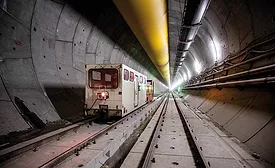
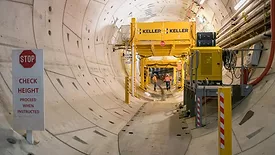
With fewer than 6 km left on the final Alpine drives, the $11.5-billion Brenner Base Tunnel shifts toward systems installation and a planned 2028 opening.
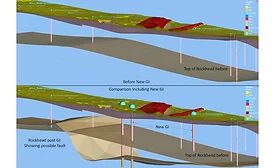
A team of New Zealand-based software designers that brought digital 3D modeling to engineering geotechnics less than two years ago recently launched an upgrade to their software. It is now being used on some major projects, including the U.K.’s multibillion-dollar London-Birmingham high speed railroad (HS2).
From buildings to bridges, the built environment would benefit from a stronger design collaboration between structural engineers and geotechnical engineers.
On Demand State transportation agencies are under pressure to deliver safer, more resilient infrastructure—faster and with fewer resources. In this webinar, experts from the Texas Department of Transportation and WSP will explore how subsurface modeling and data integration tools are transforming infrastructure planning and delivery.
On Demand Underground infrastructure must meet exacting performance demands, starting with the right materials. We'll explore how cutting-edge material science is driving stronger, lighter, and more sustainable solutions for subsurface environments. Learn how to shape the next generation of underground communications, energy, and water systems.
On Demand Water utilities are under pressure to stretch budgets, meet regulations, and improve reliability. This webinar presents a practical framework for “making the invisible visible,” using proven methods and digital tools to reveal hidden infrastructure risks, prioritize investments, and extend system life.