Brian Witte was just a freshman in high school when he launched his infrastructure career. “It was a small town in Iowa, and the teacher’s neighbor was the town engineer for a dozen communities,” recalls Witte, vice president of construction engineering for Parsons Corp. “They needed help.
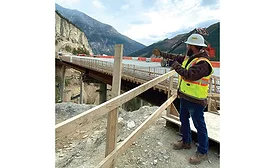
Winding along the edges of steep slopes deep in the eastern forests of British Columbia, a stretch of Highway 1 offers stunning vistas for commuters and visitors as they traverse Kicking Horse Canyon.
The cross-border Keystone XL pipeline was hit with another setback on Aug. 15 when a U.S. District Court judge in Montana ordered the U.S. State Dept. to perform a supplemental environmental impact statement on a new route through Nebraska.
Last month’s 210,000-gallon oil spill from the Keystone pipeline in South Dakota may have resulted from damage caused during construction, according to a preliminary investigation by the U.S. Dept. of Transportation’s Pipeline and Hazardous Materials Safety Administration.
The demise of TransCanada Corp.’s $12.5-billion Energy East pipeline has put another dent in Canada’s ambitious infrastructure plans, but the void may get filled with other large, albeit controversial, energy projects.
Laborers and union leaders cheered presidential memorandums to restart the Dakota Access and Keystone XL pipelines, but it will take more than a penstroke to get work under way.
Royal Dutch Shell has lost $5 billion so far in 2015, TransCanada Corp. is staring at a $2-billion write-off following the U.S. rejection of its Keystone XL pipeline, and Baker Hughes said it took a 43% hit to earnings compared to last year, a measurement almost identical to the decline of North American oil-rig drilling over the same time.