It may seen ironic at first glance that the U.S. Army Corps of Engineers and the U.S. Bureau of Reclamation are fasttracking a $900-million effort to address flood-risk and dam-safety issues at Folsom Dam, located near Sacramento, Calif., amid a headline-making, ongoing drought.
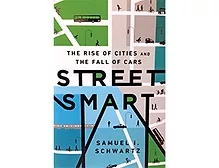
Equal parts transportation-planning compendium, autobiography and love letter to New York City, "Street Smart" (Perseus Books Group) lays out Sam Schwartz's vision for the future of multimodal and multinodal transportation systems.
Faced with chronically underfunded budgets, public-works officials are emphasizing technology-based solutions, such as drone surveys to inform preliminary designs and adaptive traffic signals to maximize corridor movement.
A U.S. company working with the Central Japan Railway Co. envisions a magnetically levitated, or maglev, passenger route along the Northeast Corridor between Washington, D.C., and New York City that will reduce travel time to an hour.
Photo Courtesy of N.H. DOT Related Links: Smart Roads Ahead: The Rise of Intelligent Infrastructure Smart vehicles, stupid infrastructure—that’s a phrase often invoked by Ted Zoli, national bridge chief engineer for HNTB, when he talks about the advent of connected vehicles that communicate with each other. He asks, will smart vehicles communicate with infrastructure? And will future infrastructure communicate with engineers?The answer is yes, he predicts. Further, he designed a test bed, the Memorial Bridge, which runs over the Piscataqua River between New Hampshire and Maine. The 1,200-ft-long, two-year-old bridge is becoming a “living bridge”—a piece of self-diagnosing, self-reporting smart
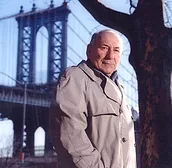
Herbert Rothman, 91, a bridge engineer who worked on historic structures throughout the nation and was a colleague of legendary bridge designer O.H. Ammann, died on July 25 in Long Island, N.Y.