A three-day conference providing demonstrations, presentations and networking by firms inventing, piloting and implementing technologies to address construction’s future left attendees bullish on tech prospects for the construction industry and heading home with ideas to deploy.
The looming influence of connected and autonomous vehicles on transportation infrastructure was the topic of an Infrastructure Week discussion on Capitol Hill, sponsored by AASHTO and the Eno Center for Transportation.
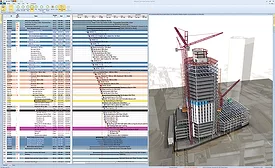
Software that can show a video of a construction project assembling itself has been around for years, but an important change is afoot, say a wide range of industry leaders.
Mixed reality holograms are the buzz this month as Microsoft released HoloLens devices. Different than previous, completely virtual experiences, HoloLens combines holographic technology with actual reality to create an environment where at-scale holograms can be projected into physical environments. For those of us who live in actual space—and not just in the video game realm—this has huge impacts on our ability to design, construct, operate and improve projects.
With concern about global warming prompting 177 countries to sign the December 2015 Paris Agreement to reduce greenhouse-gas emissions, the removal of carbon dioxide from power-plant flue gas is becoming an urgent priority.
When reading the news it seems developers, architects, engineers and contractors are fascinated with using unmanned aircraft on their next big project. And legally, any of them can fly a drone for recreational purposes within his or her field of vision and at a height of no more than 400 feet above ground provided they are not in restricted areas like airports or government installations like the White House. But whenever they step into the commercial space, new rules apply; and to avoid large fines here’s some advice.
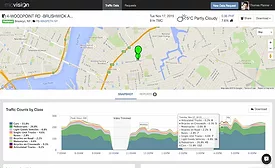
A technology company that uses computer vision to mine traffic video for data recently released a free cloud platform to which departments of transportation and engineers can upload an unlimited amount of footage and traffic data and find and connect with video consultants and contractors. Additionally, the company is releasing a new piece of hardware that plugs traffic signals into the “internet of things” (IoT).
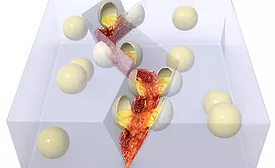
Researchers at the University of Illinois have developed a polymer based, damage-indicating coating that warns of breaks—from surface paint scratches to internal cracks—on steel and other metallic surfaces.
Using powerful nanotechnology tools, a research team led by the Massachusetts Institute of Technology has successfully modeled the complex structure of calcium silica hydrate (CSH), the main binding material in cement and concrete.
 RSS
RSS