Utility companies seeking to reduce CO2 emissions are increasingly relying on battery energy storage systems to meet peak-power demand as they retire their gas-fired plants.
The Structural Engineering Institute of the American Society of Civil Engineers recently announced the launch of a U.S. version of the U.K.’s Confidential Reporting on Structural Safety program.
European firms win projects set to deliver 1,700 MW, with millions in added state and developer infrastructure investments, as state enacts more aggressive clean-energy mandates.
Questions are still awaiting answers as Arizona Public Service Co. investigates the cause of an explosion April 19 in a 2-MW/2-MWh grid-connected energy-storage battery facility in Surprise, Ariz.
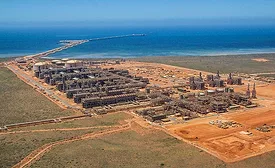
In May, Wood Group entered a new one-year contract with Chevron Australia to provide subsea integration and flow assurance front-end engineering design (FEED) services for the Jansz-lo compression project offshore of Western Australia.
The country’s first large-scale wind farms are under design off the coast of Maryland and Massachusetts, while two other large projects in those states are in the early stages of development.
The outlook for new U.S. Environmental Protection Agency guidance aimed at streamlining permit approvals for natural gas pipelines and other energy infrastructure projects is murky, at best, and could lead to more frequent legal skirmishes, some observers say.
As state is set to award its first 1,100-MW offshore wind farm contract, activists want it to restrict approvals of new natural-gas and other fossil fuel projects.
 RSS
RSS