Class-action lawsuits against engineering firms and public officials resulting from the Flint, Mich., water-supply crisis will be heard mostly in federal courts, based on a U.S. Supreme Court action on June 12.
President Trump’s announcement that the U.S. will withdraw from the Paris climate accord has catalyzed the already strong transition to renewable energy and commitments to reduce carbon emissions.
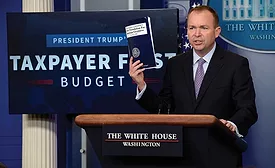
President Trump’s fiscal 2018 budget proposal confirms that he will seek federal infrastructure funds over 10 years, but there is still much that is uncertain.
California, Oregon and Washington are among the states moving forward with regulations and road maps for the construction and operation of building- and district-scale graywater capture and treatment systems for non-potable-water use, such as toilet flushing and irrigation.
New York Gov. Andrew Cuomo (D) has put forth 25 actions meant to reduce methane-gas emissions by 2020 as part of the state’s effort to reduce greenhouse-gas emissions 40% by 2030 and 80% by 2050.
An effort to put Superfund cleanup work in what Environmental Protection Agency Administrator Scott Pruitt says is the program’s “rightful place at the center of [EPA’s] core mission,” could help speed the approval process necessary to clean up the nation’s 1,300 most critical hazardous waste sites.