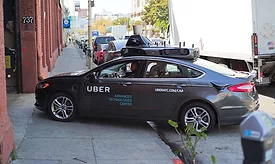
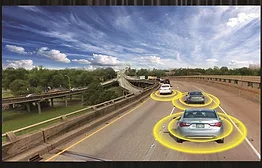
As Google, Uber, Amazon and Tesla work to transform transportation, there’s an important task that should be taken up by civil engineers: better informing the public about the risks.
Although on-street testing immerses AVs into real-world mobility environments, ensuring their reliability requires creating and evaluating as many “what if” scenarios as possible for a variety of vehicles.
Building infrastructure for autonomous vehicles can smooth down some of the rough edges of the technology, but the real work of navigation happens in the cars.
Efforts are underway in Louisiana to determine the possible impacts and new requirements for highway infrastructure that may result should the use of connected and autonomous vehicles (CAVs) grow.
Colorado's RoadX program illustrates what can be achieved when everyone—and everything—is in gear, listening, innovating and collaborating for the public good.
With the global mining industry still digging out of commodity slowdowns, much of the heavy equipment on display at this year’s MINExpo International exhibition was geared toward solving technological problems in time for the next boom.
The looming influence of connected and autonomous vehicles on transportation infrastructure was the topic of an Infrastructure Week discussion on Capitol Hill, sponsored by AASHTO and the Eno Center for Transportation.