The global management consulting firm McKinsey & Co. has released a new study of 2,400 construction technology providers serving the entire life cycle of the industry.
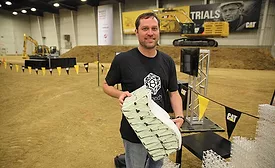
Pushing the limits of additive-manufacturing processes, 3D-printing startup Branch Technology recently completed installation of a bandshell in Nashville, Tenn., that it says is the largest 3D-printed structure in the world.
A construction tech company that printed the walls of a 350-sq-ft “tiny house” in 48 hours in Austin, Texas, in March is now partnered with a nonprofit that aims to start printing walls for 800-sq-ft homes in El Salvador—in 24 hours for each—by the end of the year.
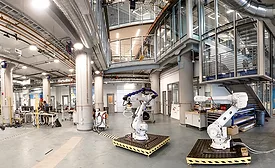
A standard, industrial robotic arm has “printed” about a third of a 12-meter pedestrian bridge that is destined to span an old Amsterdam canal in the Netherlands as early as next year.
When Caterpillar began its current investment in 3D-printing components for heavy equipment earlier this decade, the company’s engineers and chemists tried to manage their expectations.
The nascent 3D-printing industry is working toward the goal of printing large-scale structures with specially designed feed material, but researchers working at a smaller scale are currently exploring techniques for printing a wide range of materials in complex shapes.