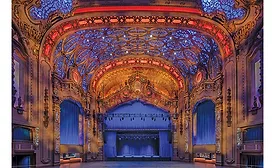
The project revitalized a historic 1920s-era French Baroque theater —that once hosted Buddy Holly & the Crickets, Chuck Berry, Duke Ellington and Ella Fitzgerald—by preserving its former grandeur while integrating modern technologies to meet today’s performance standards.
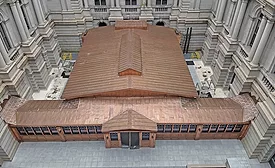
Named in the 1920s as a tribute to allied forces’ triumph in World War I, the Endicott Johnson Victory Shoe Factory was long a symbol of local pride and prosperity.
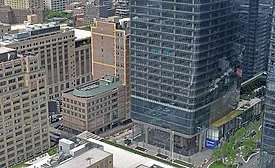
Part of a larger East River Waterfront esplanade, the in-water structure fills in a gap in Manhattan’s Waterfront Greenway, a planned continuous 32.5-mile loop around the island.
Working under a design-build delivery approach, the team completed replacement of two tower elevator systems on the Marine Parkway–Gil Hodges Memorial Bridge, a 540-ft-long vertical lift span built in 1937, and rehabilitated mechanical components, including the span locks.
The 126,000-sq-ft multidisciplinary building is designed to be a creative hub for innovation by showcasing RIT’s technological and arts programs with five large classrooms, studios for music and dance, a flexible event theater and seven maker/shop spaces ranging from wood and metal shops to 3D printing, electronics and textiles.
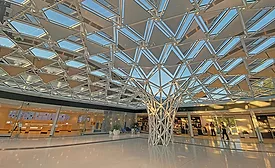
Spanning 19 acres, the 330,000-sq-ft facility incorporates shell space of a former shopping mall department store—providing easy access to roadways and public transportation, ample parking and nearby amenities for patients.
In addition to the complexity of integrating advanced energy technologies such as geothermal into a century-old historic building, the project was made even more complicated by the need to move a 12,000-lb drilling rig below grade into a subfloor below the basement with no elevator service.
Located within historic Delaware Park, the project upgraded the original museum building with 43,500 sq ft of renovated spaces and expanded it with 67,000 net sq ft of new space and 60,000 sq ft of underground parking.



-New-Build-02.webp?height=168&t=1730488743&width=275 "Rochester Institute of Technology")