The Alaskan Way Viaduct Replacement Tunnel was originally slated to open in December 2015, but faced years of delays when the tunnel-boring machine malfunctioned beneath downtown Seattle.
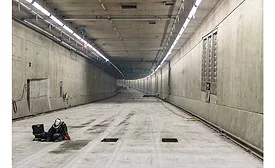
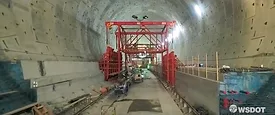
Bertha made the tunnel, but now Seattle Tunnel Partners crews working on behalf of the Washington State Dept. of Transportation must turn that tunnel into a workable 1.7-mile double-decker roadway.
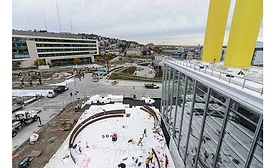
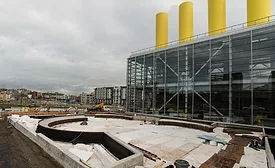
No transformation has proven quite as dramatic as in Seattle where the two pits—one at the south end of the project and the other at the north end, near the Space Needle—will require full transformations to serve the needs of the double-decker tunnel roadway.
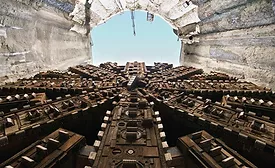
For four years, Bertha, once the world’s largest tunnel-boring machine, came packed not only with 57.5-ft worth of diameter and over 8,000 tons of girth, but never-ending drama.
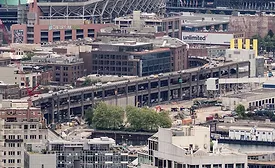
As we move closer to the 2019 milestone of opening the new State Route 99 tunnel under downtown Seattle, officials can start making plans for removal of the aging Alaskan Way Viaduct, the entire reason the new 1.7-mile tunnel was conceived originally.
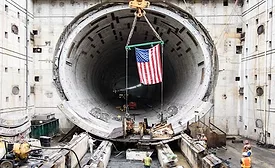
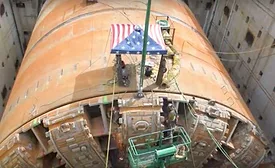
It took years for Bertha, a tunnel-boring machine, to mine 1.7 miles underneath downtown Seattle, but crews will spend just five months removing the 57.5-ft-dia machine from the receiving pit near Seattle’s Space Needle.
To get just over a quarter of a mile from the finish of the 1.7-mile-long bored tunnel under downtown Seattle, Bertha had to dig under another State Route 99 tunnel.
The holiday season provided some rest for Bertha, the tunnel-boring machine roughly three-quarters of the way through its route to bore a new State Route 99 tunnel under downtown Seattle, but that doesn’t mean crews have had it so easy.
The vast majority of 2016 Bertha news has fallen into the positive category, a welcome respite for the $3.1 billion project to replace Seattle’s aging Alaskan Way Viaduct with a 1.7-mile-long bored tunnel.