Designing to address climate change will require a paradigm shift for engineers who must plan for rainfall, floods, drought and sea-level rise without historical models to guide them.
Insurance companies, governments and some businesses are looking to engineers to build more-resilient structures to accommodate changing climate and weather extremes.
In response to devastating floods in the past few weeks from Hurricanes Harvey and Irene in Texas, Louisiana and many areas in the Southeast, the American Society of Civil Engineers’ library has assembled a set of papers and publications that highlight post-flood response and the risks posed by flooding in urban areas, making them free and publicly available to non-members until Dec. 31, 2017.
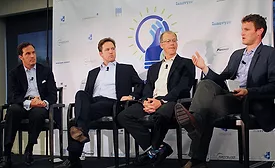
A “shark tank” panel of private equity investors at the American Society of Civil Engineers innovation awards celebration in June shed light on how they evaluate prospects, what red flags they look for and how innovation is likely to advance in an industry whose customers are dominated by public sector owners predisposed to “say no.”
The American Society of Civil Engineers has published a new edition of its structural design standard, Minimum Design Loads and Associated Criteria for Buildings and Other Structures.
When the Trump administration finally reveals the details and timing of its much-touted infrastructure investment program, the American Society of Civil Engineers has a good idea of what needs to be done.
The International Code Council has approved—as expected—the updated structural building-design standard, written by the American Society of Civil Engineers Structural Engineering Institute, for inclusion in the 2018 edition of the ICC’s model International Building Code.
The American Society of Civil Engineers is preparing to publish the world’s first standard for the design of critical structures to resist the impact of tsunamis.