Environmental Settlement
Keystone Successor Firm Pays $70M to Settle Giant 2022 Kansas Pipe Spill
Federal decree comes as new Canada oil pipeline owner gains US permission for midwest line extension
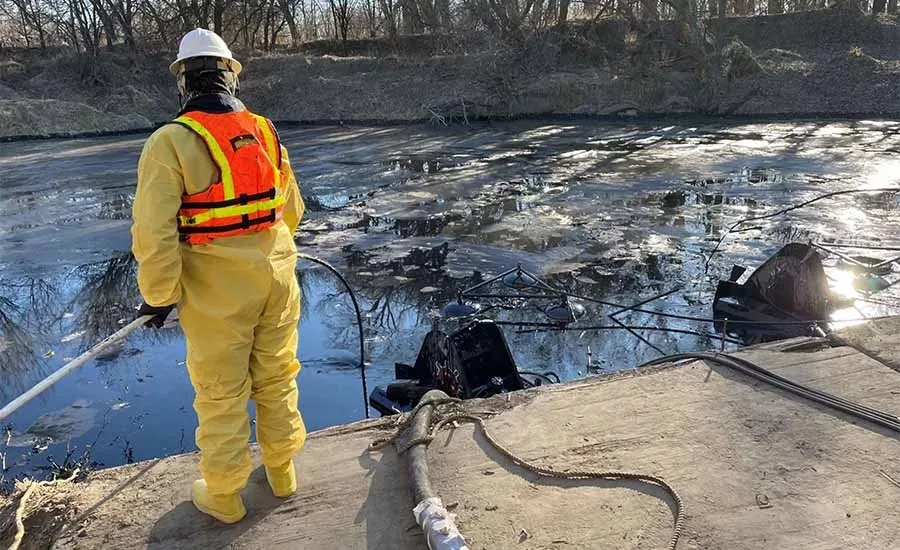
Cleanup work after rupture of former owner TC Energy's pipeline that spilled record 13,000 barrels into Kansas waterway also cost firm nearly $500M.
The successor owner of the Keystone pipeline that spilled more than 13,000 barrels of thick oil into Kansas waterways in 2022 has agreed to a nearly $70 million settlement with the federal and state governments to cover damages and more cleanup mitigation, said a U.S. district court filing July 10.
The agreement was reached with Canada-based South Bow LP and South Bow Infrastructure Operations Inc., which own and operate the pipeline, following a 2024 spinoff from TC Energy, which had owned the 36-in-dia line at the time of the accident.
South Bow agreed to pay a $26.9-million civil penalty to resolve federal and state clean water law violations, as well as $3 million to Kansas for additional restoration projects and $40 million to strengthen pipeline integrity, enhance automated leak detection and prevent future accidental discharges, according to the consent decree. It is set for a 30-day comment period before taking effect.
The December 2022 rupture was one of the largest inland U.S. oil spills in a decade and cost the former owner nearly $500 million to remediate. The substance discharged from the pipeline was diluted bitumen, a heavy and viscous petroleum crude oil.
The rupture was caused by stress on the pipeline that went undetected for many years, according to a report by Ohio engineering consultant RSI Pipeline Solutions, which was hired by TC Energy to investigate the cause of the accident. Lapses in oversight during pipeline construction in 2010 and gaps in TC Energy standards, policies and administrative controls were cited as the root cause.
The event prompted a large cleanup effort that involved up to 800 federal, state and contractor personnel on site as vacuum trucks removed oil from the creek to control its spread, TC Energy said, with two earthen dams built downstream to contain spilled oil.
A South Bow spokesperson said in a statement that the company “proactively” launched its response to the spill before receiving formal directives from government officials, including a “comprehensive environmental remediation” completed in February 2024. She said that since the spill, the company has conducted more than 12,000 miles of pipeline inspections and done 400 line-section excavations for monitoring and repairs. “This work reflects our ongoing commitment ... to continuously strengthening pipeline integrity,” the spokesperson said.
Looking for quick answers on construction and engineering topics?
Try Ask ENR, our new smart AI search tool.
Ask ENR →
"The incident had a massive impact on the State of Kansas, and we are happy that this settlement will mitigate that damage," said Ryan A. Kriegshauser, U.S. Attorney in Kansas
Meanwhile, South Bow has plans to expand its cross-border crude pipeline system from Canada, in a joint venture with Houston-based Bridger Pipeline, for a new section called Prairie Connector from Guernsey, Wyo., to a major oil hub in Cushing, Okla.
President Donald Trump on April 30 signed a presidential permit for the route from Canada, which would enable up to 550,000 barrels per day of Canadian crude oil into U.S. markets. It would follow a different route from the Keystone XL pipeline, which former President Joe Biden canceled in 2021.
South Bow has not publicly disclosed the project cost, but one analyst, ATB Cormark Capital Markets, estimated it at $2 to 3 billion with a two- to three-year construction schedule. The project final investment decision is set to be finalized in mid-2027.
But South Bow CEO Bevin Wirzba stated that construction would not start until the firm gains what he called "complete durability" guarantees—legal assurances that a future U.S. administration cannot revoke the permit in 2029.