Government
EPA Proposes Revamp of NEPA Reviews
What changes is the process, not protections, agency says
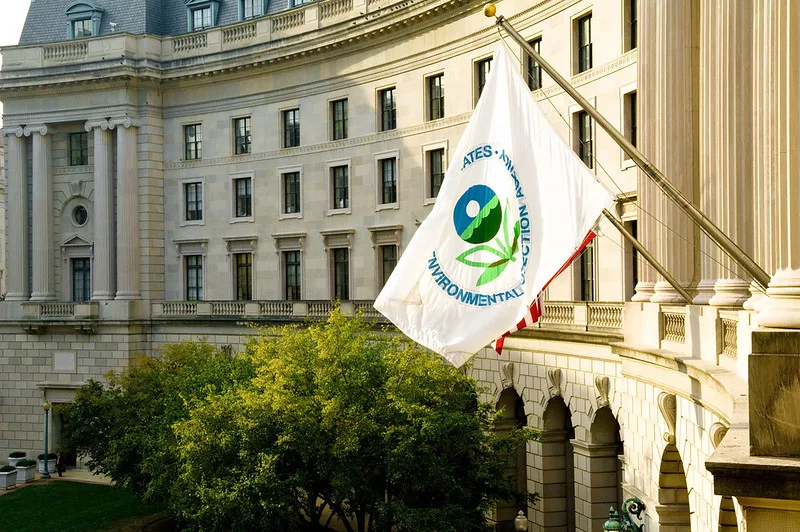
According to EPA, the proposed rule would align with NEPA review changes at other federal agencies.
The Environmental Protection Agency has proposed revisions to its National Environmental Policy Act (NEPA) process that officials say will speed up reviews and make them clearer and more predictable.
“NEPA was never meant to be a weapon to kill projects. It was meant to protect the environment we all share,” EPA Administrator Lee Zeldin said in a statement. “For decades, it's done the opposite: drowning critical projects in paperwork and lawsuits.” The reforms would set hard deadlines, cut red tape and allow more construction without weakening environmental protections, he said.
Brad Campbell, president of Conservation law Foundation and a former EPA regional administrator, made short shrift of the agency’s action, however.
“While there is little disagreement about the need to expedite decision-making and reduce protracted litigation under the National Environmental Policy Act, Congress, the Supreme Court and the Trump administration have whittled away NEPA’s core protections to the point that Administrator Zeldin’s NEPA proposal is largely irrelevant,” said Campbell, who is also a former DOJ attorney. "It’s the rulemaking equivalent of shooting bullets into a corpse, no doubt to impress an audience of one in the Oval Office.
If approved in its present form, the changes would streamline the review process without rescinding any environmental laws such as the Clean Air and Clean Water acts, according to EPA.
The proposal calls for capping environmental impact statements (EIS) to 150 pages, or 300 pages if actions are extraordinarily complex, and EPA would be required to finish an EIS within two years and certify that it has met the statutory deadlines.
NEPA analysis would be clarified to cover proposed actions and their reasonably foreseeable environmental effects. A fast-track process would be created for establishing new categorical exclusions—actions already determined by an agency to have no significant impact on the human environment. Other agencies’ existing categorical exclusions would be adopted to reduce duplicative analyses.
Looking for quick answers on construction and engineering topics?
Try Ask ENR, our new smart AI search tool.
Ask ENR →
Those actions would be aligned with the NEPA procedures at other agencies, including the departments of Agriculture, Commerce, Defense, Energy, Interior and Transportation, as well as the Federal Energy Regulatory Commission and the U.S. Army Corps of Engineers.
Builders groups welcomed the proposal. AGC is supportive of streamlining measures that advance the permitting of infrastructure projects in a timely manner without compromising environmental protections, Alex Etchen, vice president of AGC’s construction advocacy and risk management, told ENR in an email. “This memo does just that and, without excluding EPA, refocuses the agency on its expert advisory role in that process as opposed to picking winners and losers.”
The National Utility Contractors Association (NUCA) referred ENR to its November 2025 statement in support of the Standardizing Permitting and Expediting Economic Development (SPEED) Act, which aims to fast-track the NEPA review process. Introduced in the House last July, the bill remains in committee review.
“Our contractors are hard at work rebuilding America's decaying water and wastewater systems and modernizing our electric and broadband grids, yet they are routinely delayed by an existing NEPA permit process that has drifted far from its original procedural intent into an endless cycle of delay, duplication and litigation abuse,” Zack Perconti, NUCA chief advocacy officer, said in the statement. “Projects that should take months to permit routinely stretch into years driving up costs, killing jobs and leaving critical infrastructure unbuilt.”
EPA noted a number of federal actions in its statement that align with the proposed changes, including the Supreme Court’s unanimous decision last year in Seven Country Infrastructure Coalition v. Eagle County, which limited the scope of NEPA reviews, as well as President Donald Trump’s January 2025 “Unleashing American Energy” executive order to accelerate permitting and strengthen energy production.
The executive order directed the White House Council on Environmental Quality to propose rescinding existing NEPA regulations and to issue guidance to federal agencies on expediting and simplifying the permitting process. In January 2026, CEQ rescinded those regulations, clearing a path for agencies to quickly revamp their own NEPA procedures.

.webp?height=200&t=1770408349&width=200 "Clean-Air---Good-Neighbor-Plan-(2)")
