Sea Level Rise
NJ Punts on Enacting Tougher Coastal Development Rules
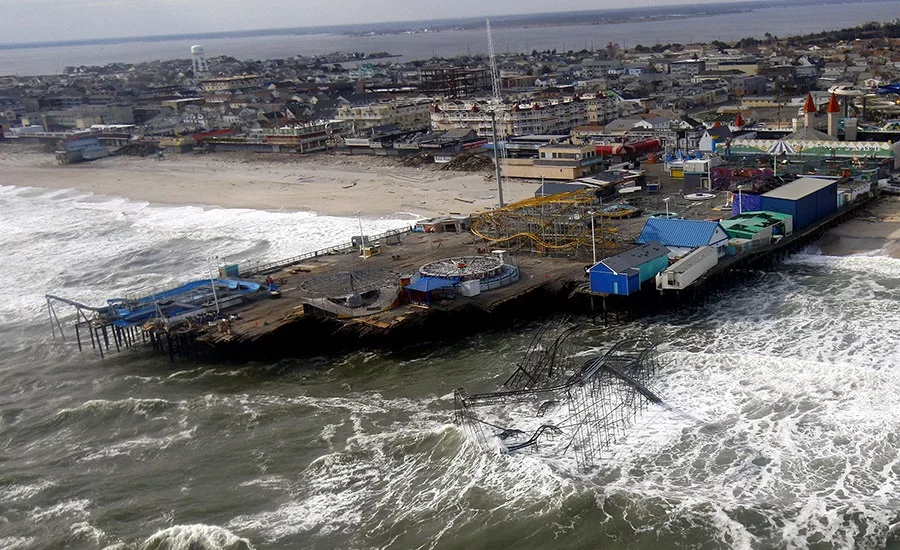
Seaside Heights, NJ boardwalk was heaviliy damaged by Superstorm Sandy in October 2012, with catastrophic storm surge causing up to $38 billion of physical and economic damange in the state
With controversy at a peak six months after the New Jersey Dept. of Environmental Protection issued its new precedent-setting coastal zone development rule crafted during the administration of former Gov. Phil Murphy (D), successor Democrat Mikie Sherrill has opted to delay its enactment. Projects now have a one-year reprieve from July, before the mandate is set to take effect, and pro and con forces have more time to battle over likely amendments.
The Resilient Environments and Landscapes rule (REAL) would require new or substantially improved structures—residential, commercial and infrastructure—in tidal flood zone areas to be built up to 4 ft higher than the current FEMA-based flood elevations to account for future flooding that studies say is expected to worsen from climate change impacts.
The July 20, 2026 deadline that was set for project permit applications to be reviewed under pre-REAL “legacy” requirements now would extend to July 20, 2027. A 60-day comment period on the extension is in effect until July 31.
REAL is supported by environmental groups and the Association of New Jersey Environmental Commissioners, which raise concerns about future impacts to one of the most developed and at-risk ocean coastlines in the U.S., with projections through the year 2100 showing potential sea level rise by 4.4 ft. The new rule also requires stiffer storm management and wetland protections in flood-prone areas.
Superstorm Sandy in 2012 cost oceanfront communities in New Jersey between $30 and $38 billion in physical and economic damage, official tallies say,
But the New Jersey Builders Association and state Business and Industry Association filed a state Superior Court appeal against the rule, noting its effect on development, including expanded affordable housing. Four beach-facing counties—Cape May, Monmouth, Cumberland and Ocean—also have sued to block the mandates regulations, claiming they are beyod the state agency's authority, and even state Senate President Nicholas Scutari, a Democrat, started a legislative move in March to eliminate the rule.
“The 1,000-plus-page REAL rule goes far beyond sea level rise resilience and is laden with … wish list items that do little to nothing to improve resilience,” said Jeff Kolakowski, builders group CEO, who wants elevation requirements halved and the directive put on hold. The legal challenges are pending.
Looking for quick answers on construction and engineering topics?
Try Ask ENR, our new smart AI search tool.
Ask ENR →
While proponents worry that the rule extension could lead to changes that will weaken or kill it, Sherrill said, “We are taking a close, comprehensive look at the REAL [requirements] to ensure they reflect our core priorities of protecting lives and property [and] supporting responsible development.”
She added that the extension “gives us time to meaningfully engage with … stakeholders across New Jersey to get this right.”