Airports
Seattle-Tacoma Airport Expands C Concourse by Going Vertical
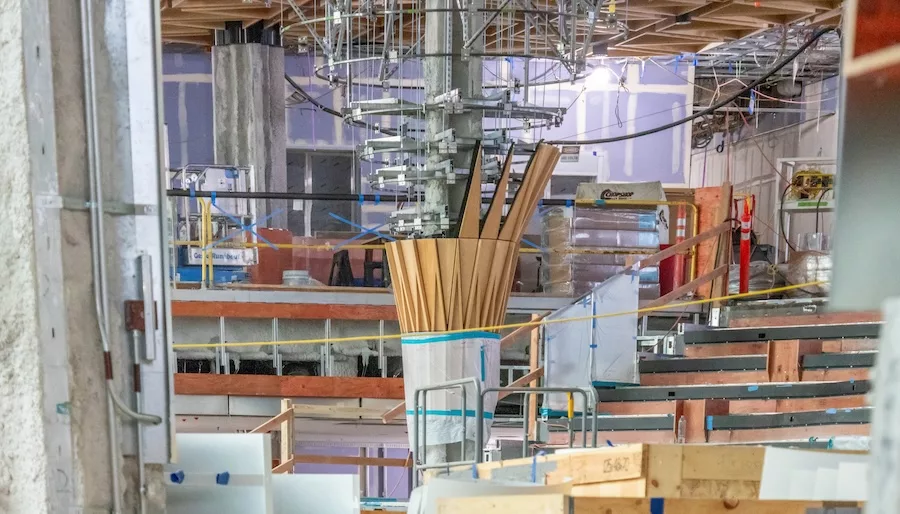
A “tree trunk” creates a canopy-like aesthetic in the concourse gathering space.
In the limited footprint that is the Seattle-Tacoma International Airport (SEA), the Port of Seattle needed to go vertical to expand the C Concourse from 114,000 sq ft to more than 229,500 sq ft.
Led by Turner Construction as the general contractor-construction manager, the project created four additional floors above an existing concourse building on the footprint of back-room offices. Work began in summer 2022 and major construction started in 2024, culminating with a June 11 opening on the $399-million project funded by a combination of the Airport Development Fund and future revenue bonds. No taxpayer money was used.
“SEA is one of the most space-constrained airports in the country while welcoming the 11th largest number of passengers,” says Wendy Reiter, SEA managing director. “Our teams had to get creative. We couldn’t go out, so we had to go up. Using the same footprint, and not losing any gates, we’ve created more comfort and utility for our travelers.”
The connection between C and D concourses—traditionally highly congested—is now daylit and with 10 new retail and dining spaces. The all-electric project created grand stairs to connect the new concourse level with a mezzanine level featuring dining. Switchback stairs—inspired by a hiking trail—links to level three, which features an open-air Lookout at C with an outdoor wood deck and basalt stone overlooking views of the airfield and Olympic Mountains. Levels four and five include flexible spaces for lounges and offices. While building up, the port was able to maximize daylight and view corridors.
The main floor of the concourse, created using terrazzo stone quarried regionally, forms the base of a tiered atrium, an open amphitheater-like spot with an area for live music, framed by dining and retail dubbed the Marketplace at C. Located near the C2 gates that welcome busy commuter flights, the atrium takes inspiration from local outdoor markets, particularly Pike Place Market. There’s an all-new 20,000-sq-ft Alaska Airlines Lounge, office space and the ability to expand further.
“This project really was in the middle of a very, very busy airfield,” says Janet Sheerer, project lead for the port.
The Tree at C offers the most visually striking component of the project, an artistic way to elevate the western hemlock roof of the new building and highlight the triangular wood ceiling. Inspired by the folded exterior facade, the wooden “tree trunk” solved the challenge of integrating structural columns into the design while ensuring a canopy-like aesthetic in the gathering space. The trunk reaches from the floor to the 30-ft ceiling halfway up the grand stairs.
Looking for quick answers on construction and engineering topics?
Try Ask ENR, our new smart AI search tool.
Ask ENR →
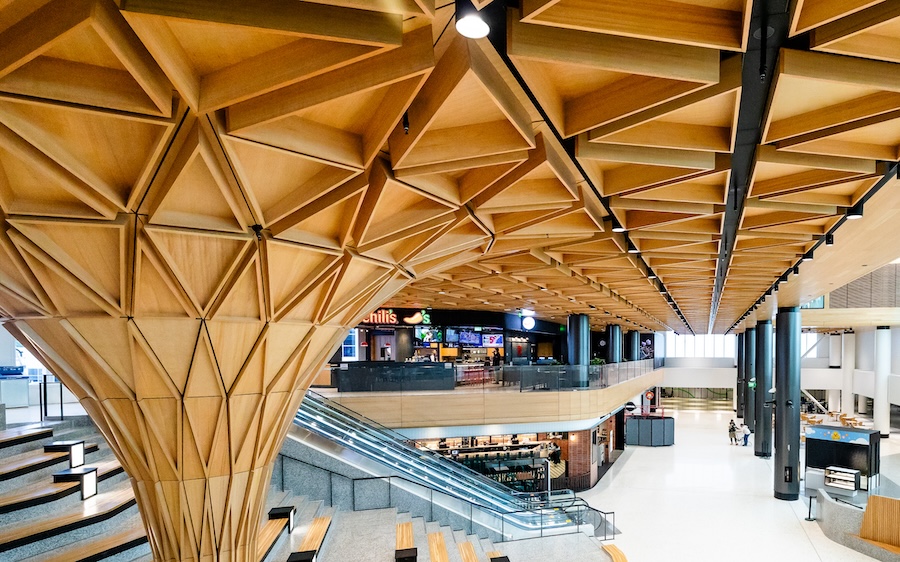
"The Tree at C" functions both aesthetically and structurally within the expanded concourse.
Photo courtesy Port of Seattle
“The idea came through iteration and the more we sketched it out, we saw that it happened to be in kind of a sweet spot—the way circulation happened around it, and the way the grand stairs tucked into that mezzanine level,” says Billy Schreiber, project leader at Woods Bagot, who worked with The Miller Hull Partnership on the design.
Kevin Stilwell, vice president and construction executive at Turner, says airports serve as gateways to communities and the C Concourse expansion “provides passengers with more opportunities” to take in the Pacific Northwest.
A folded exterior facade, patterned on Pacific Northwest forests, wraps the southwest exposure in alternating south and west-facing glass panels featuring dynamic tinting. The 5-ft wide glass panels come in pairs, minimizing columns. The roof slopes at a Federal Aviation Administration-prescribed angle relative to the runways to maximize the interior volume while holding a photovoltaic array designed to produce up to 14% of the facility’s power, all part of the port’s sustainable effort that have this project aiming for LEED Platinum, the highest certification of any SEA facility.