Environmental Response
DC Agency Chief Defends Pre-Sewage Spill Maintenance, But System Repair Is Far from Over
DC Water CEO is grilled in May 20 House hearing on early 2026 release of 240 million+ gallons of untreated waste into Potomac River, and developing consequences
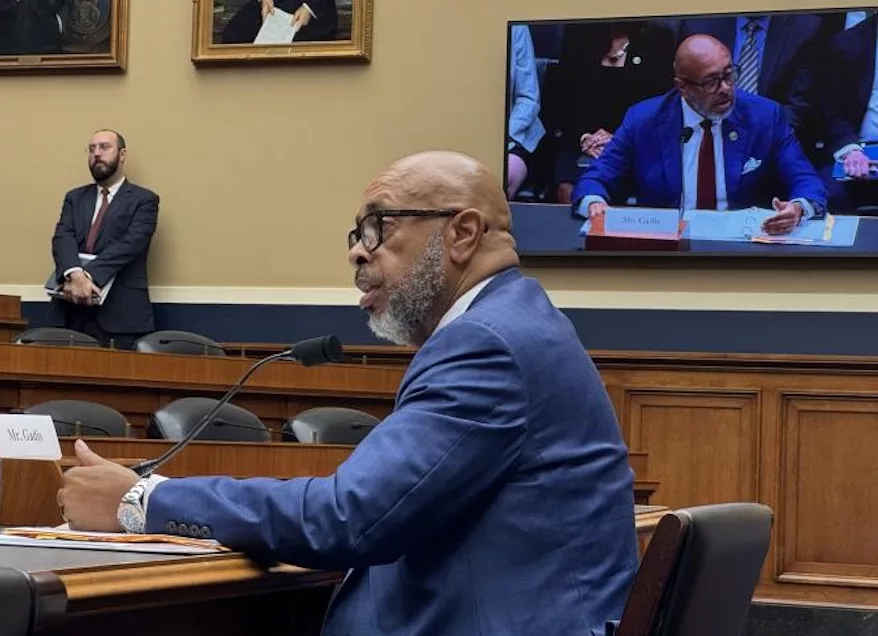
DC Water CEO and general manager David Gadis testified in front of the House Emergency and Commerce Subcommittee on Oversight and Investigations.
The agency leader responsible for collapse earlier this year of the Potomac Interceptor defended maintenance practices for the deteriorating 60-year-old wastewater pipeline at a Congressional hearing into causes and consequences of releasing more than 240 million gallons of untreated sewage into the Potomac River
DC Water CEO and general manager David Gadis told members of the House Emergency and Commerce Subcommittee on Oversight and Investigations that the Jan. 19, 2026 incident was not the result of ignored infrastructure challenges
“Rather, it occurred within one of the nation’s oldest and most complex wastewater systems—a system D.C. Water has spent decades modernizing, rehabilitating and improving for the benefit of the region and the environment,” he said in prepared testimony.
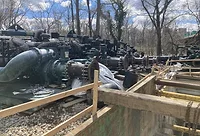
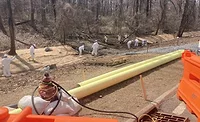
Gadis was joined by representatives of the U.S. Environmental Protection Agency, U.S. Army Corps of Engineers and U.S. National Park Service, who added perspectives on the two-month emergency effort to contain the spill and resulting environmental damage, including a section of the Chesapeake & Ohio Canal National Historical Park that was used for several weeks as a temporary bypass channel for daily wastewater flows of up to 60 million gallons.
No total cost for the response, repair and environmental remediation effort has been announced, but reports have said it could be more than $20 million, with Maryland-based advocacy group Potomac Conservancy, which has 35,000 membres, estimating it on May 22 as up to $60 million.
Gadis noted that the collapse location within the environmentally sensitive park “significantly increased the complexity of both emergency operations and long-term rehabilitation planning.”
Lessons Learned
Questioned by subcommittee members, he explained that a pipeline section encompassing the collapse site had been identified for corrosion and rebar repair as early as 2018, but construction had been stymied by a lengthy National Park Service permit review process that was still unfinished when the incident occurred.
Looking for quick answers on construction and engineering topics?
Try Ask ENR, our new smart AI search tool.
Ask ENR →
Park Service officials said that that the permit application “needed to go through the process,” Gadis said DC Water was repeatedly told. “That’s all we were waiting on,” he added.
"Having long-term easements to access the Potomac Interceptor, standardized permitting timelines, streamlined reviews for similar rehabilitation work and better field coordination with regulatory authorities can help to prevent a recurrence of the failure," Gadis said in his testimony. "We take seriously our obligation to learn from this incident snd strengthen our systems."
Citing pending litigation from state and federal lawsuits filed against DC Water earlier this year, acting C&O Canal Park superintendent Edward Wenschhof declined to answer key questions about the permitting process, or if the agency felt that a pipe rupture was imminent. The park official did say that in most cases, reviews of utility-proposed construction permits could take six months to a year.
“There are others that are identified as high priority,” he added.
In an April Washington Post investigation, a Park Service spokesperson insisted that the lengthy environmental assessment process resulted from repair plan changes initiated by DC Water—something that Gadis told the subcommittee had occurred just twice. In one case, according to the Post investigation, DC Water underestimated the number of trees impacted by the proposed repair effort, prompting the Park Service to require an in-depth assessment rather than approve a fast-tracked permit.
While a specific cause for the collapse has not been determined, Gadis said that large boulders and debris suspected of having been used as fill during original pipeline construction may have been a contributing factor.
“Collectively weighing approximately 18 tons … these materials obstructed flow within the pipeline and likely contributed to significant structural stress to the Interceptor over many decades,” Gadis' testimony said, adding that the resulting blockage significantly complicated emergency response and rehabilitation operations.
“The boulders restricted access to the damaged sections of pipe, impeded wastewater flow, created dangerous and unstable working conditions for crews and substantially increased the complexity of excavation and debris removal efforts within an environmentally sensitive and highly constrained work area, all during historically cold weather and ice,” Gadis noted. "As a result, the response proved far more operationally challenging, requiring specialized equipment, careful staging, continuous coordination among engineering and environmental teams and extensive safety precautions to protect workers, nearby infrastructure and the surrounding river environment.”
Stepping Up System Assessment
DC Water reports no further spills since emergency repairs finished in March. Efforts to clean soil from a canal section used as an emergency bypass are nearly complete, while permanent repair progresses of a 2,700-ft section that includes construction of a bypass chamber to divert wastewater around pipe sections while undergoing rehabilitation. DC Water’s daily water quality testing at ten downstream sampling sites continues to show E. coli levels within normal safety ranges.
Gadis also told the subcommittee that the agency has stepped up condition assessments of the entire 54-mile Potomac Interceptor system, using ground-penetrating radar to boost inspections.
Three areas found in need of immediate attention are being prioritized for repair, with mobilization expected this summer, but Gadis did not specify their locations nor describe the scope or status of contracted work.
“You need to look at outside of pipe as well as the inside,” he told the subcommittee—adding that had the agency known about boulders atop the pipeline, “we would have excavated and replaced them with clean fill.”
Asked whether DC Water’s efforts will be enough to prevent a similar major failure of the Potomac Interceptor in the future, Gadis responded that while the agency is hopeful that will be the case, “there are no guarantees" when dealing with aging infrastructure more than 60 years old.
"This was a preventable environmental disaster. After four months, we still do not know what must change to prevent it from happening again," said the Conservancy. "Through transparency and a full accounting, we can correct course with a clear plan to prevent future failures, address necessary repairs on National Park Service land, invest in long overdue water infrastructure and develop a long-term restoration strategy for the Potomac River."