How to Ask Potential Suicide Victims to Lock or Store Their Guns
February 26, 2026
How to Ask Potential Suicide Victims to Lock or Store Their Guns
February 26, 2026
“In the United states, the story of suicide is really a story about firearms. that might sound like an extreme statement But the numbers back that up.“
Michael Anestis, Rutgers University
The last place Kimball retreated to was his bedroom, according to the newspaper. There, in the bedside table, was a loaded handgun.
That construction has a suicide problem exceeded only by mining’s is beyond dispute. In Kimball’s case, the leaders of the industry’s 10-year-old suicide prevention movement may recognize several risk factors: fatigue, money pressure, an illness in the family, anxiety and paranoia. By emphasizing these and other risks, construction’s multipronged mental health and wellness campaign has started to transform brusque, business-only jobsites so that carpenters, laborers and ironworkers are able to turn to each other, and to trained counselors, for help with personal problems. Share your worries and weaknesses, both physical and mental, they are told—there is no shame in it.
But obstacles remain. Mercilessly tight project schedules and long, closely spaced work shifts promise more fatigue and sleep deprivation, especially amid a data center boom and ongoing worker shortage.
More importantly, suicide’s supremely lethal method, guns, are widely available. While fewer than one in 10 suicide attempts involve a gun, firearms are used in more than half of all attempts that cause death, and nine out of ten times the attempt is fatal. The construction industry has roughly five times as many people die by suicide each year, 5,000, as from jobsite accidents.
“In the United States the story of suicide is really a story about firearms,” argued Michael Anestis, executive director at Rutgers University’s New Jersey Gun Violence Research Center, in a podcast interview. Anestis added that “might sound like an extreme statement, but the numbers back that up.”
RELATED
How ENR Suicide Prevention and Safety Coverage Evolves
The grim reality becomes clearer when you look at a few of the trades mentioned in the American Institute for Boys and Men’s 2023 suicide fatality totals for all methods, keeping in mind that more than half were likely done with a firearm: 21 boilermakers; 52 cement masons and concrete finishers; 65 iron and steel workers; 61 electric power line installers and repairers; 47 ceiling tile and drywall installers and tapers; 112 brick and stone masons; 70 sheet metal workers; 163 roofers and 36 painting workers—the trade in which Timothy Kimball, a painters’ union member, will likely fall into when 2025’s statistics are compiled.
It’s hard to identify all who enter a potentially suicidal state because in the midst of an intense crisis the idea may come out of the blue, say researchers such as Craig J. Bryan, a clinical psychologist at the University of Vermont Medical Center. “People move in and out of suicidal states, sometimes very quickly,” said Bryan in a webinar.
Looking for quick answers on construction and engineering topics?
Try Ask ENR, our new smart AI search tool.
Ask ENR →

36
The number of painting workers who died by suicide in 2023.
Source: The American Institute for Boys and Men
Noting similarities and overlap between construction workers and veterans, Matthew A. Miller, a former executive director for suicide prevention in the U.S. Dept. of Veterans Affairs who recently joined consultant A-G Associates, believes “the ones who die by firearm suicide aren’t necessarily the ones who are struggling with chronic depression or something along those lines. It’s that they experience a window of time where all of a sudden they were overwhelmed by risk factors, and that includes access to a gun.”
Overemphasizing mental health treatment has led to overlooking other strategies, Bryan argues, such as limiting gun access, and, before the lethal means becomes an issue, improving quality of life and alleviating stresses. But the basic idea is to at least make it harder to use a gun until the impulse to end life passes.
The old image of a suicide crisis intervention is someone trying to talk a potential jumper down from a building ledge or bridge. Focusing on gun access—and talking about it with someone in crisis—plucks several different cultural nerves. Who is qualified to raise the issue of gun access to someone in crisis? And how is it done so as not to entangle with fraught Second Amendment politics?
Before a worker even reaches in desperation for a firearm, any number of stressors might have led them to that point.
The Overworked Worker
Construction workers often discuss working hours—how many they get, and how much they can stand. Hours and practices vary greatly with craft, project and season. A Reddit thread started three years ago asking, “How long is your typical workday?” tells some of the story.
“At first I loved it,” starts one response. “10-12hr days and the rest of the day to cool down/relax.
“But recently (past 4ish months) we’ve been working 13-16hr days consistently (5 day weeks, Saturday and Sunday off). I gotta say, that [it’s] draining. I have no time to recover for the next day and just pick up where I left off in terms of tiredness. It’s starting to get so damn brutal, I have no social life at all. Even on the weekend I just spend most of my time sleeping.
“Is this the norm for anyone else?” the poster asks.
“Been there,” wrote another poster. “Two years of that and I was a walking zombie, friends and family hadn’t seen me in months, wife said she barely knew me and we fought about everything.” He continued: “Ask yourself why you’re doing it and if it’s worth it, make an exit strategy, and stick with it. At some point having all the money in the world doesn’t matter if you can’t even find time to spend it. I’ve known guys who stick with it because their family needs the money, but anything short of that and there’s a better way to live.”
163
The number of roofers who died by suicide in 2023.
Source: The American Institute for Boys and Men
There are several influences driving the workaholism. Some of it has to do with the high cost of living; others trace it to the seasonality and cyclicality of construction work—and the idea that you must make every dollar you can now because you never know what’s around the corner.
A longtime worker wellness and safety advocate, Justin Azbill, has spoken on the subject. He said his blue-collar family had the mentality of taking whatever work and money was available. “The mindset was you had to work hard for every dollar you earn. And you never turned down work,” he said on a podcast interview. “And I think that’s the mindset in the construction industry.” Burnout follows and injuries are common, but workers may conceal them and resort to opioids to cover the pain. “The construction industry just can wring the life out of you if you let it,” says Azbill.
Worker health advocates long ago began encouraging employers to see exhaustion as a safety hazard rather than a badge of honor. Model fatigue management and fatigue risk assessment programs have been around for years.
In 2004, the U.S. Centers for Disease Control and Prevention and the National Institute for Occupational Safety and Health suggested overtime limits depending on shift lengths: eight-hour shifts followed by no more than four hours of overtime, 10-hour shifts limited to two hours of overtime, and no overtime allowed after a 12-hour shift. Sleep and fatigue issues are recognized in other countries, too. Under Queensland, Australia’s Work Health and Safety Act of 2011, employers must identify, assess and control shift and fatigue related risks, including combatting acute and cumulative sleep debt.
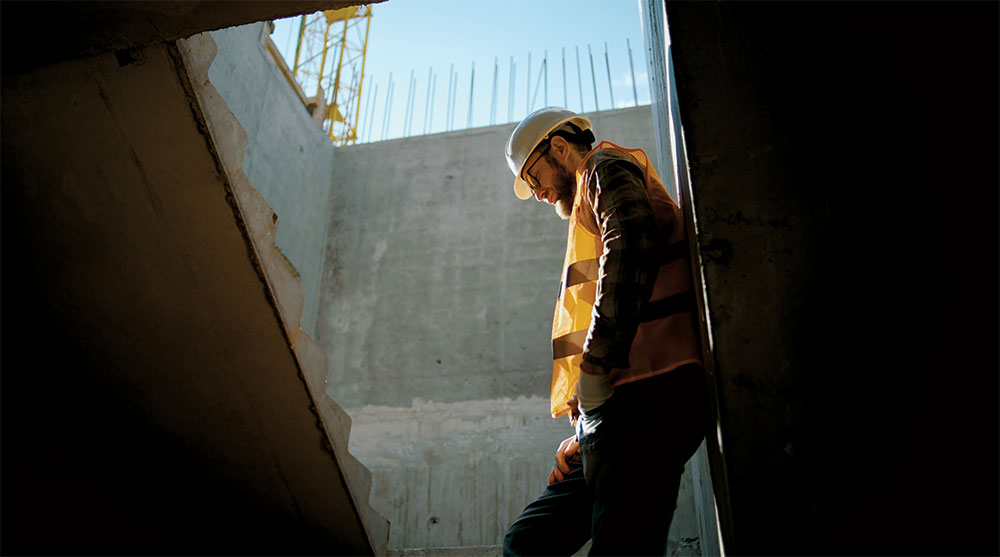
Construction workers often discuss their working hours—how many they can get and how many they can stand.
Screen capture from video by Getty Images/Vitalii Duda
Much Paid Time Off Goes Unused
Last December, Heavy Civil Resource Consultants, a Morro Bay, Calif., recruitment firm, published the results of its poll of construction project managers, asking if they use all their vacation or paid time off days each year: 61% said no. The company posted an article on the subject on its website.
Taylor Maurer, the firm’s senior managing partner, has noticed this disparity between time available and time used. Tight deadlines—driven partly by clients but also by contractors wanting to minimize equipment and human capital costs—make it hard for project managers to disconnect for needed recovery time. Project deadlines make it difficult for project managers “to feel like they have a spot where they can carve out and disconnect from work to, for example, bring in that mental wellness and recovery time they need,” he says.
During more than 20 years in construction recruitment, Maurer says, “I have not seen it change much.”
“Even if it delays someone one to twenty seconds, that may be enough of a wait to ask themselves,
‘What am I doing?’”
Nick Dodson, retired plumber and gasfitter
To recruit and retain a shrinking pool of qualified workers, employers are offering more paid time off and vacation benefits. Almost 80% of construction workers have access to paid vacation, according to the U.S. Labor Dept. And about 73% of construction employers offer paid time off, up from 40.5% 10 years ago, according to a survey by compensation consultant PAS.
Despite the access to more paid time off, burnout among project managers remains rampant, warns Maurer. Bonuses reward intense effort, creating a financial upside in exchange for the personal and family stress, he says. The old platitude, he adds, still rings true that construction is “the industry of heart attacks and divorce.”
While offering paid time off and vacation time serves as a recruitment carrot, the real impact and benefit requires a top-down commitment to the time off actually getting used, says Maurer. He says doing so means there must be smarter project scheduling (factoring in vacations), sustainable backlog growth, adequate staffing that is seen as an investment and leaders normalizing rest by modeling it.
Some companies are already moving in that direction.
Daniel Oates, a senior project development manager for construction manager Flintco, sat down for a podcast interview last year with Sally Spencer-Thomas, a longtime suicide prevention and worker wellness advocate. He said that as far as working to burnout, he’s been there and done that. And now he wants Flintco to encourage employees taking time off to “really” take the time off—and not be checking emails, making phone calls and never actually detaching from the workplace.
“Today being so connected with your cell phone or with your computer or with Zoom calls or whatever, when you take time off, like you really just have to take time off,” he said. “You have to trust the people that are around you. You have to trust your supervisor, trust your direct reports to handle it while you’re gone.”
Other companies have shown concern about schedules, rest and fatigue. DeFord Contracting Inc., an Edmonton-based highway and heavy contractor, says on its website that its management and supervisory personnel must be able to recognize and respond to fatigue signs and symptoms, and that workers are responsible for getting enough rest. The company has a website section, separate from its health and safety code, devoted to the subject.
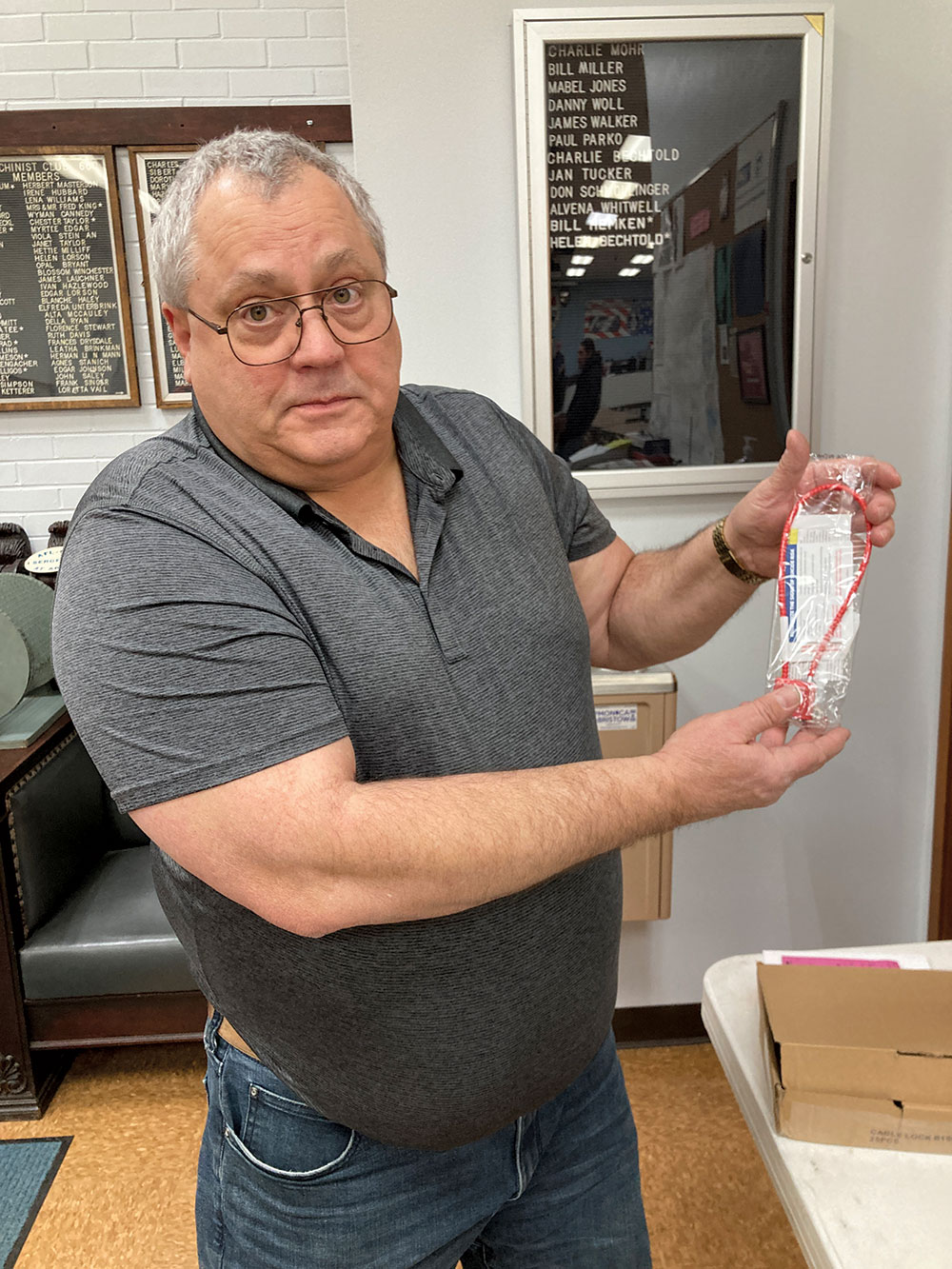
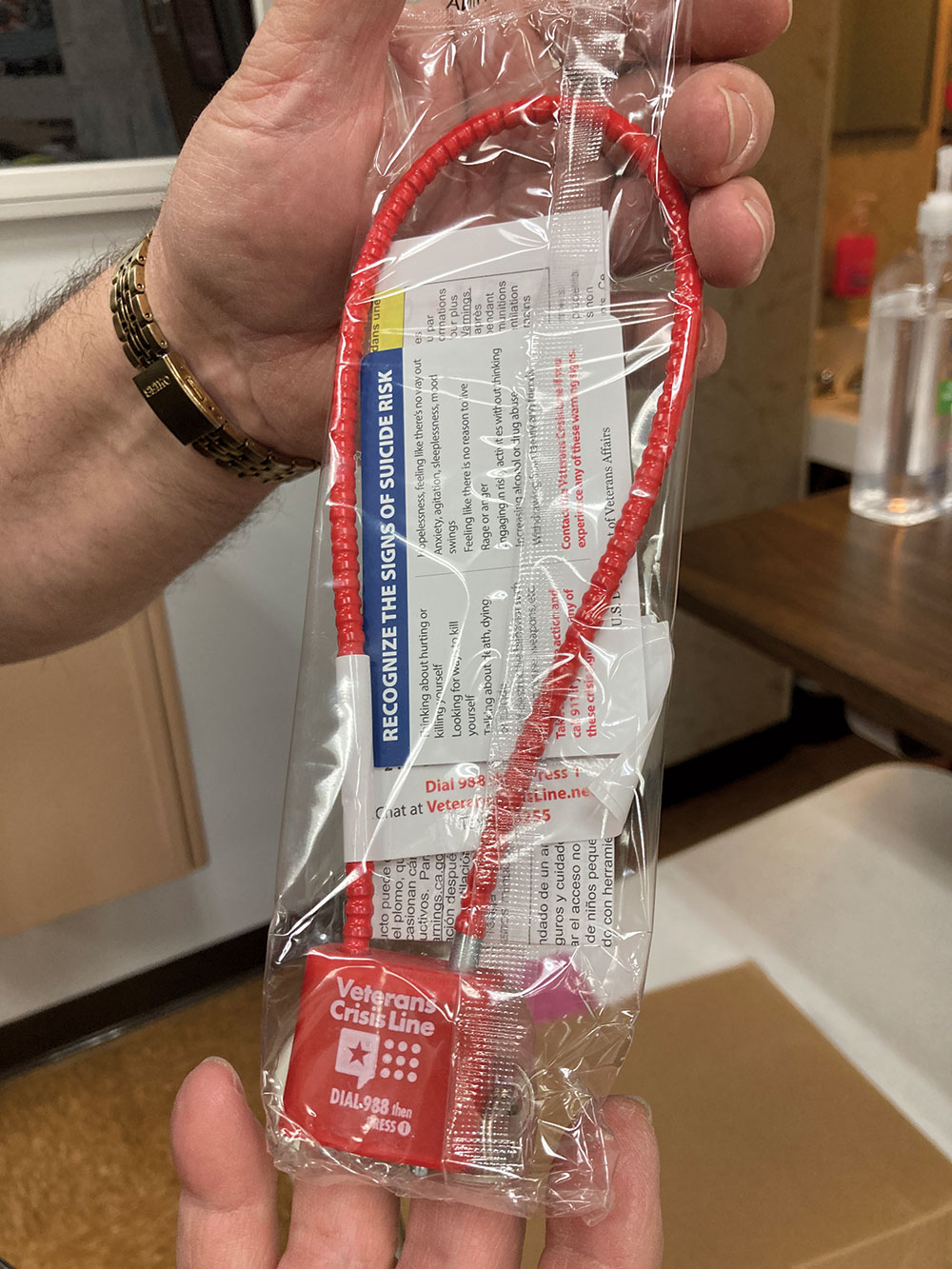
After retiring from an Illinois plumbers and gasfitters local, Nick Dodson obtained a grant to pay for more than 1,000 gun locks distributed for free to building trades members.
Photos: Elizabeth Donald/Labor Tribune
Distributing Free Gun Locks
In 2017 Nick Dodson retired from building trades work, where he had been a member and former president of Plumbers and Gasfitters Local 360 in Collinsville, Ill. Soon after, he started in another role, serving as the local’s liaison to the United Way, which provides health and counseling services in local communities. It was a time when the full extent of the opioid addiction crisis was becoming clearer, and Dodson heard a presentation by a union business manager who had lost his son to an overdose.
“I found out after doing some research how terrible the problem was,” he recalls. “Then I ran into another person who lost a son to suicide.” That had Dodson wondering how often the opioid overdoses he heard of were actually suicides, too.
Dodson believes in mental health counseling and hopes building trades workers, many of whom are veterans, no longer feel any stigma about seeking help. “There are a lot of veterans in the trades, and the suicide rate for veterans is ungodly,” he says.
But as he was absorbing the dimensions of the opioid and suicide issue, Dodson also learned the importance of lethal means in suicide prevention and took action. He applied for a grant from the state health department, and in 2024 received and distributed free of charge to any building trades worker in the area more than 1,000 cable-style gun locks, the kind that obstruct a firearm from being loaded or fired. The locks usually have a steel cable that threads through the chamber and ejection port, preventing the action from closing and rendering the gun inoperable.
“There’s no way to know if the gun locks save lives,” says Dodson, “but we know if you put that tool, the lock, between suicide ideation and the impulse to use a gun, even if it delays someone one to twenty seconds, that may be enough of a wait for them to ask themselves, ‘What am I doing?’ before the gun is even loaded.”
The lethal means approach also needs more people willing to discuss with anyone at risk for suicide the delicate subject of whether they have a plan to kill themselves and what it is.
Starting a Lethal Means Conversation
No judging, lots of empathy and open-ended questions. That’s the formula for initiating a conversation about lethal means. “I think you start with, ‘How are you doing?’” suggested Jill Harkavy-Friedman, the senior vice president for research at the American Foundation for Suicide Prevention, in a webinar presentation. The language used makes a difference, she said. Establish if there’s something to be concerned about before asking about guns. “We have to learn to talk to each other about guns in a non-judgmental way, in a health-promoting way,” said Harkavy-Friedman.
At the same webinar, a prominent Second Amendment and responsible gun use advocate explained ways to avoid alienating a gun owner during a talk about lethal means. Rob Pincus, executive director of the Personal Defense Network, said gun owners are likely to tune out anyone who implies that gun ownership itself is a problem.
"Peer members are often best qualified to start a lethal means conversation, more than a so-called expert."
Matthew A. Miller, veterans suicide expert
“Being a little more sensitive to that presentation can set a gun owner up to be ready to hear you,” said Pincus. The vast majority of firearms are not involved in negative outcomes, he claimed, yet gun safety has been “weaponized against the gun community.” To steer clear of sensitivities, “it’s a good idea not to dive too deep into it unless you are well versed in gun ownership [because] a lot of gun owners bristle at the idea that it’s even brought up.” Talking about “access control” is better than just asking, ‘Is it locked up?’” said Pincus. “I think that’s a much more neutral way,” especially since “the idea is to encourage them to think about it and encourage them to do the right thing.”
Different methods exist for what to do about the firearm and ammunition, starting with gun locks, where the key or combination is given to someone other than the person at risk. Other plans involve separating firearms from ammunition or storing a firearm with a friend, gun shop or even with local police.
Miller, the former executive director for suicide prevention in the U.S. Veterans Affairs department, says research related to military veterans shows that a peer member or friend is often best qualified to ask and initiate a conversation about lethal means “more so than hearing about it from a so-called expert in a suit.”
61
The number of electrical power line installers and repairers who died by suicide in 2023.
Source: The American Institute for Boys and Men
A lethal means safety discussion may sometimes go over well when it is started by a primary care mental health provider, says Miller, because the person at risk “may see it in the context of talking about what they’re experiencing and their feelings and thoughts. But outside that context it’s not received real well,” and Miller says a better reception is likely if it comes from “a friend.”
Although the lethal means theory of prevention has gained traction over several years, its potential hasn’t always been apparent. Last July, Spencer-Thomas posted a podcast with Swedish scholar Gergö Hadlaczky, who has studied the matter. He spoke about the state of mind of suicidal individuals, saying that they have a lot of ambivalence, sometimes deliberate the pros and cons and that the goal isn’t always to die, but to stop suffering. “There’s usually an internal debate,” he said.
Spencer-Thomas’ reaction to his research seemed to show that the advocates of mental health and well-being are ready to carve out a bigger role than they had previously afforded to lethal means suicide prevention. In Spencer-Thomas’ appraisal, she brought out a broader, somewhat inspirational interpretation of the temporal aspects of lethal means prevention. She called the podcast with Hadlaczky “groundbreaking” and asked in introducing it, “what if creating time—even just a few minutes—can change the trajectory of a suicidal crisis?”
“Time,” she wrote, “gives people a second chance at life and a fighting chance to survive.”
With Elaine Silver