Viewpoint
Building Sensors Make Financial Sense in Construction Insurance

Chad Hollingsworth
How many insurance managing general agencies can say they helped renovate and protect from damage a national landmark? Let me explain the context. You know that spiraling material costs, labor shortages and other challenges make it hard for contractors and developers to stay on track and budget. Any delays or disruptions can devastate profits.
Purchasing builders’ risk insurance is a standard method to provide financial protection and risk transfer for damage and delays arising from covered incidents, including floods, fires or vandalism. Either an owner or a prime contractor purchases it. But when it comes to the losses that most frequently trigger payouts under such policies, the source is not natural catastrophes as many expect.
By dollar amount, natural disasters comprise a relatively small share of builders’ risk losses. Instead, industry data show, non-flood water damage claims account for more than half of all payouts, totaling about $15 billion each year.
Unfortunately for insureds, many costs fall outside policy recoveries, such as uninsured delays and project disruption. Meanwhile, the price tag for these claims is climbing with the median cost of water damage claims in construction rising by more than 20% and losses over $1 million in recent years tripling.
Proven technology can help solve the problem and ease the burden. By using Internet of Things (IoT) monitoring of small water detection, contractors and developers can prevent or mitigate otherwise costly water damage. It can also possibly qualify for more favorable insurance terms.
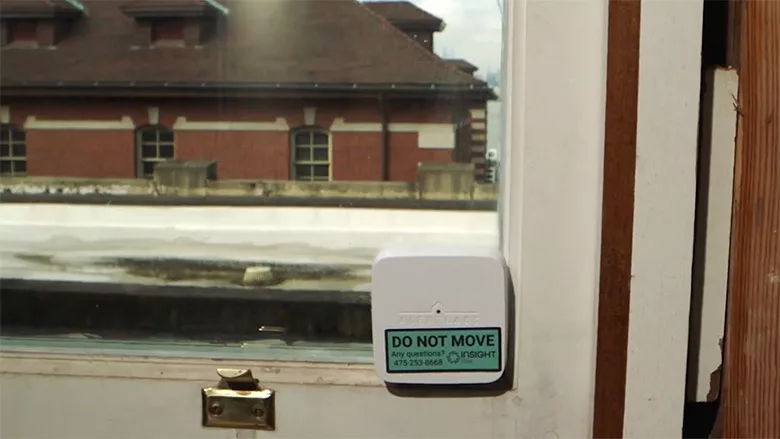
When Ellis Island National Museum of Immigration recently underwent extensive improvements, the project team protected the museum and its historic content with multiple IoT water detection sensors strategically deployed throughout the building. Connected by a wireless network for 24/7 monitoring, the sensors and software enabled the team to quickly spot and remediate any water leaks or intrusion.
Here’s how we work the combination of technology and insurance: When a broker obtains a builders’ risk quote from our company, and when the coverage is bound, my firm noninvasively installs sensors around boilers and sanitation rooms, pipes or adjacent to valuable items or artifacts—anywhere there could be leaks. If a change in temperature or damage from moisture intrusion is detected, an alert goes out by text, email or an in-app message. The response is fast.
Looking for quick answers on construction and engineering topics?
Try Ask ENR, our new smart AI search tool.
Ask ENR →
We helped the Statue of Liberty-Ellis Island Foundation procure a water detection system to help us better secure the national treasure that is the Ellis Island Museum. Our company then provided builders’ risk insurance for the renovation project that started in 2024. Because IoT technology was deployed, the insured received premium credits and deductible relief.
Not surprisingly, projects with properly installed, active IoT solutions typically have reduced claim frequency and severity and some insurers have begun rewarding this proactive approach with reduced premiums, lower deductibles or preferential access to coverage.
Different solutions offer increasing levels of protection combined with a corresponding deductible buydown and pricing adjustments to help offset technology costs. The result is lower water damage deductibles—as low as $50,000 from what typically can be several hundred thousands.
While IoT technology provides an advantage in new construction, it’s a bigger deal for contractors and developers on major adaptive reuse projects. Such sites often face elevated risk from water loss. In these situations, installing active IoT monitoring, along with documentation of water event responses and maintenance data, demonstrates measurable evidence of loss control that strengthens an insurance submission.
Permanent use of such sensor detection could lower the cost or allow for enhanced program endorsements in permanent property policies. The monitoring systems offer developers and owners in an industry with high risks and tight margins a long-term risk management advantage.
I look forward to visiting Ellis Island with my kids and grandkids to not only show them its tremendous history, but also let them know, “Hey, I played a very small part in making it as pretty as it is.”