Government
US Energy Dept. Withdraws Federal ‘Zero-Emissions Building’ Definition
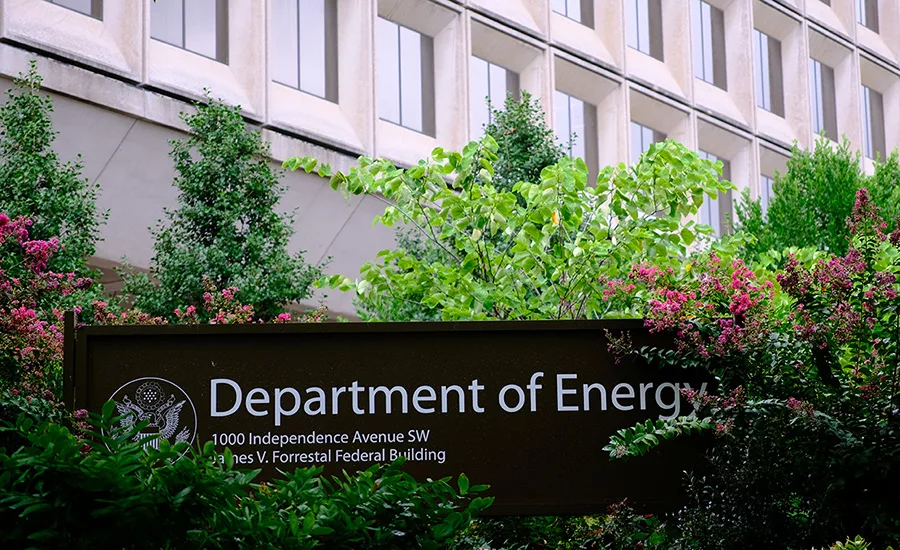
The U.S. Energy Dept. has withdrawn its federal definition of zero-emissions buildings and ended related technical assistance that many states and owners used as a benchmark.
The U.S. Dept. of Energy has withdrawn the Biden-era federal definition of a “zero-emissions building,” marking another step in the Trump administration’s rollback of climate-focused initiatives and creating uncertainty for states, cities and owners that had informally used the guidance in project planning.
In a Federal Register notice published Dec. 4, DOE said the 2023 definition is “not consistent with current administration priorities” and should not be used by authorities or private-sector organizations. A press release issued the same day confirmed that DOE removed the definition from its website and ended all related technical assistance.
RELATED
DOE Awards $90M to Support Updating U.S. Building Codes
Issued in 2023 by DOE’s Building Technologies Office, the definition sought to provide a uniform method for assessing buildings that produce zero on-site emissions, meet stringent efficiency requirements and use enough renewable energy to match annual load.
Though never binding, it became a reference point for jurisdictions drafting building-performance standards and for institutions seeking a federal benchmark for decarbonization. ASHRAE publicly endorsed the definition in June 2024, underscoring its early influence among standards-setting groups.
RELATED
Team Launches Structural Engineering Code Review With Eye on Reducing Embodied Carbon
Lou Hrkman, principal deputy assistant energy secretary for critical minerals and energy innovation, said in a statement that “the interaction of America’s 130 million buildings with our energy system should not be further complicated by arbitrary and imprecise federal guidance.”
Looking for quick answers on construction and engineering topics?
Try Ask ENR, our new smart AI search tool.
Ask ENR →
DOE’s newly created Office of Critical Minerals and Energy Innovation said the withdrawal would promote “freedom of choice” and relieve developers and owners of indirect pressure created by guidance that “never had the force or effect of law.”
Early reporting from EnergyWire and other outlets framed the decision as part of a broader pullback from climate-forward federal building policies.
The change could alter planning assumptions for public- and private-sector owners that had incorporated the federal definition into procurement language, grant-scoring criteria or internal carbon-reduction goals. It may also disrupt efforts by groups such as ASHRAE, the International Code Council and US Green Buildings Council to align sector-wide emissions standards.
DOE has not indicated whether a new framework will replace the rescinded definition. As of publication, major industry organizations had not issued public comment.

Bryan Gottlieb is the online editor at Engineering News-Record (ENR).
Gottlieb is a five-time Society of Professional Journalists Excellence in Journalism award winner with more than a decade of experience covering business, construction and community issues, including finance, law and real estate. He has reported for Adweek and the San Diego Daily Transcript and led a community newsroom in Santa Monica, Calif. He served as editor-in-chief of the Detroit Metro Times and as managing editor at Roofing Contractor, where he helped shape national industry coverage. At Engineering News-Record, Gottlieb covers breaking news, large-scale infrastructure and megaprojects, regulatory developments and business trends across the U.S. and global construction sectors.
email: gottliebb@enr.com | office: (248) 786-1591